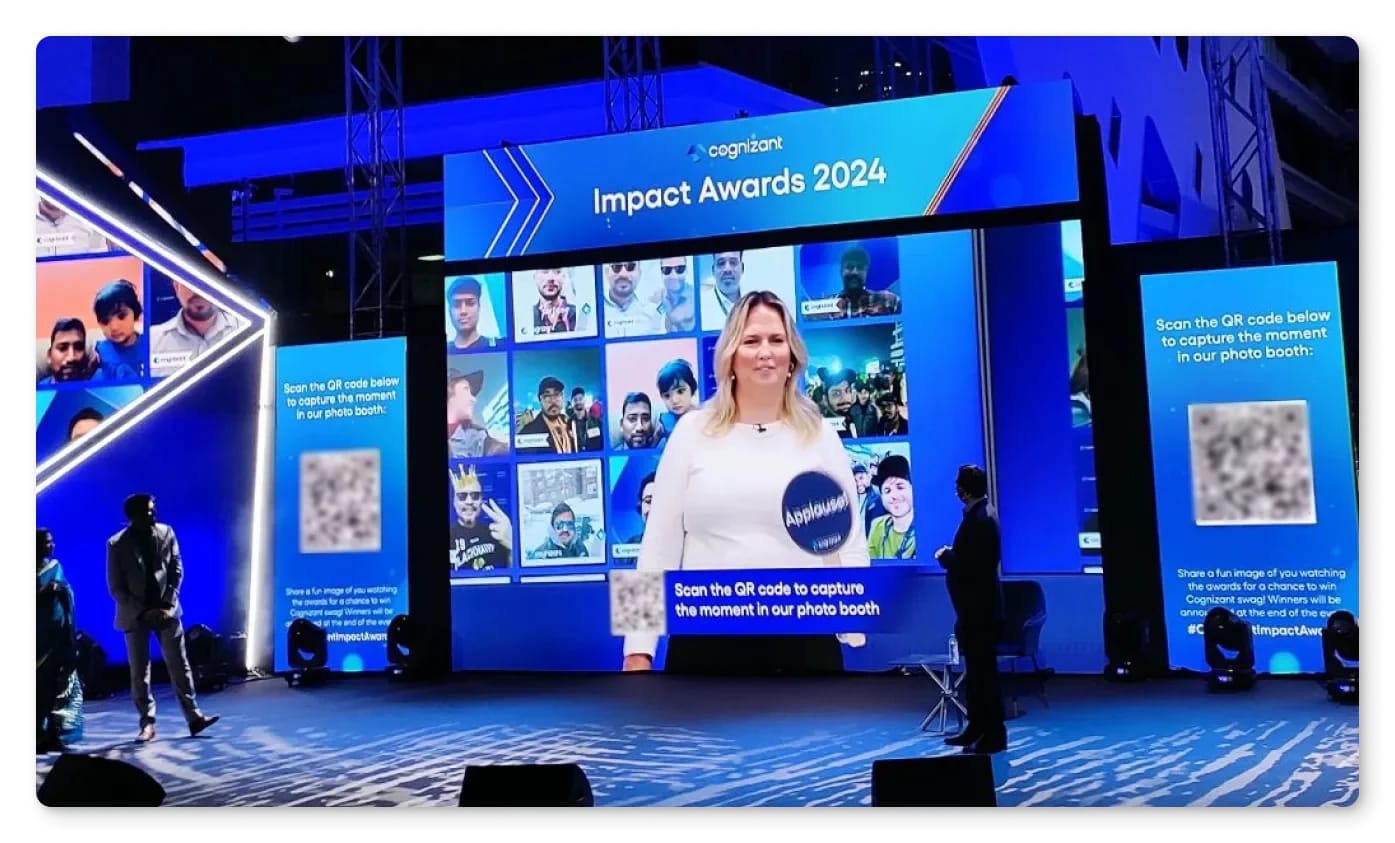

The boxes come back from every show. Pens, printed one-pagers, a stack of tote bags, all ordered weeks before anyone knew how many people would walk past the booth. Plenty of event teams now work inside a sustainability policy, and few of them got a budget line to go with it.
Sustainable experiential marketing, at the activation level, starts with the things you never needed to make. The answer usually isn't a greener giveaway. It's a takeaway guests actually keep, delivered by an experiential marketing platform to their inbox or phone instead of their suitcase, plus a short list of claims you can defend when someone asks what you changed. We wrote this for the marketer who's been asked to make the next activation lower-waste and wants to do it without overclaiming.
Key Takeaways
- The lowest-waste takeaway is the one you never ordered. Cut first, then substitute.
- Trade show audiences care about this more than consumer audiences do.
- Travel is most of an event's footprint. Cut what your team controls, and say exactly that.
- Name the specific thing you cut. A blanket "eco-friendly" is the claim regulators are taking apart.
What makes experiential marketing sustainable?
Sustainable experiential marketing means fewer things made, printed and shipped for a single day, and a takeaway guests actually keep. That's the test at the activation level. The US EPA's waste management hierarchy puts it in one line: source reduction, "also known as waste prevention," is "the most environmentally preferred strategy." Recycling sits further down the list. For an activation, that means the most sustainable tote bag is the one nobody ordered.
It also means sustainability is mostly a planning decision, not a production one. By the time you're choosing recycled stock for the one-pagers, the bigger question (do we need one-pagers at all?) has already been answered by default. If you want the wider discipline first, our guide to experiential marketing covers planning, formats and measurement. This piece stays with the activation itself: what guests touch, take and leave behind.
Do event audiences care whether an activation is sustainable?
Trade show audiences do, more than most. Event Marketer's EventTrack 2026 survey of corporate event marketers and attendees found that trade show attendees care more about event sustainability than consumer-event attendees, which runs against the usual assumption about who the green-minded crowd is.
85% of trade show attendees say they care about the sustainability of the events they attend, compared with 60% of consumer-event attendees. (EventTrack 2026, Event Marketer)
The same report has a less comfortable finding. When budgets get tight, most event agencies and departments report that "the sustainable options (which are frequently the more expensive options) are the first to get cut." That's the case for starting with subtraction. A recycled-material water bottle costs more than the regular one and dies in the budget meeting. Not ordering the water bottle costs nothing, so it survives.
Where does an activation's waste actually come from?
Mostly from things ordered before anyone knows turnout. The order goes in weeks ahead, it's sized for the optimistic headcount, and whatever's left rides home in a crate or goes in the venue's dumpster. In an activation it usually looks like this:
- Printed collateral and pre-printed takeaways, sized for the crowd you hoped for.
- Branded giveaways handed to whoever walks past, including people who'll never think about your brand again.
- Single-purpose kit shipped to one show and back.
- Paper sign-up sheets and a business-card bowl, which someone then types into a spreadsheet after the event.
Keep the scale honest, though. One life-cycle study of a two-day, 200-person conference found travel made up 57% of its carbon footprint, with meals the next largest share. Your activation isn't the biggest lever on an event's footprint, and nothing here changes how people get to the venue. It's the part your team controls this quarter, which is reason enough to start there, and reason enough not to describe it as fixing the whole event.
How do you make a brand activation lower-waste?
Replace the things you'd have ordered with things guests receive, and make on the day only what someone asks for. Five moves cover most sustainable brand activations, and none of them waits on a separate sustainability budget.
Give a digital takeaway instead of a printed one
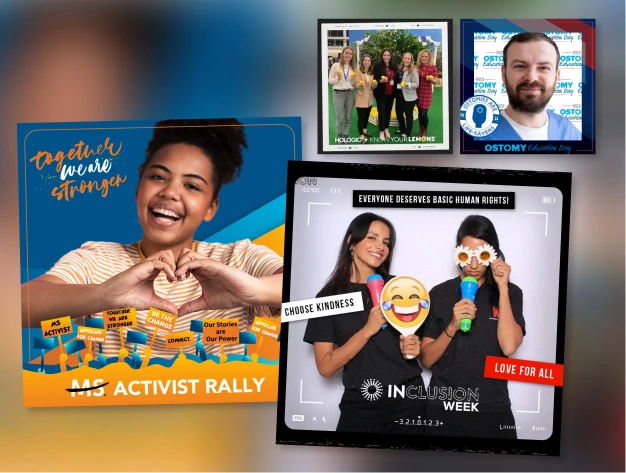
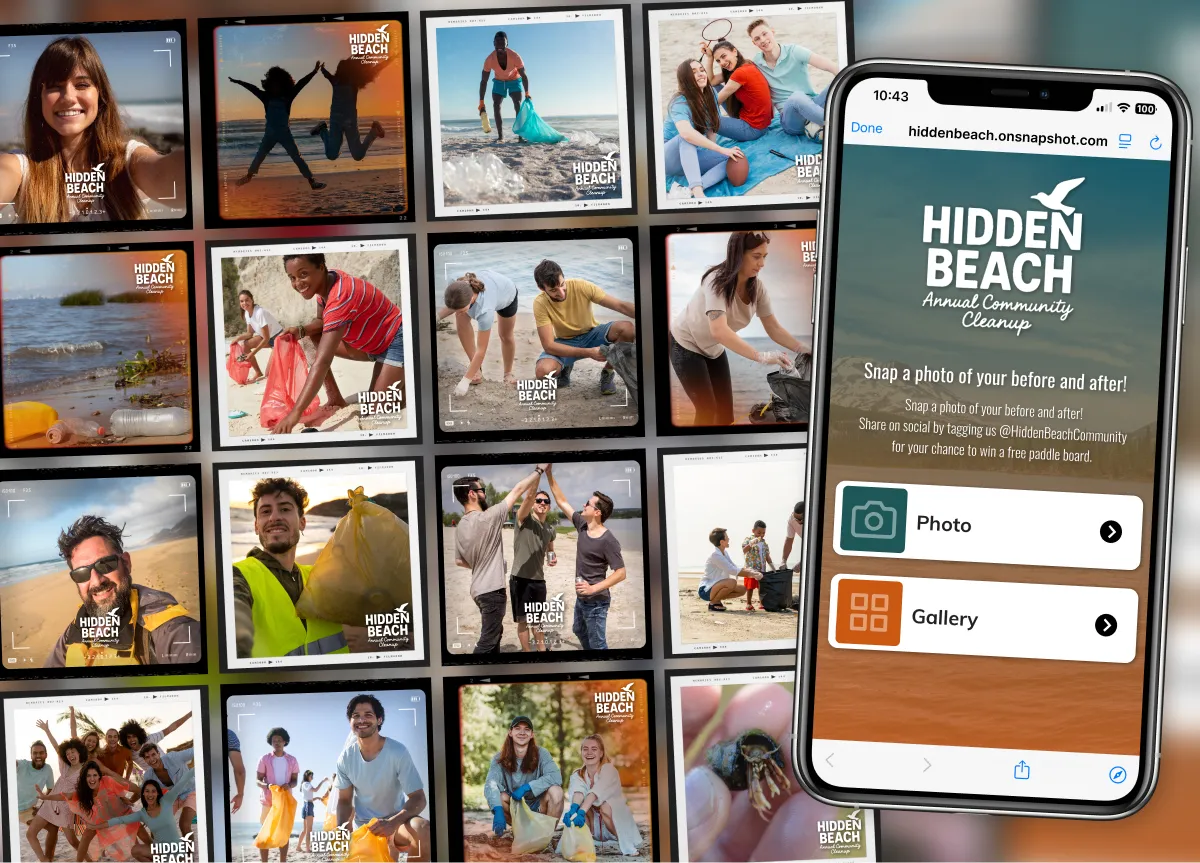
Make the branded photo the takeaway. Guests get it by email or text, in their own gallery, instead of a printed strip or a branded object. A per-guest gallery doubles as the swag people actually keep, because their own face is in it. It only replaces a printed piece if it arrives, and it does: our delivery emails average a 95% open rate, which is why the delivery email deserves as much design attention as the activation. Guests save and share from that gallery on their own time.
Run it on hardware you choose
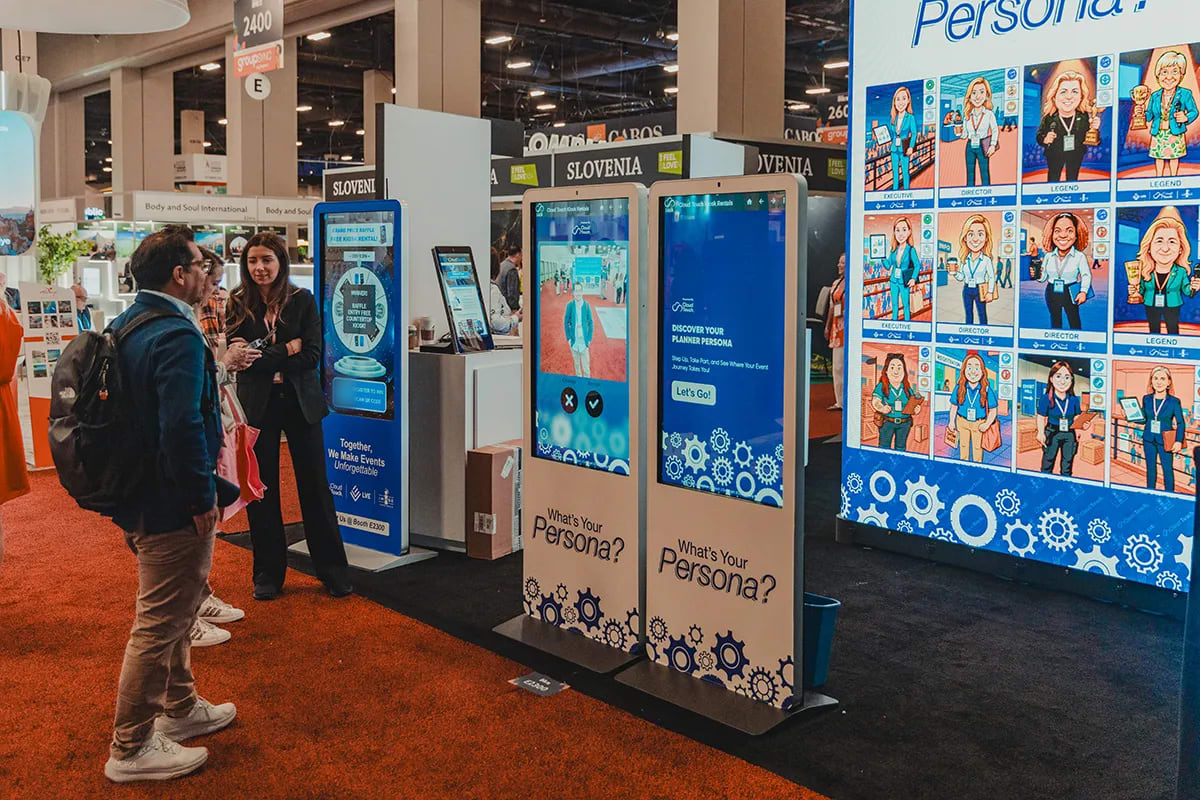
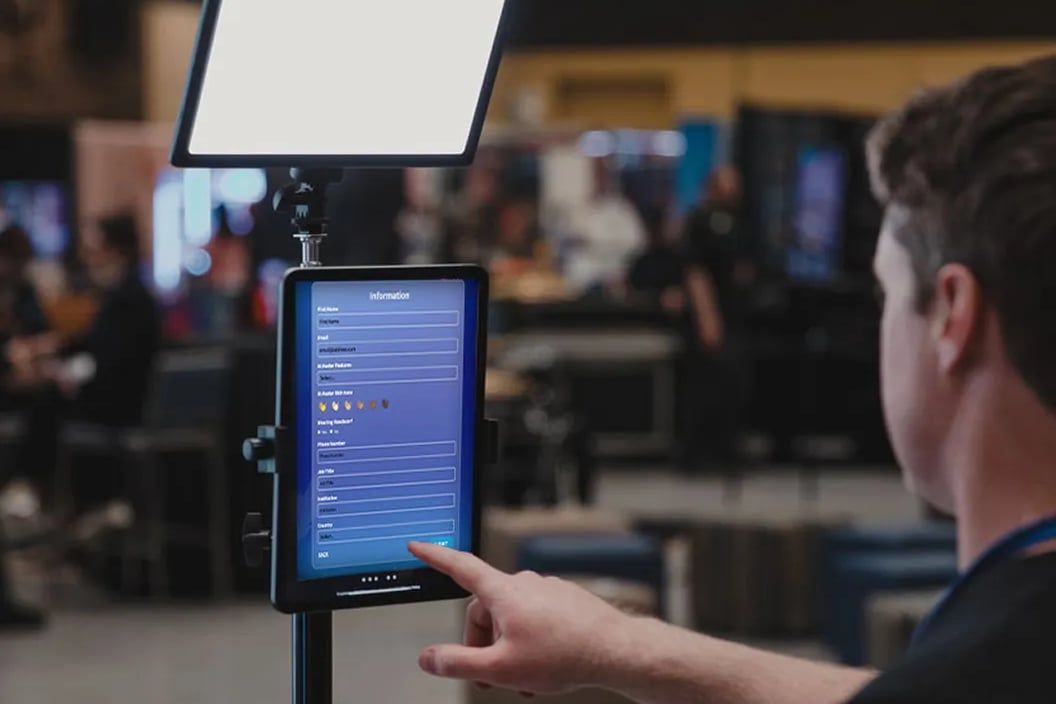
The same experience runs on a kiosk, an iPad on a stand, a laptop at a desk, or guests' own phones by QR code or link, and you can run all of them at once. Snapbar doesn't supply or ship hardware, and doesn't staff the booth. Your team decides what goes on the stand, which can mean devices you already own, and nothing has to travel to the show for the activation unless you decide it should. We've written about why we got out of event logistics.

Guests' phones are one option, not the whole answer. Most clients still run it on hardware of some kind, with a kiosk or a tablet as the anchor, because a visible screen draws people in. That's fine. The waste worth cutting is single-use kit shipped in and thrown out, not the screen itself.
Put guest content on the screens already in the room
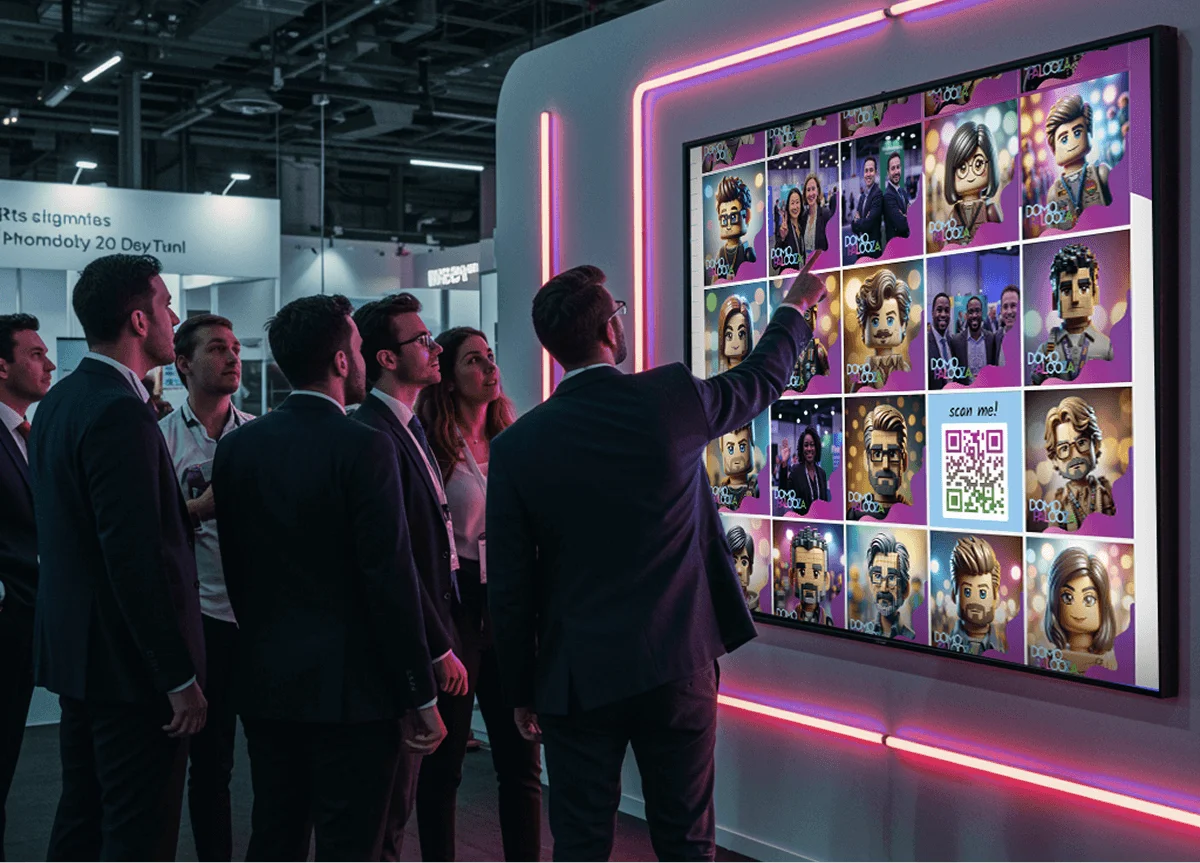
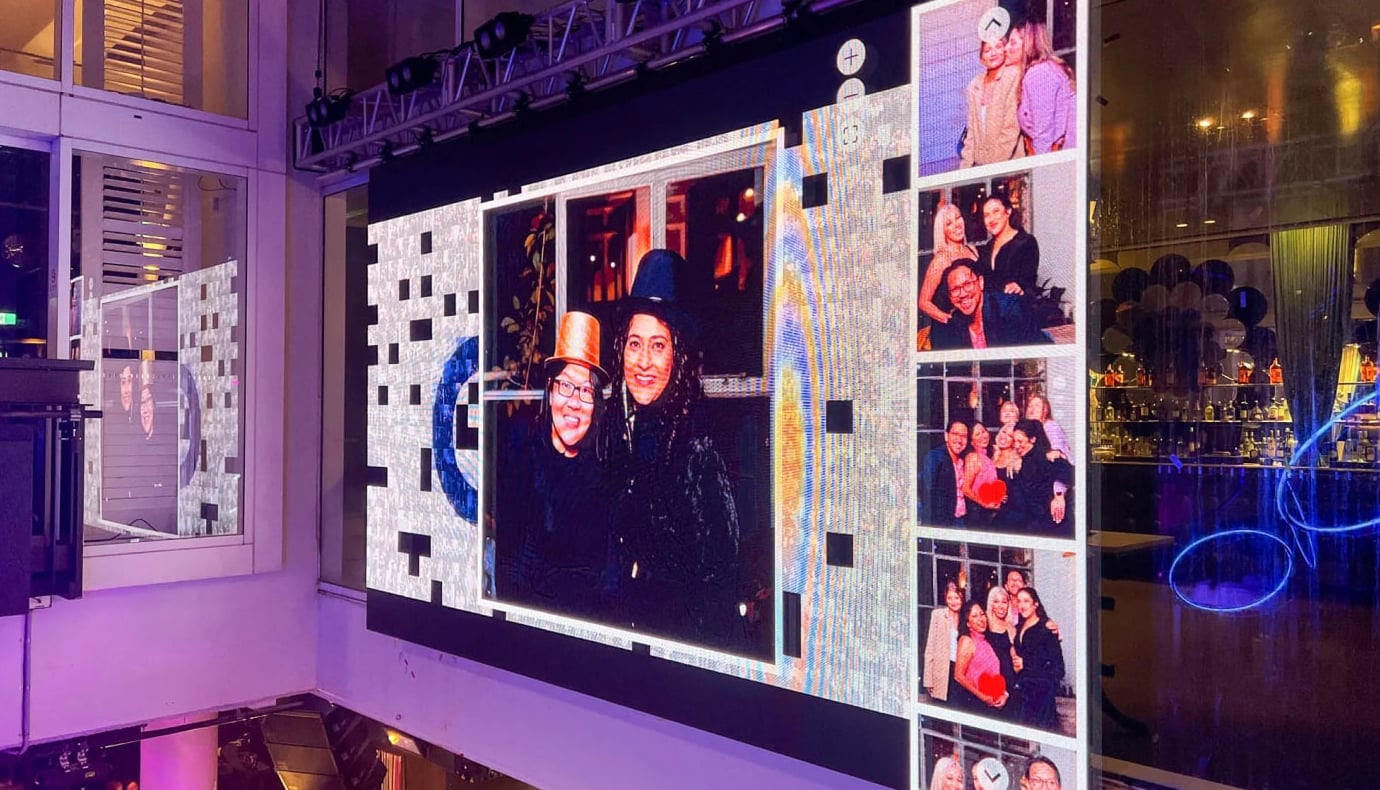
Venues are full of screens looping a static logo. A live gallery, a slideshow and a leaderboard come with every activation, and you can run as many of those displays as you like, so guest content can fill the screens you already have instead of a printed backdrop made for one show. See how a live gallery works on a venue screen.
Print on demand, not in advance
Some guests want something in their hand, and for some formats a print is the right call. The lower-waste version prints what guests ask for, when they ask: your event gallery or slideshow can print a single 4x6 photo, or a trading card's front and personalized back on one sheet, on a printer you provide. That swaps a run ordered before you know turnout for a count that matches the people who wanted one.
Put giveaways behind an ask
If you're keeping physical giveaways, give fewer of them to the right people. Ask for something first, a guest's details and their consent to hear from you, and the swag goes to people who opted in. A trade show prize wheel does that with a game, and the box that rides home gets lighter.
If sustainability is the subject of the event itself, a volunteer cleanup or a cause campaign, our activation concepts include formats built for it, where participants capture their part and the photos carry the story.
See it in action
Build your own Digital Photo Booth activation
A branded photo guests keep, delivered by email or text, on any device you choose.
Explore Digital Photo Booth
One caveat we'd rather state than have someone else point out: digital isn't zero-impact. Hosting, sending and displaying content uses energy too. What a digital takeaway does is replace printing, packing and freight for a single day, which is a trade worth making and worth describing accurately.
Can you call an activation eco-friendly?
Not as a blanket label. Say the specific thing you cut. Eco-friendly experiential marketing is a fine goal and a risky headline, and two sets of rules explain why.
The US Federal Trade Commission's Green Guides say marketers shouldn't make unqualified general environmental benefit claims, should limit a claim to the specific benefit, and shouldn't "imply that any specific benefit is significant if it is, in fact, negligible." In the EU, Directive (EU) 2024/825 goes further: from 27 September 2026, member states apply a ban on generic environmental claims a business can't back with recognised excellent environmental performance, and on claims about a whole product or business when only one part of it qualifies.
That second rule maps onto activations closely. Swapping a printed strip for a digital photo is one change. Calling the whole event sustainable because of it is the pattern the EU rule describes.
- A claim that holds: "No printed takeaways at this year's booth. Every guest got their photo by email or text."
- A claim that doesn't: "A sustainable event."
This is a plain-language summary of two public texts, not legal advice. Run anything going on a banner or a press release past your own counsel.
How do you measure a lower-waste activation?
Count what you didn't order. Put last year's order sheet next to this year's: pieces printed, giveaway units, boxes shipped out, boxes shipped back. You already have those numbers, and they're specific enough to report without anyone asking what they mean.
Then count the replacement, so it's measured rather than assumed. Your event report shows how many guests took part and how their content was delivered, which turns "every guest got a digital takeaway" from a hope into a figure. Guest details entered on the screen land in your dashboard as they come in, ready to export, so the clipboard and the business-card bowl stay home.
Report the results as counts: pieces not printed, boxes not shipped, guests who received their content. A "percent greener" figure invites the question of what it's a percentage of, and that's the conversation you don't want after the show. For the rest of the scorecard, our breakdown of experiential marketing ROI covers the layers beyond waste.
Start with the order sheet for your next show. Cross off what a digital takeaway replaces, keep printing for the guests who ask, and write the claim down before the event in words you'd be comfortable defending. That's sustainable experiential marketing without the overclaiming.
Planning a lower-waste activation for your next show?
Get a Quote
Or explore: Experiential Marketing Platform | How It Works