
Table of Contents
Search for experiential marketing software and you get a strange shortlist. A booking system for brand tours and tastings. An event app with a polling tab. A games tool built for online promotions. A platform that turns guests into the content on your screens. All four call themselves an experiential marketing platform, and all four are telling the truth about something. They just aren't selling the same thing.
If you're working out how to choose an experiential marketing platform, and then defending the pick to procurement, legal and a pipeline number, the label won't help you much. The questions below will. We build an experiential marketing platform ourselves, so we've written them from our side of a lot of these evaluations, and we've tried to be straight about where another kind of platform fits better.
Key takeaways
- "Experiential marketing platform" covers at least four different products. Work out which one your program needs before you compare features.
- An agency rents you an outcome per event. A platform is what you keep from one event to the next: the tools, the content and the consented data.
- Score the workflow your team will actually run on event day, not the length of the feature list.
- Ask what the pricing model meters. Devices, screens, seats and guests each change the bill differently when the event doubles in size.
What is an experiential marketing platform?
An experiential marketing platform is the system a brand team uses to build the part of an event that guests take part in, run it live on whatever screens and devices the event has, and keep the content and consented guest data it produces. It sits after registration and before your CRM.
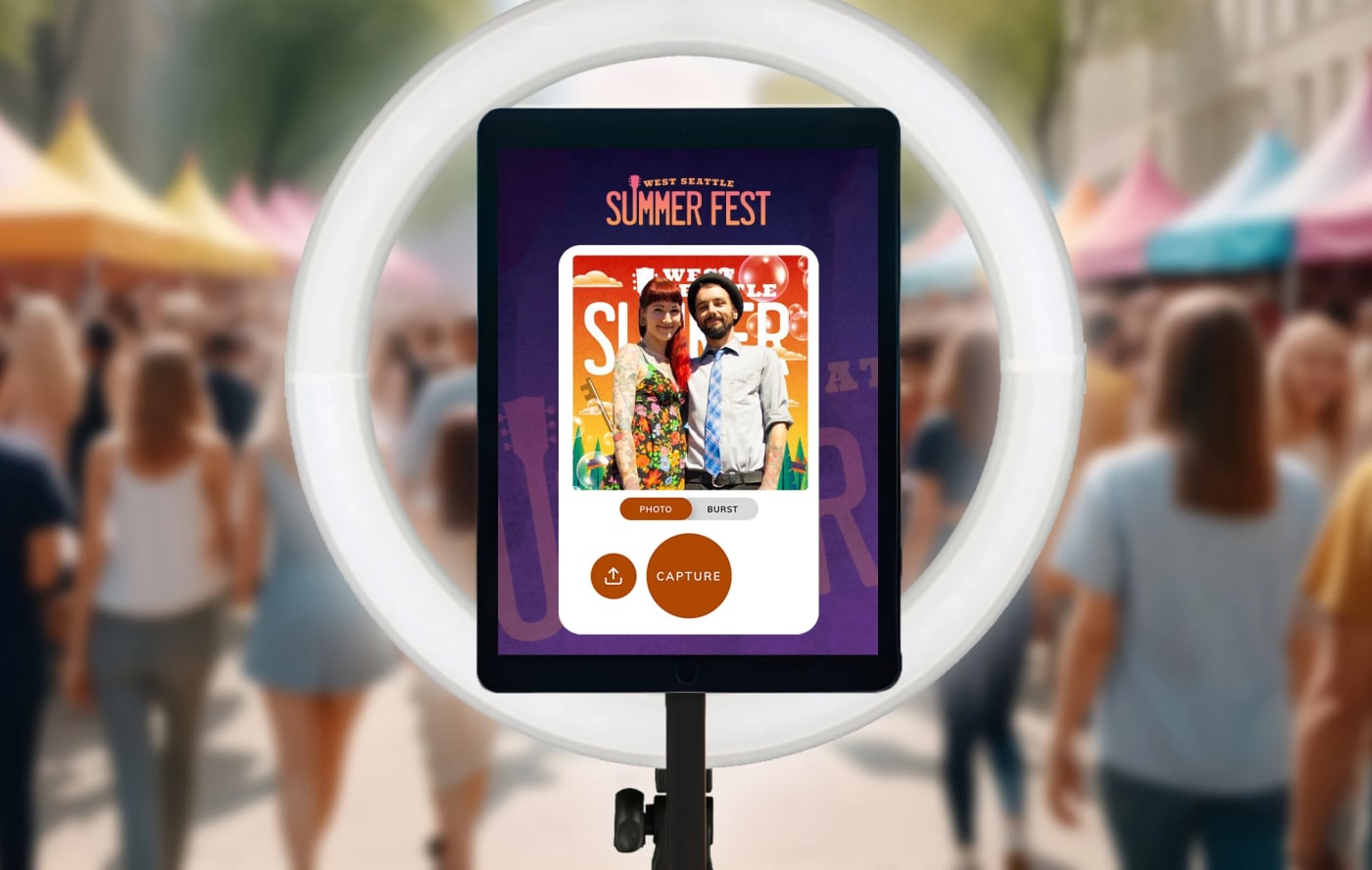
That middle position is the whole point. Experiential marketing (our guide to experiential marketing covers the discipline itself) asks people to do something with your brand rather than look at it, and the platform is where that something gets designed, delivered and measured. In practice it follows a loop. A guest captures, plays or interacts. The platform processes what they made, whether that's a branded photo, a quiz result or a prize. The result goes up on a display and out to the guest, and the lead record and the analytics build up the whole time.
The loop also explains why the category is wider than events. Experiential marketing is a behavior, not a venue, so the same platform can run a trade show booth, an employee all-hands, a retail pop-up or a campus tour. Our own experiential marketing platform is built around that loop, which is also why it doesn't look much like the booking tools that share the name.
What gets sold as an experiential marketing platform?
Four kinds of product use the label today. Each is good at something real, and a few vendors straddle two of them. The useful question isn't which is best. It's which one matches what your guests are supposed to do.
| Approach | Built for | What guests do | What you keep afterward |
|---|---|---|---|
| Booking and ticketing for brand-owned experiences | Recurring tours, tastings, classes and in-store visits | Reserve a slot, check in, attend, leave feedback | Bookings, visit history and purchase data tied to a guest profile |
| Event management suite with an engagement add-on | Running a whole conference: registration, agenda, badges, app | Register, build an agenda, answer a poll inside the event app | Attendance and session data, plus whatever the add-on records |
| Engagement and game tools | Quizzes, polls, prize wheels and promotions, often online-first | Play a game or answer a question for a chance to win | Entries and opt-ins, usually without content guests want to keep |
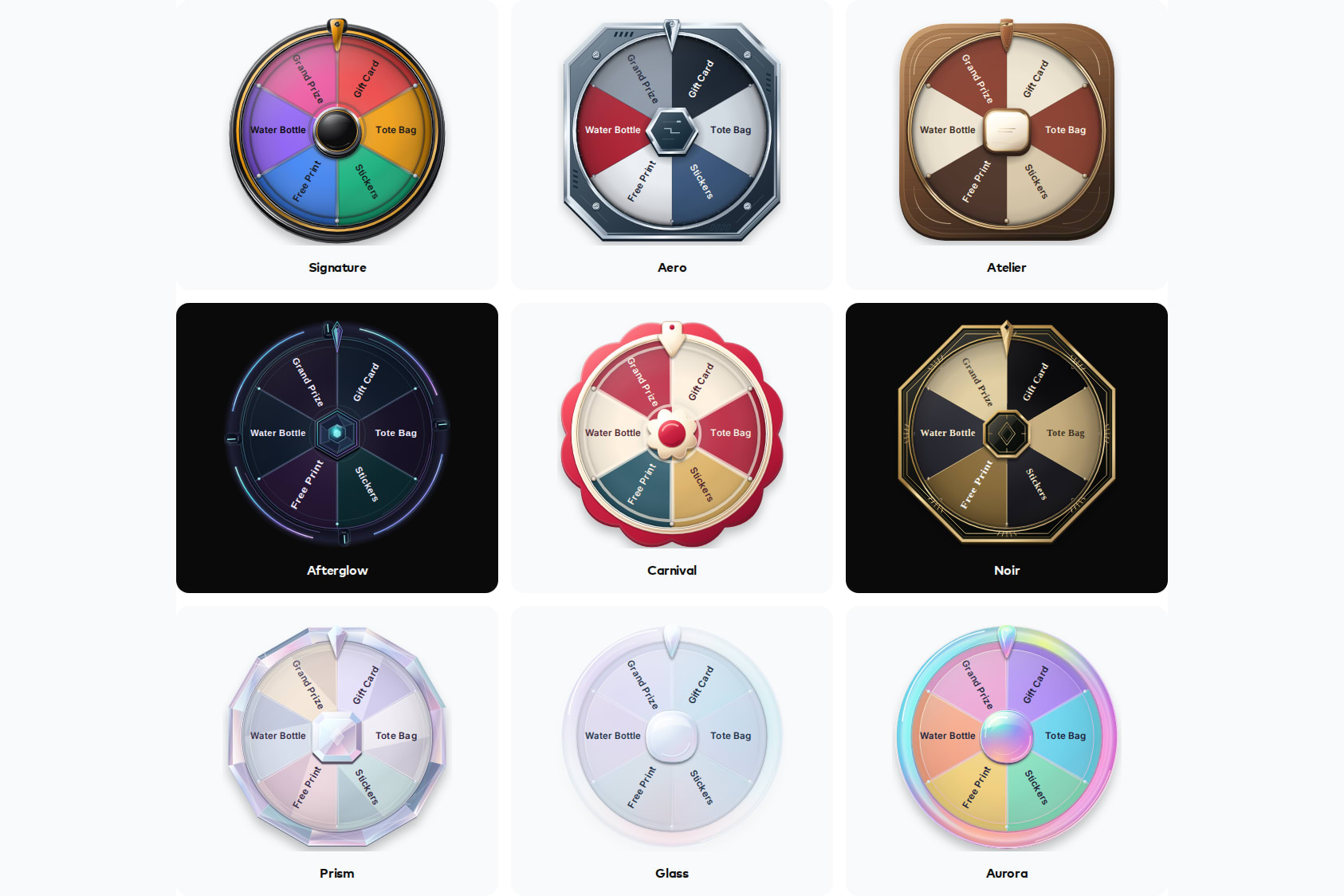
| Activation platform | The interactive moment at a booth, a lounge or a stage | Make something: a branded portrait, a trading card, a quiz result, a spin of the wheel | Content guests share, live displays on the floor, and a lead record for each guest |
If your program is a recurring visitor experience where the goal is a booked visit and a purchase afterward, a booking-led platform is the better fit, and it would be a stretch to tell you otherwise. If the goal is getting the right people to stop, take part and leave a record of who they are, you're shopping for the last row. For polls and games specifically, our piece on audience engagement strategies covers how to choose between engagement tools.
How is an experiential marketing platform different from an agency, an event management platform or a photo booth app?
These three get compared to a platform more than anything else, usually in the same budget meeting. Each answers a different question.
An agency
An agency brings craft and people. You brief them, they design and run the activation, and you pay per event. That's often the right call for a flagship moment. What you don't usually keep is the machinery, so the next event starts from a new brief. A platform flips that: you hold the tools, the branding, the lead fields and the content, and each event builds on the last. One gets booked. The other gets built on. Budget pressure is pushing teams to ask the question: Gartner's 2025 CMO Spend Survey found marketing budgets flat at 7.7% of company revenue and 39% of CMOs planning to cut agency budgets. Most teams end up using both. Our in-house brand activation playbook covers what teams keep and what they still hand off.
An event management platform
Event management software runs attendance: registration, badges, the agenda, the event app, check-in. An experiential marketing platform runs what attendees do once they're in the room. They work side by side, and a good activation platform should slot into the event tech you already pay for rather than ask you to replace it. If a vendor pitches one product as both, ask to see the engagement part running at a real event, not in a slide.
A photo booth app
A photo booth app does one capture format, usually on one class of device, and is often licensed per device. For a rental business running the same booth every weekend, that model makes sense. For a brand team running several formats across a year of events, it tends to be one tool among many. If photo capture is the whole brief, our guide to evaluating photo booth software goes much deeper on that slice.
How do you choose an experiential marketing platform?
Choose on seven things: what guests actually do, whether it runs on the hardware you have, where guest data goes, what the room sees and who approves it, how you prove results, who builds and runs it, and what the pricing model meters. Everything else is detail inside one of those.
33%
The average share of their martech stack's capability that marketing organizations were actually using in 2023, according to a Gartner survey of 405 marketing leaders.
That figure, from a Gartner survey run in May and June 2023, is a warning about how software gets bought. Research on what's called feature fatigue (Thompson, Hamilton and Rust, Journal of Marketing Research, 2005) found that people weigh capability heavily before they use a product and usability heavily after, so they tend to pick the more complicated option and like it less once it's theirs. A demo is a capability tour. Event day is the usability test. Score the second one.
What will guests actually do, and does it work across your event formats?
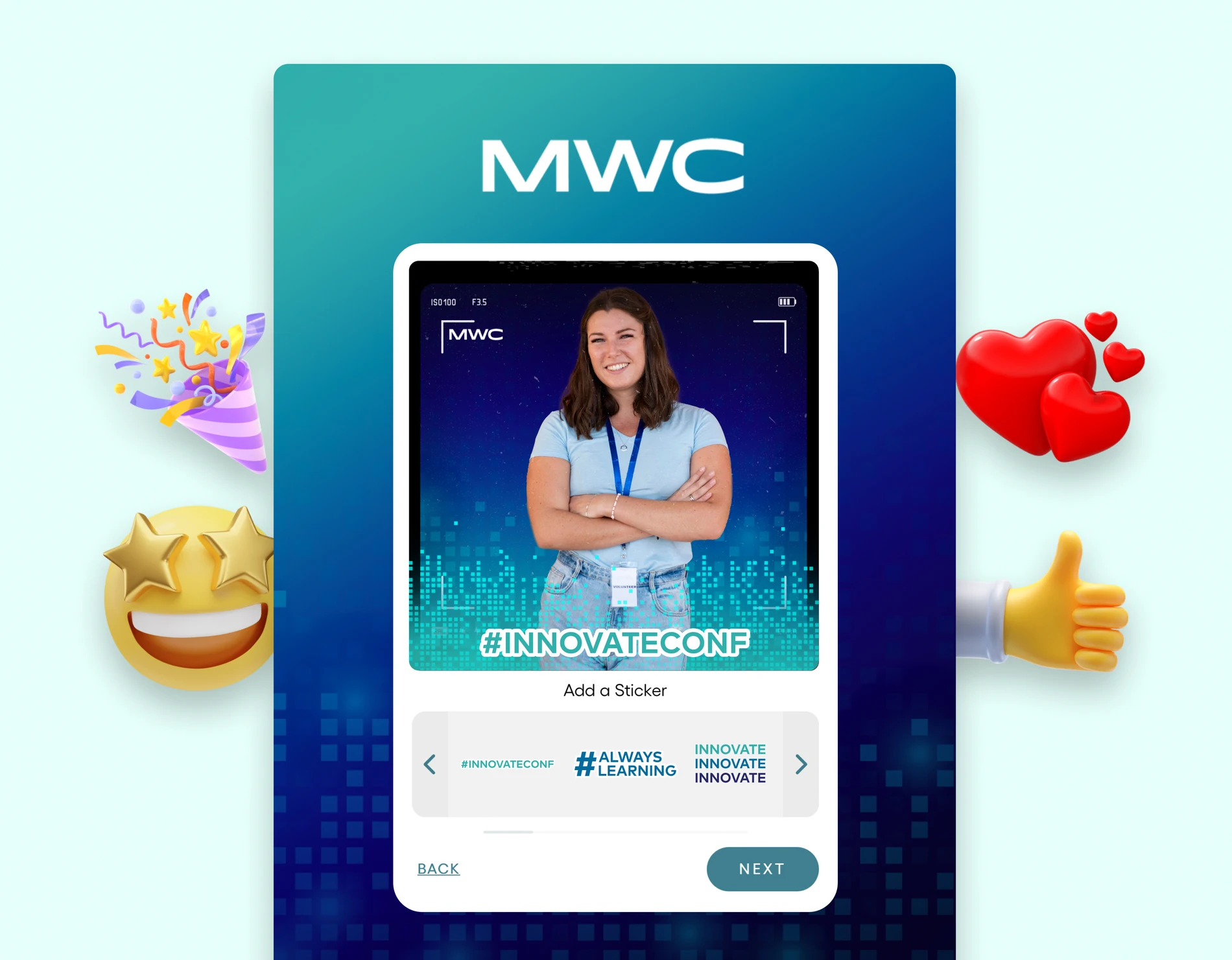
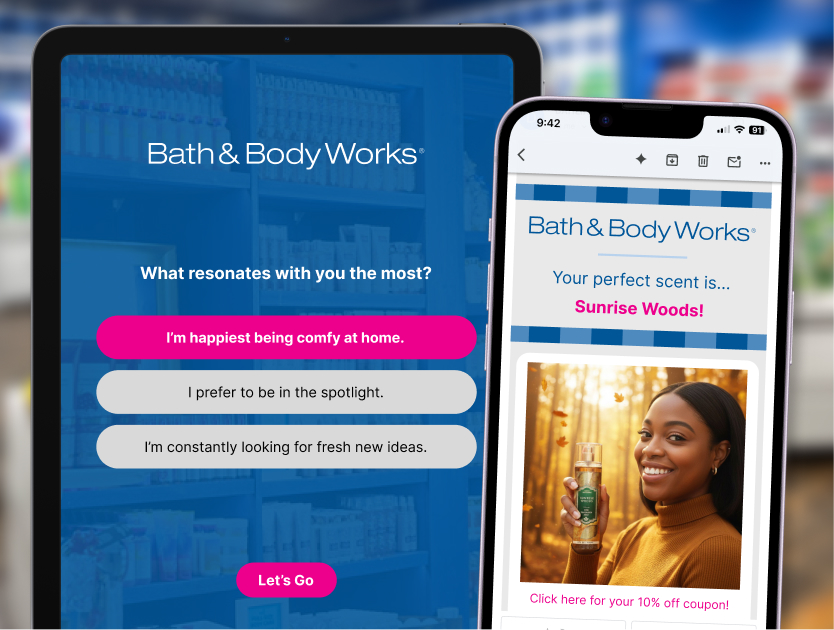
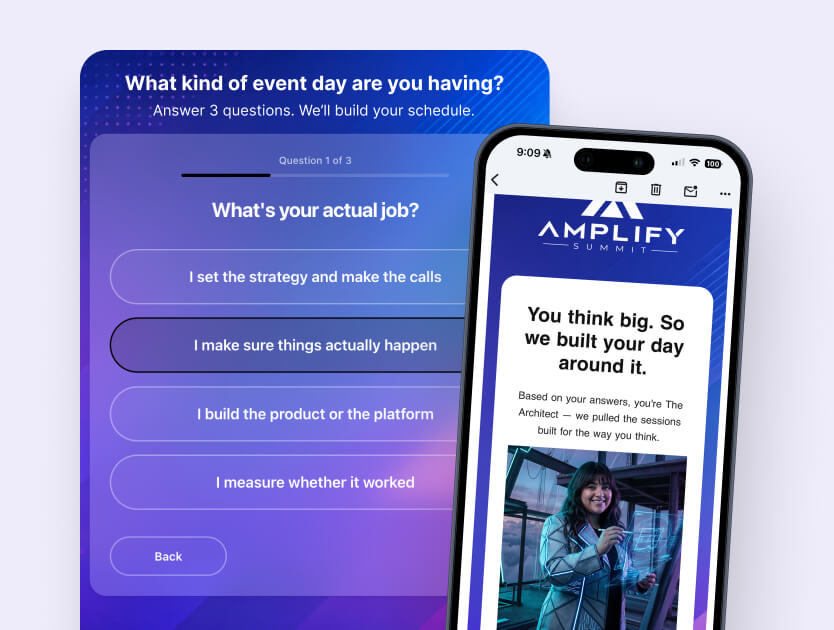
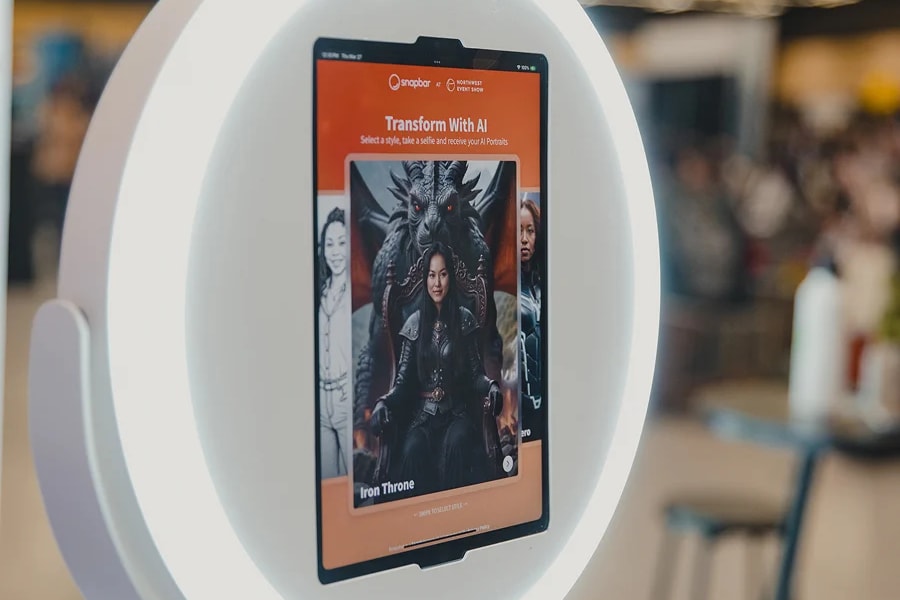
Start with the guest, because everything downstream depends on whether people take part. Look for range across formats rather than depth in one, because experiential marketing tools that only do one thing tend to get used once. A team that runs a trade show, a user conference and an internal all-hands in the same year needs more than one kind of moment: a branded AI portrait for the booth, a persona quiz that sorts visitors for sales, a prize wheel for a busy aisle, trading cards for a sales kickoff. On our platform those all sit in one catalog with the same branding, data and displays behind them. Ask any vendor which of their formats a client like you ran last quarter, and what share of guests actually finished it.
Does it run on the hardware you already have?
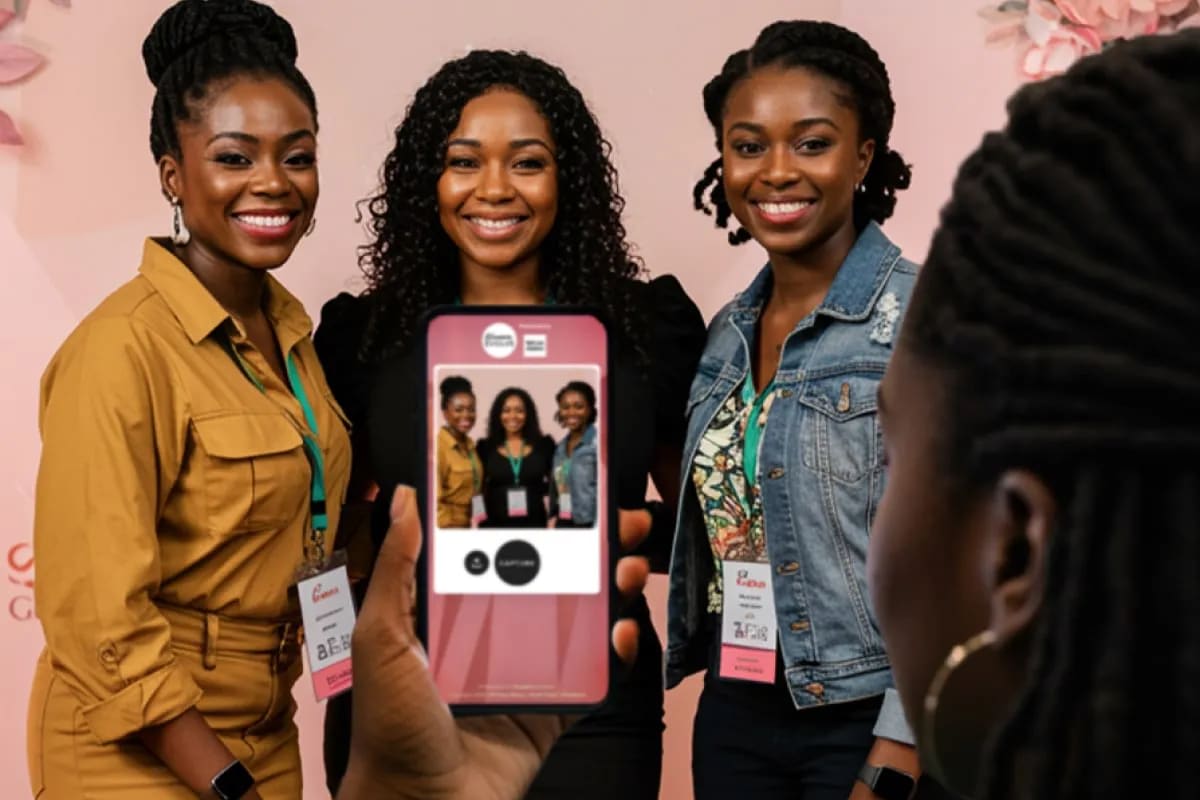
A browser-based platform should run on whatever you bring: a high-end kiosk, an iPad on a stand, a laptop at a registration desk, or every guest's phone by QR code or link. Or all of those at once, with the same branding and the same data on every device. Ours works that way, and there's no charge for adding devices or for how many people use it at the same time, so a second kiosk or a whole ballroom joining from their phones doesn't change the price.
To be plain about the physical side: we don't supply hardware or on-site staff. Clients use their own devices, rent screens and kiosks locally, or run it on guests' phones and need nothing at all. When you evaluate any vendor, ask what is licensed per device and who owns the kit after the event.
Where does guest data go, and who controls consent?
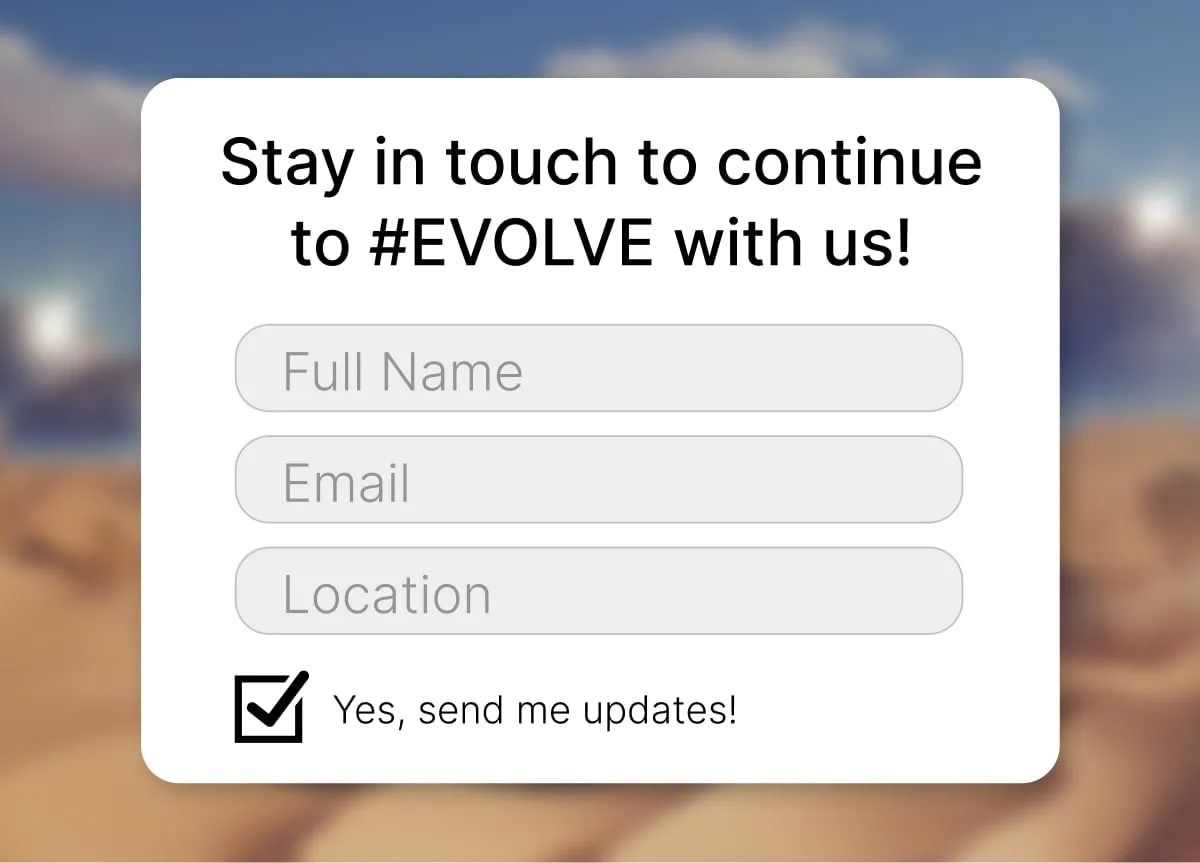
Ask where the lead record lives, what the guest agreed to, and how it reaches your systems. On our platform the data capture step is configured per experience, so a qualifying question, a role or a product interest can sit in the entry form next to name and email. Consent is built in: if a guest declines, their personal details are dropped before anything is sent onward, while their photo still processes. Content reaches guests by email or text, and they share it from the gallery they're delivered to.
Leads and photos can flow in real time to Slack, to your own systems through signed webhooks or our partner API, and to HubSpot through those routes; integrations are enabled per account on request, so our team sets them up with you rather than it being a switch you flip. For internal events, our team can also limit an experience to guests who enter an email on your company's domains and cap how many times one guest can submit. Where event lead data actually goes compares the common patterns in detail.
What does the room see, and who approves it first?
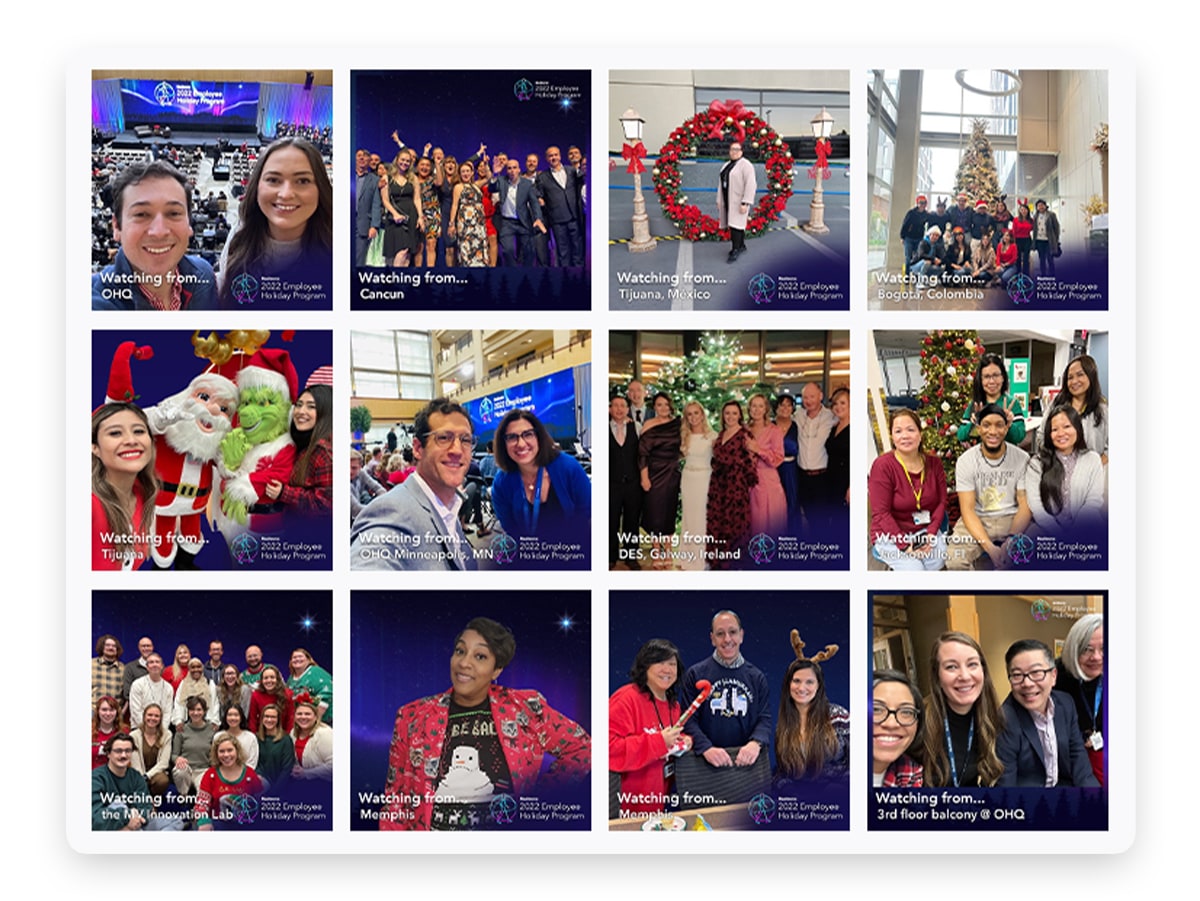
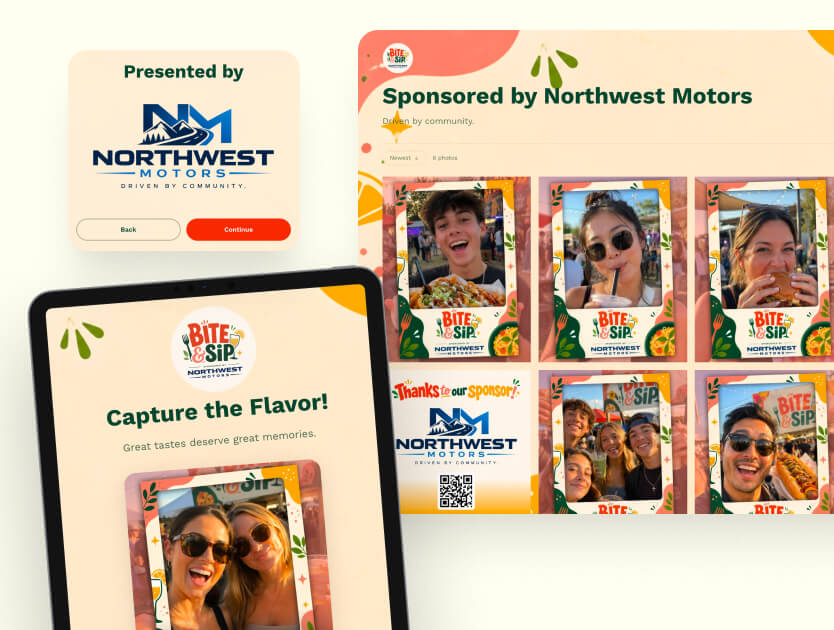
Screens are what pull the next person in, so check what the platform puts on them. On ours, a live gallery, a slideshow and a leaderboard come with every activation, and you can run as many screens of those as you want at no extra cost. Twelve screens across a booth, a lounge and a main stage cost the same as one. A live mosaic is the one add-on.
Then check who decides what goes up. If an event is public-facing or sponsored, you may want a person to approve each photo before it reaches any screen, and you can turn that on per experience so anything left unapproved never appears. Every delivery email also carries a link a guest can use to ask for their photo to come down, which your team reviews in the dashboard. Our comparison of live event displays goes further into the screen side.
Can you prove what it produced?
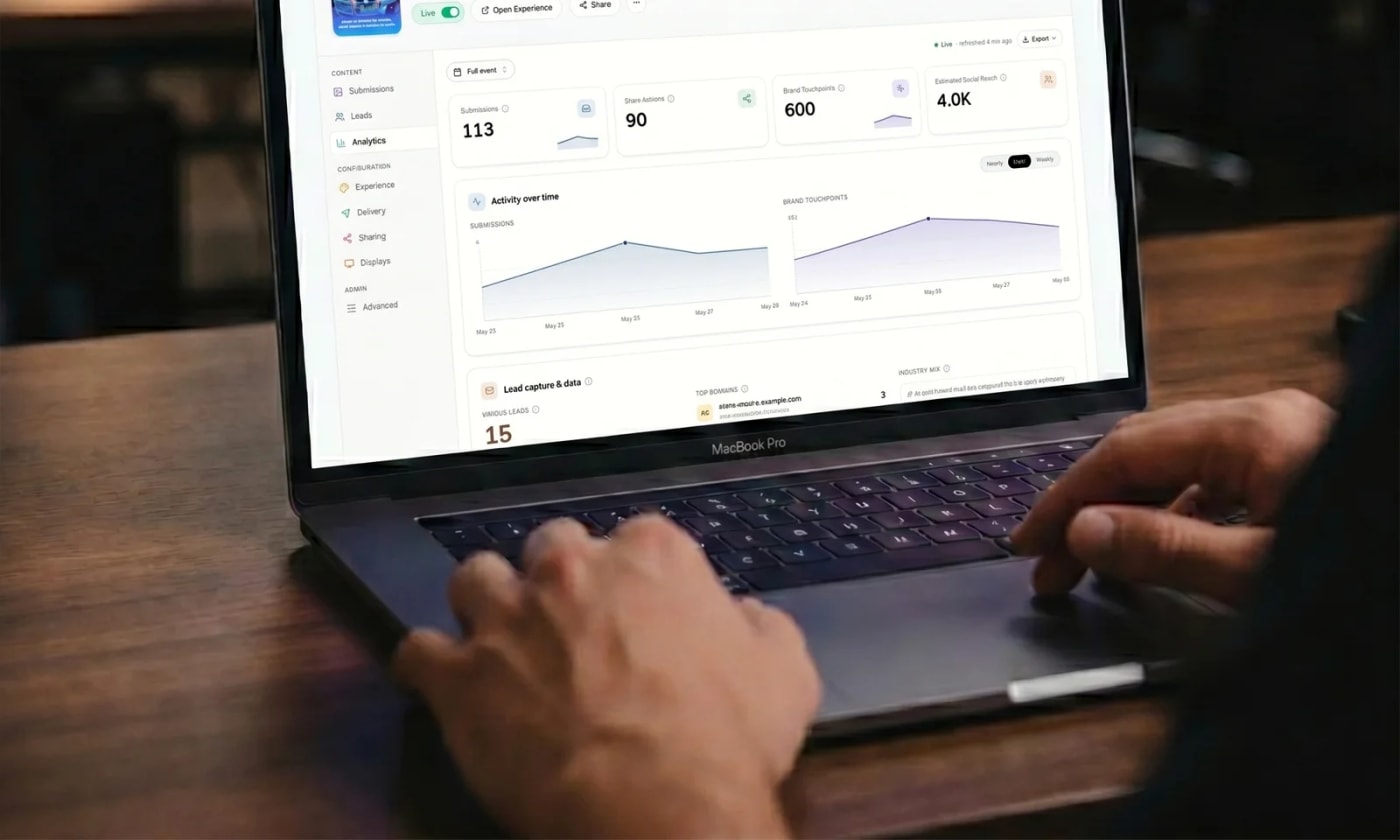
Your platform should give you numbers you can put in front of a CMO the week after, not just a gallery. Look for real-time analytics you can share, activity by hour, day or week so you can see which part of the show drew people in, a lead record tied to each submission, and bulk content exports named so they file cleanly on your side. Ask the vendor to show you a finished event's report, not a dashboard full of sample data. For the framework behind the numbers, see how to measure experiential marketing ROI.
Who builds it, and who runs it on the day?
Some platforms hand you a login and step back. Some hand you an account manager and keep the controls. Ours sits in between on purpose: the platform gives your team immediate control over branding and design, and our team brings expertise and guidance on the harder parts, like AI prompts and how the data flows. Be just as direct with every vendor: who designs the experience, who changes it mid-event, and who's standing next to the screen when something goes wrong? On our side, that last answer is your team or your event staff.
What does the pricing model actually meter?
Prices only compare once you know what's being counted, and each kind of vendor counts something different. Agencies usually price per event. Photo booth apps tend to license per device. Event management suites often price by seat, attendee or module. Platforms like ours price per experience with usage included, and don't charge for devices, extra screens of the included displays or additional admins. Each model makes a different thing expensive.
So ask every vendor the same question: what doubles when the event doubles? If the answer is a device count or a screen count, a bigger footprint gets expensive fast. If it's guest participation, the cost follows the result you wanted. Our current platform pricing shows what each experience includes.
Questions to ask in the demo
Bring these to every vendor and compare the answers side by side:
- Show me a client like us, at an event like ours, and what share of guests finished the experience.
- What runs on our existing devices, and what is licensed per device or per screen?
- If a guest doesn't consent, what happens to their details?
- How do leads reach our CRM, and who sets that up?
- Who approves what goes on a screen, and how does a guest get a photo taken down?
- What does the report look like a week after the event?
Vague answers to the consent and data questions are worth more weight than a missing feature. Features ship. Data handling is architecture.
Where to start
Pick the one goal your next activation has to hit: qualified conversations, content, community or education. Then list the event formats you'll run in the next twelve months. That's your shortlist filter. A platform that covers every format on that list will serve you longer than one built around a single show.
If you'd like to hold ours up against these questions, start with the experiential marketing platform overview: what guests can do, how it runs on your devices, where the data goes and what you see afterward.
Want to see how your events would run on one platform?
See what the Snapbar experiential marketing platform does across capture, displays and data.
Explore the PlatformOr explore: Get a Quote | How It Works