
Table of Contents
Every event marketer knows the swag math. You order 2,000 branded pens, hand out 1,400, and the rest rides back to the office in a bin. A trading card activation runs on different math: instead of handing guests something with your logo on it, you hand them something with their own face on it, built from their photo, their name, and a stat they picked themselves.
That flip is why the format keeps beating a table of giveaways at trade shows, conferences, and fan events. Whether you're scoping your first collectible event giveaway or you've run a few already, here's what the format does and what one looked like at real scale.
Key takeaways
- A trading card activation turns each guest into a custom collectible card: their photo, your design, their answers mapped into fixed positions.
- Cards get kept because of ownership and identity, not novelty. A card with your face on it isn't disposable the way a pen is.
- One interaction produces four things: a takeaway guests want, marketing fuel, a data capture step, and live display content.
- Digital-first by design. You can print a card on site, front and personalized back on one foldable 4x6 sheet, but the sharing and the data live on the digital side.
- Cards can carry a holographic front that tilts and shimmers in 3D as the card moves, and a personalized back viewers can flip over to see.
- EA Sports ran one at the Super Bowl Experience Fan Zone: 600+ cards in four days, peaking at 300 in one day.
What is a trading card activation?
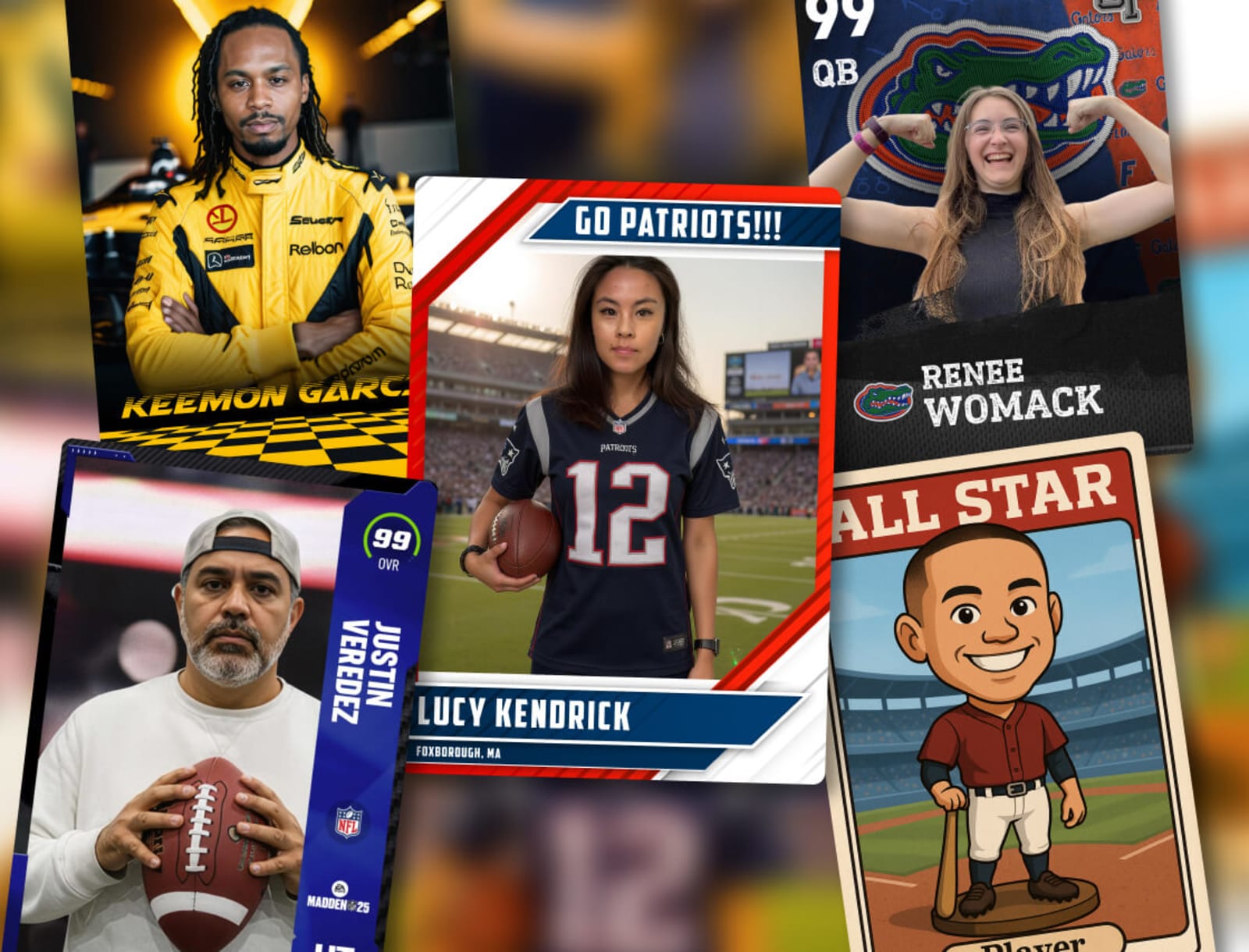
A trading card activation is an event experience that turns each guest into a custom collectible card. Guests take a photo, answer a few questions you design, and the card composes itself: your artwork, their portrait, their answers dropped into place, delivered by email or text and pushed to your event displays within seconds.
What separates it from a stack of pre-printed cards is that nothing is fixed except the design system. The rating a guest enters lands in the rating slot. The name they type lands in the nameplate. Two people standing next to each other walk away with cards that share your brand and nothing else, which is why they hold them up side by side. That comparison is how one interaction becomes a small crowd.
Why do branded trading cards work?
Branded trading cards work because ownership changes what an object is worth. Kahneman, Knetsch and Thaler documented it in 1990: people demand far more to give up something they hold than they would have paid to get it. Their tests of the endowment effect used coffee mugs, but it's the same mechanism at your booth. The second a card is theirs, it stops competing with the giveaway table.
Identity does the other half. Russell Belk's "Possessions and the Extended Self" argued that what we own both contributes to and reflects who we are. A card reading "SEO Master" under a guest's name isn't a souvenir of your brand. It's a statement about them that happens to carry your brand with it.
Then there's the piece most teams underuse: letting the guest build the card rather than receive it. Norton, Mochon and Ariely called this the IKEA effect.
$0.23 versus $0.05
In the IKEA effect experiments, people who folded their own origami valued it at $0.23. Others would pay $0.05 for the same pieces (Norton, Mochon & Ariely, Experiment 1B, n=106). Minutes of amateur labor roughly quadrupled perceived worth.
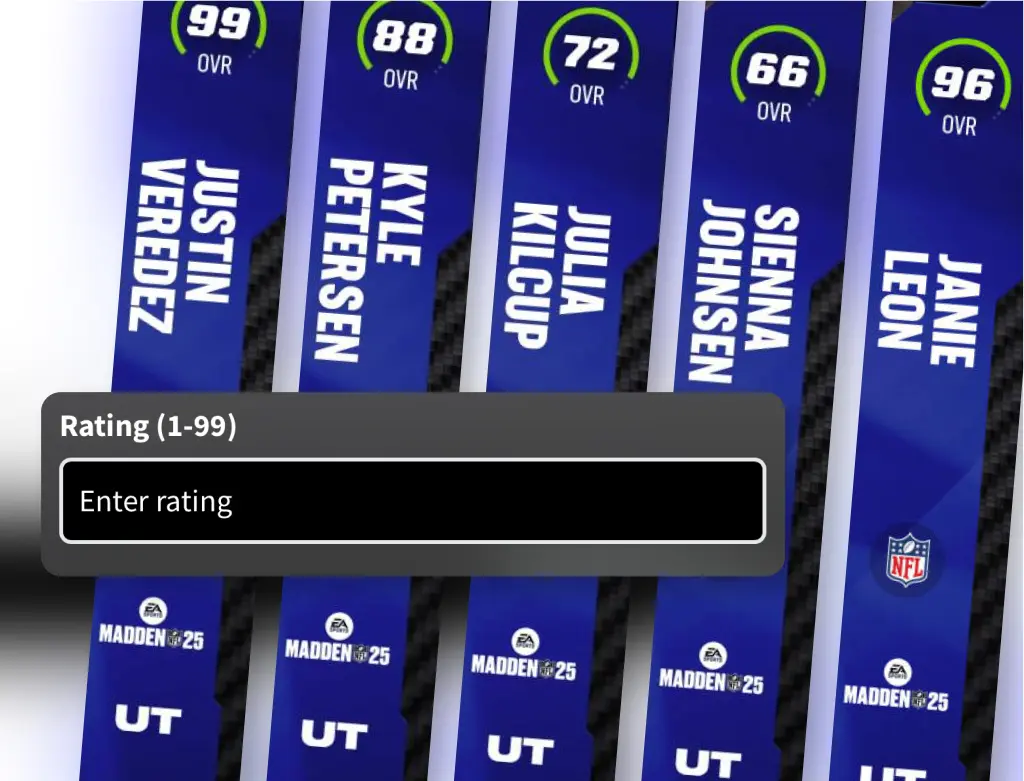
EA Sports put that to work by letting fans set their own Overall rating instead of assigning one. A number the guest chose is a number the guest defends, and defending it out loud is free reach for the brand beside it. Set completion pulls the same way, but our guide to event gamification covers that mechanic properly.
What does a trading card activation deliver?
A trading card activation pays for itself four ways inside one guest interaction, which is why it beats formats that do just one job.
A takeaway guests actually keep. The card lives in their camera roll and their group chat instead of a hotel bin, so your brand stays in circulation long after the booth is packed.
Marketing fuel. Guests post cards they're proud of, tag the brands on them, and hand your team a library of on-brand content for recaps and social. Our piece on turning guest content into marketing fuel covers planning that reuse before the event, and the experiential marketing statistics roundup has the numbers behind it.
A data capture step that doesn't feel like one. The card can't be built without a few fields, so guests fill them in willingly. They're not trading contact details for nothing; they're supplying the inputs to the thing they walked over for. Lead data comes back as an export after the event, ready for whatever your team runs. To tie it to pipeline, start with how to measure experiential marketing ROI.
Content for your displays. Finished cards surface on a live gallery and slideshow as they're created, turning each guest into the reason for the next. A wall of fresh cards recruits better than a staffer will.
Digital vs. printed trading cards
Snapbar trading cards are digital-first, and that's a design decision rather than a gap. Print sits alongside the digital card rather than replacing it: your event gallery can lay the front and the personalized back on one 4x6 sheet, which folds in half into a two-sided card. The activation, the data capture step, and delivery all still run on digital, because that's where the format is strongest.
| What you're weighing | Digital card | Printed card |
|---|---|---|
| Quantity | Unlimited, nothing over-ordered | Fixed run, ordered before you know turnout |
| Sharing | One tap to a guest's network | Reaches whoever is standing there |
| Data capture | Built into card creation | Needs a separate ask |
| Mid-event changes | Swap artwork or fields between sessions | Locked at the print order |
| Physical keepsake | A two-sided sheet you can print and fold on site | Yes, the main reason to add print |
Print earns its place in specific rooms. A VIP dinner where a physical keepsake is the point. A booth where a card in hand opens the conversation. Teams who want it add a printer beside the digital experience and print the two-sided sheet straight from the event gallery. What we'd push back on is making print the main event, because once printing is the constraint you inherit a line at the printer and a dependency on hardware in the room.
What does a trading card activation look like in practice?
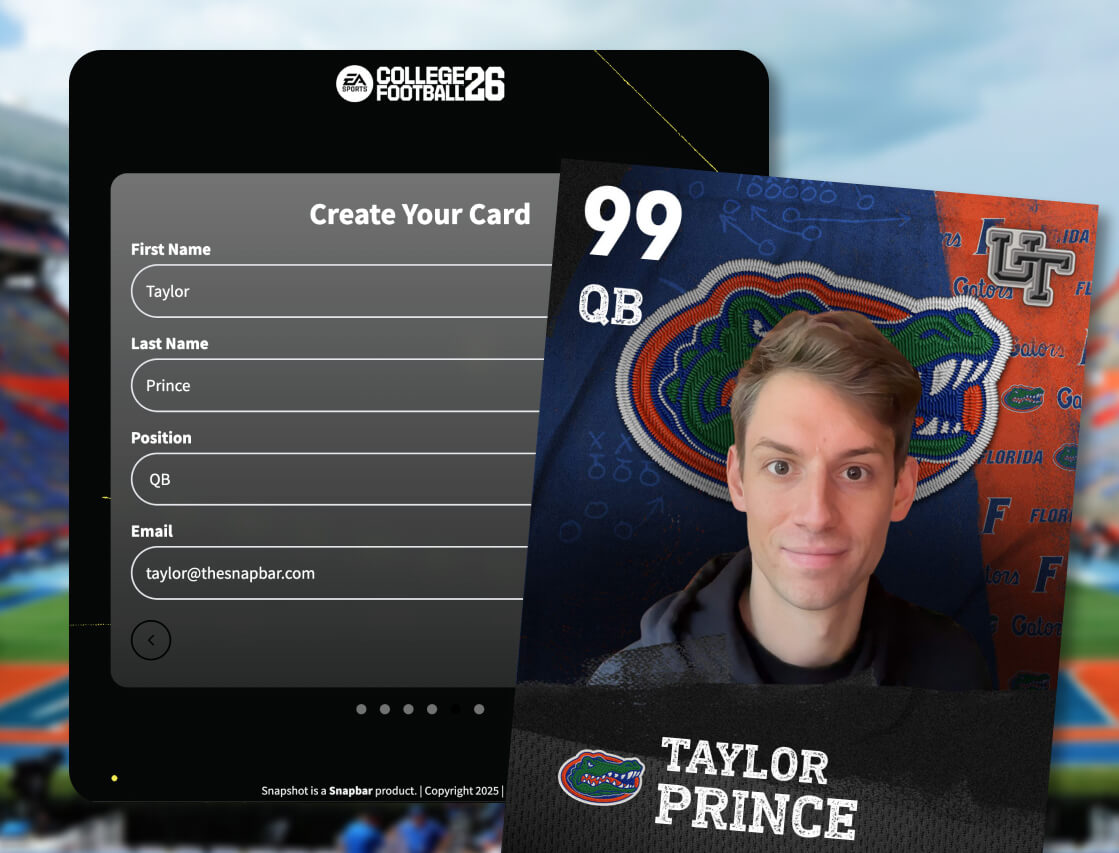
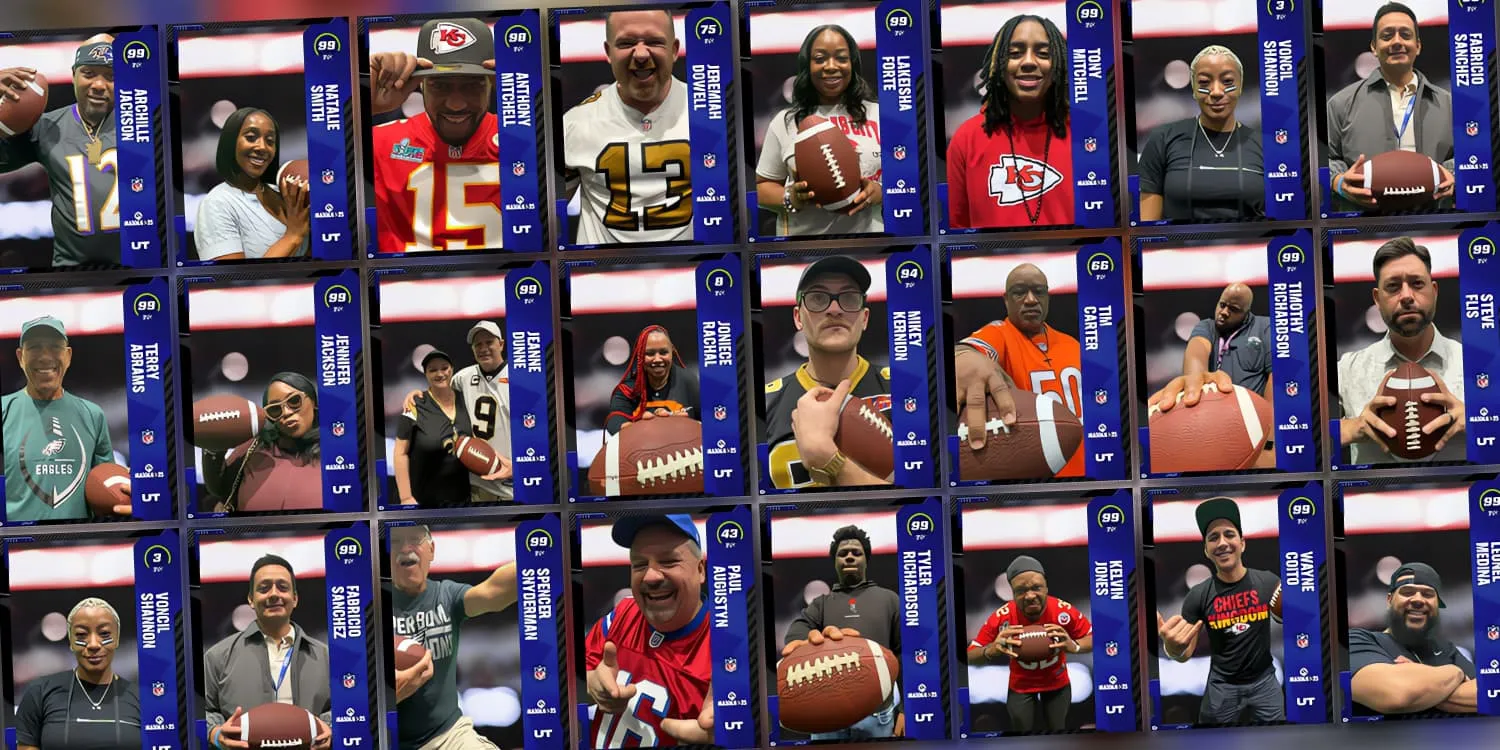
At the Super Bowl Experience Fan Zone, EA Sports and Youth Marketing Company worked with us to turn Madden NFL 25 into a personalized card for every fan who walked up. The brief was volume without a bottleneck: thousands of fans, a loud room, a promotional goal.
Fans took a live photo, entered their name, and chose their own Overall rating. The background dropped out automatically, the portrait landed inside an authentic Madden Ultimate Team layout, and the card arrived by email carrying a link to download Madden NFL 25 Mobile. No app, no queue for a device.
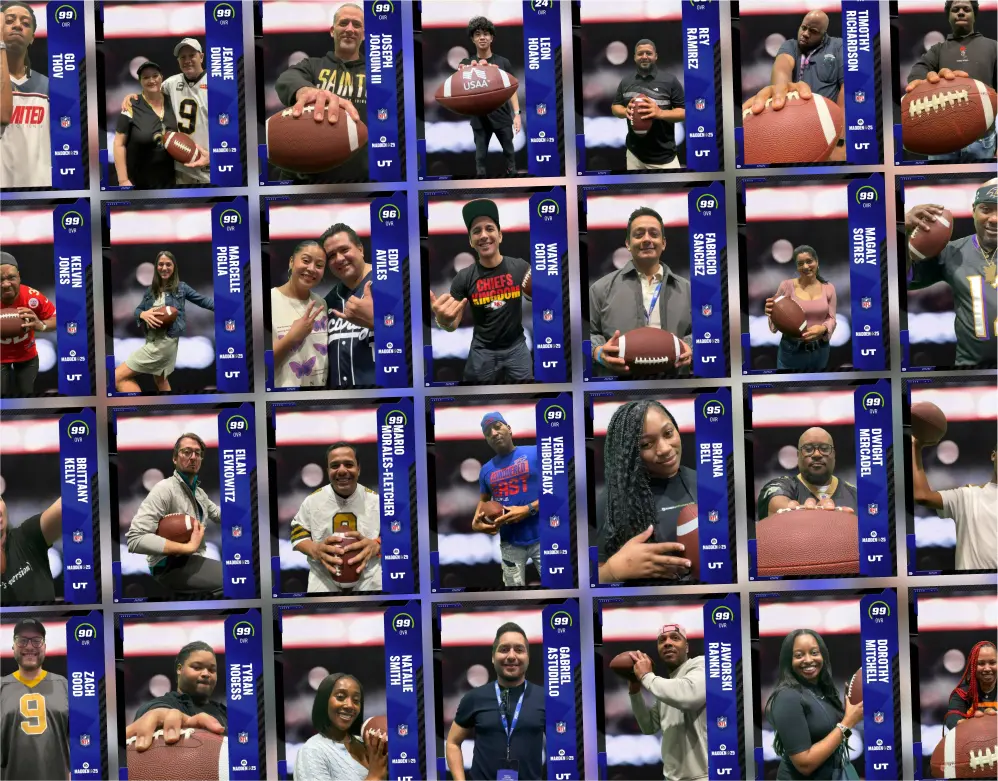
The self-selected rating was the sharpest part of the design. Fans compared numbers, argued about them, posted cards to settle it.
EA Sports, Super Bowl Experience Fan Zone
- 600+ custom trading cards generated and delivered across four days
- 300 cards in a single peak day
- Fans organically tagging EA Sports and the NFL as they shared
The full breakdown lives on the EA Sports Madden trading cards project page. Personal enough that fans wanted the card, branded enough that every share carried Madden with it.
What kinds of trading cards can you make?
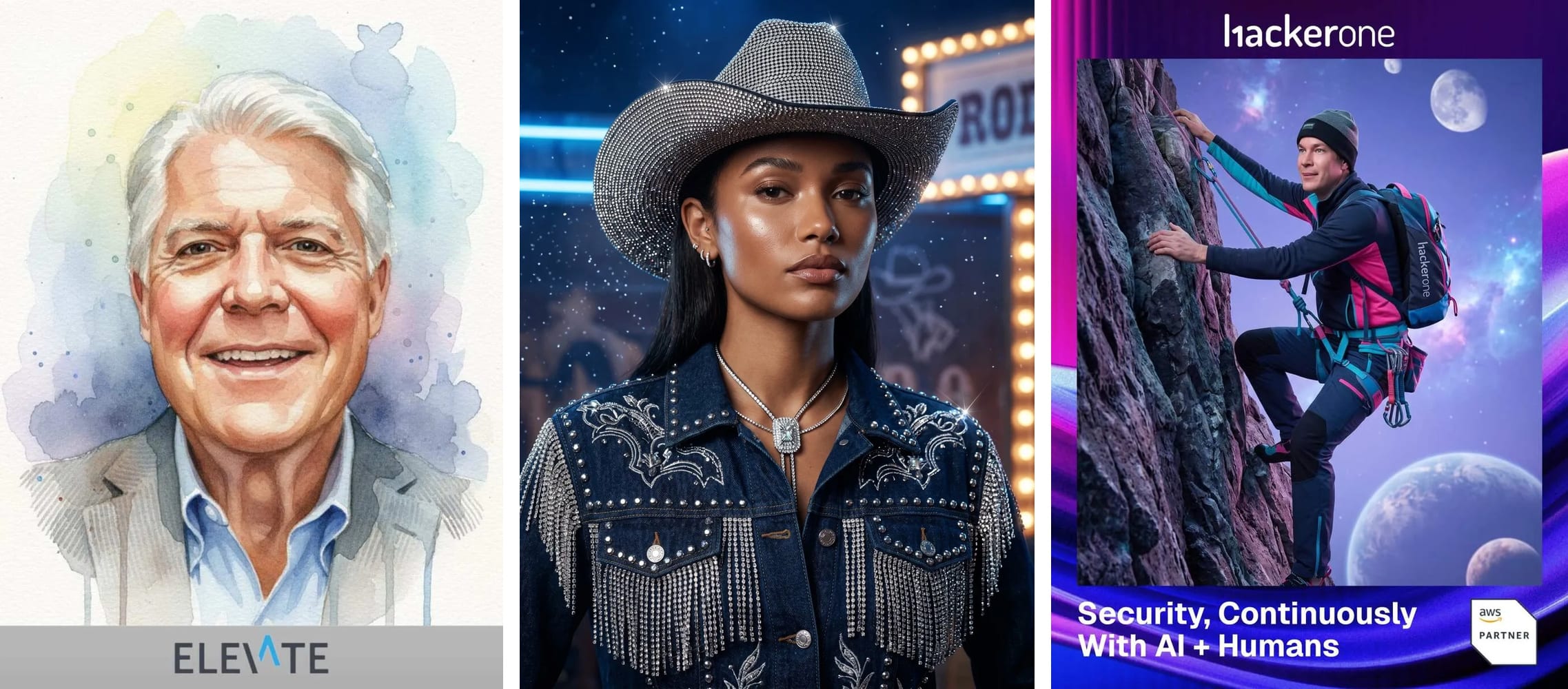
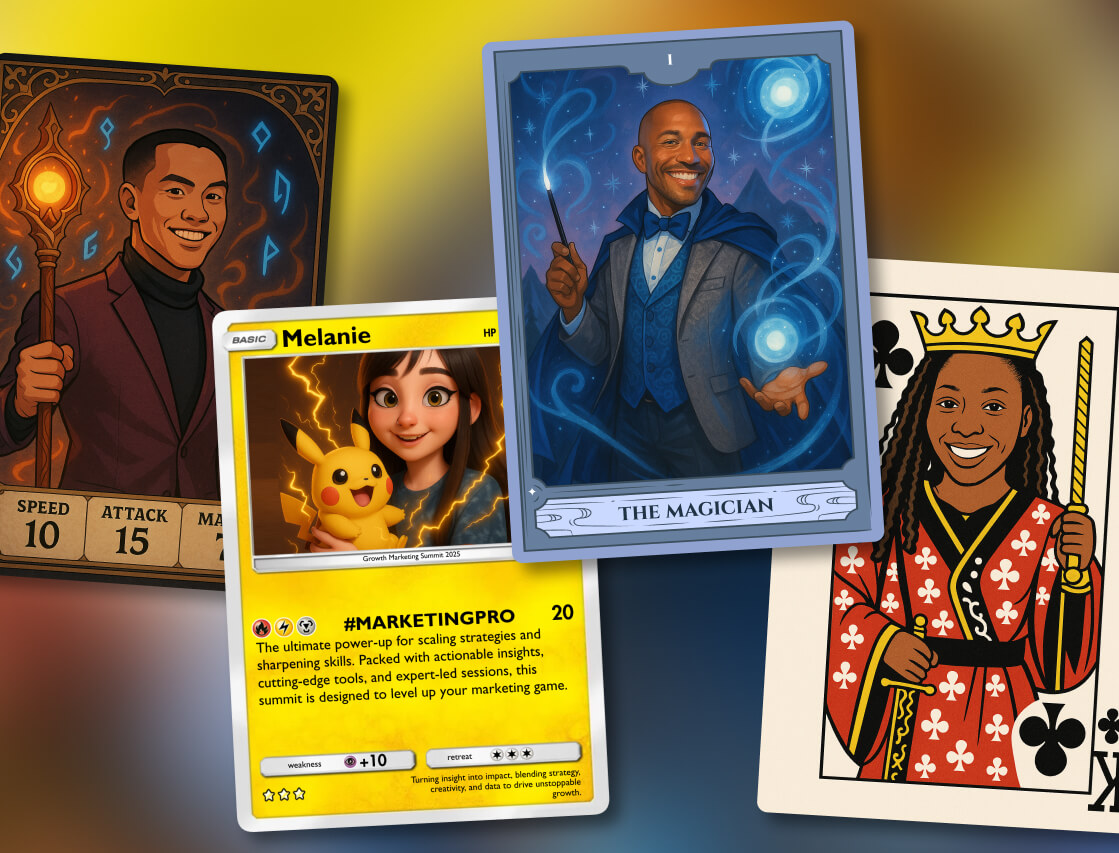
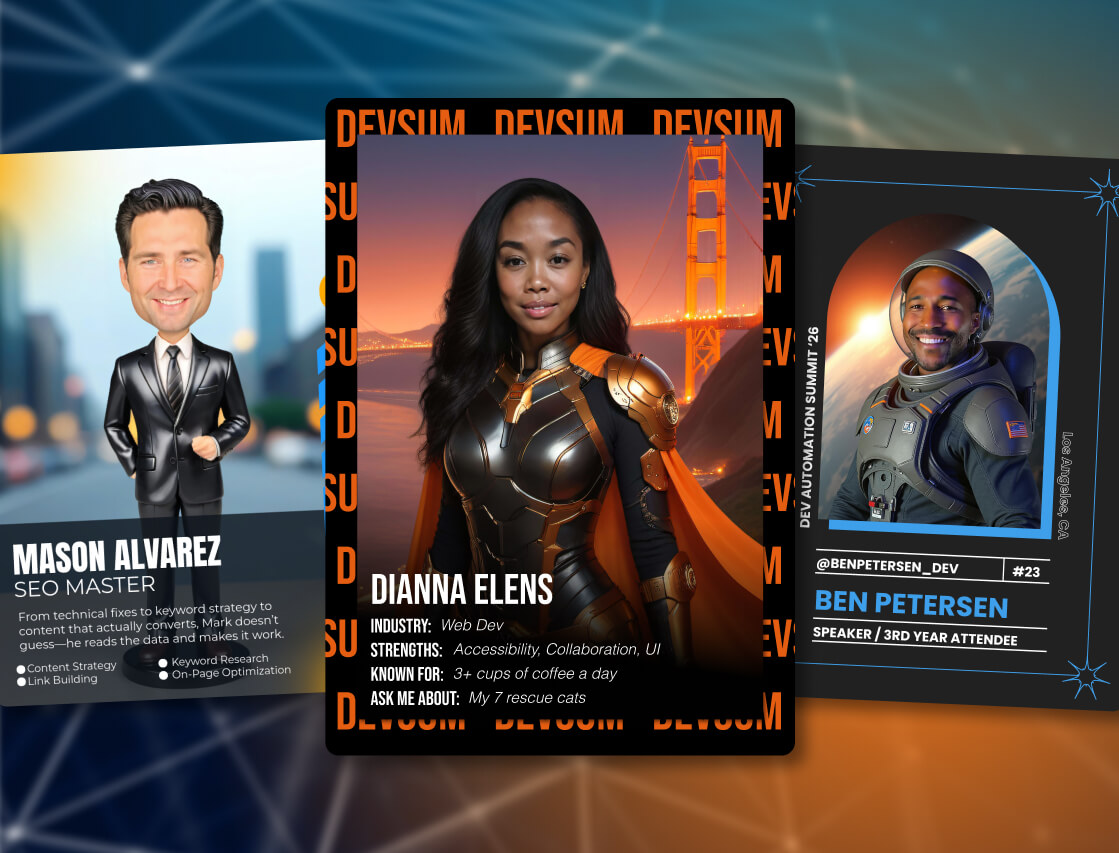
The card concept is where a trading card activation gets its personality, and it drives how much guests share. Seven starting styles sit on the trading card photo booth page, but most briefs land in one of five patterns.
| Concept | Best for |
|---|---|
| Classic gaming cards | Product launches and fan events wanting a nostalgic, collectible feel |
| Digital networking cards | Conferences where guests want something better than a badge scan to trade |
| Sports cards with stats and rarity | Fan zones and sponsorships leaning into competition |
| B2B cards with gamified stats | Trade show booths that want a named card to open the conversation |
| Illustrated or fantasy cards | Internal events and culture moments where the goal is delight, not qualification |
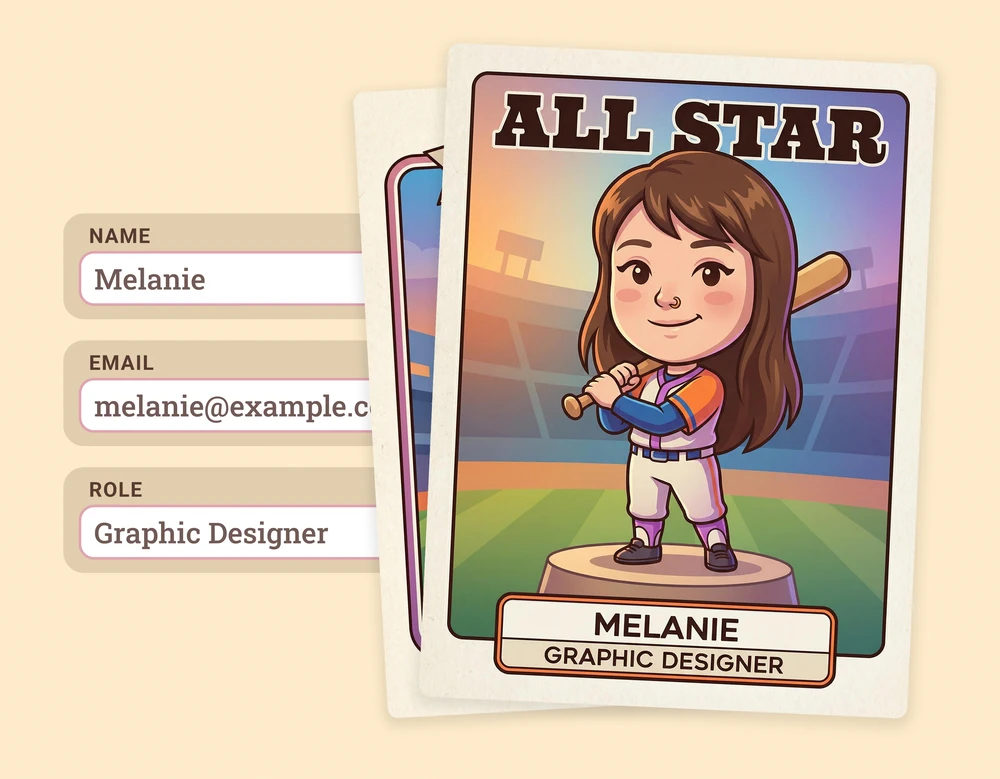
Each concept maps its fields to fixed positions, so whatever a guest types lands exactly where the design expects it. That mapping is the difference between a card that looks designed and one that looks like a template with text pasted over it.
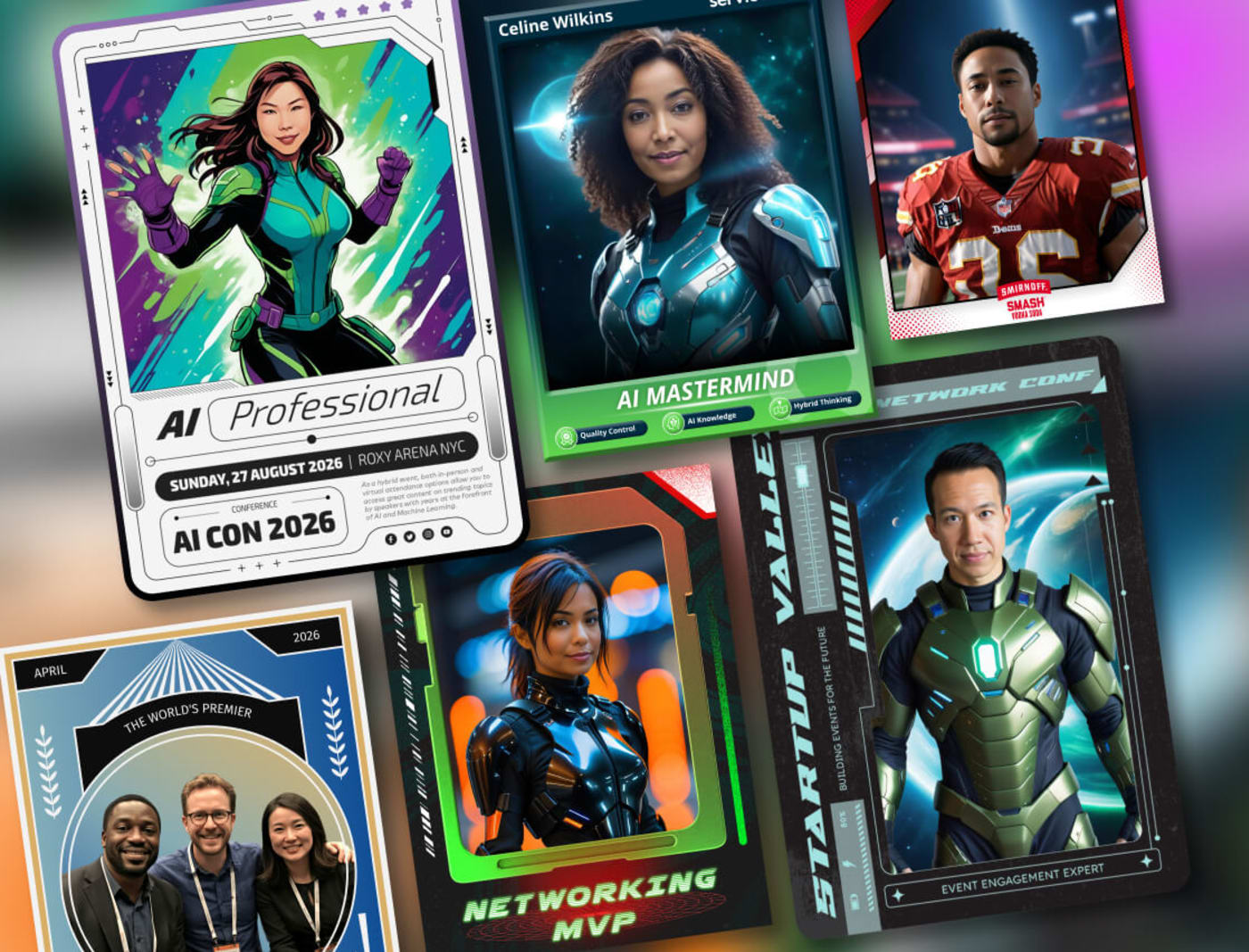
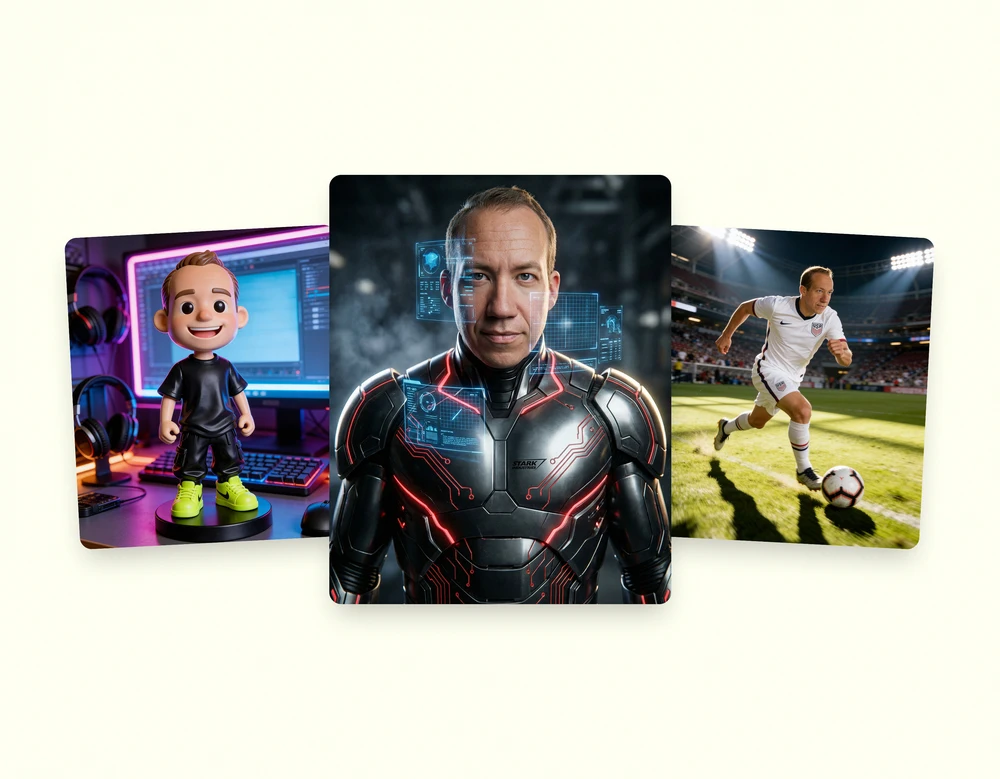
Any of these can carry the holographic treatment, which is a finish rather than a concept: the front tilts and shimmers in 3D, and the effect follows the card into the event gallery and into whatever link a guest shares. Someone opening that link gets the interactive card rather than a flat image, which quietly makes every share a demo.
Cards can have a back, too. Design it for each style the same way as the front, and it fills in from the guest's entry: their name, their title, the stat they picked. Anyone viewing the card, in the gallery or on a shared link, can flip it over, and guests can download the front, the back, or both sides.
Pick the concept before the artwork. It decides how many fields the card carries and how the layout behaves.
See it in action
Build your own Trading Cards activation
Your card design, your data fields, delivered to every guest in seconds and pushed straight to your event displays.
Explore Trading CardsOnce the concept is settled, run-of-show is the easy part.
How do you run a trading card activation?
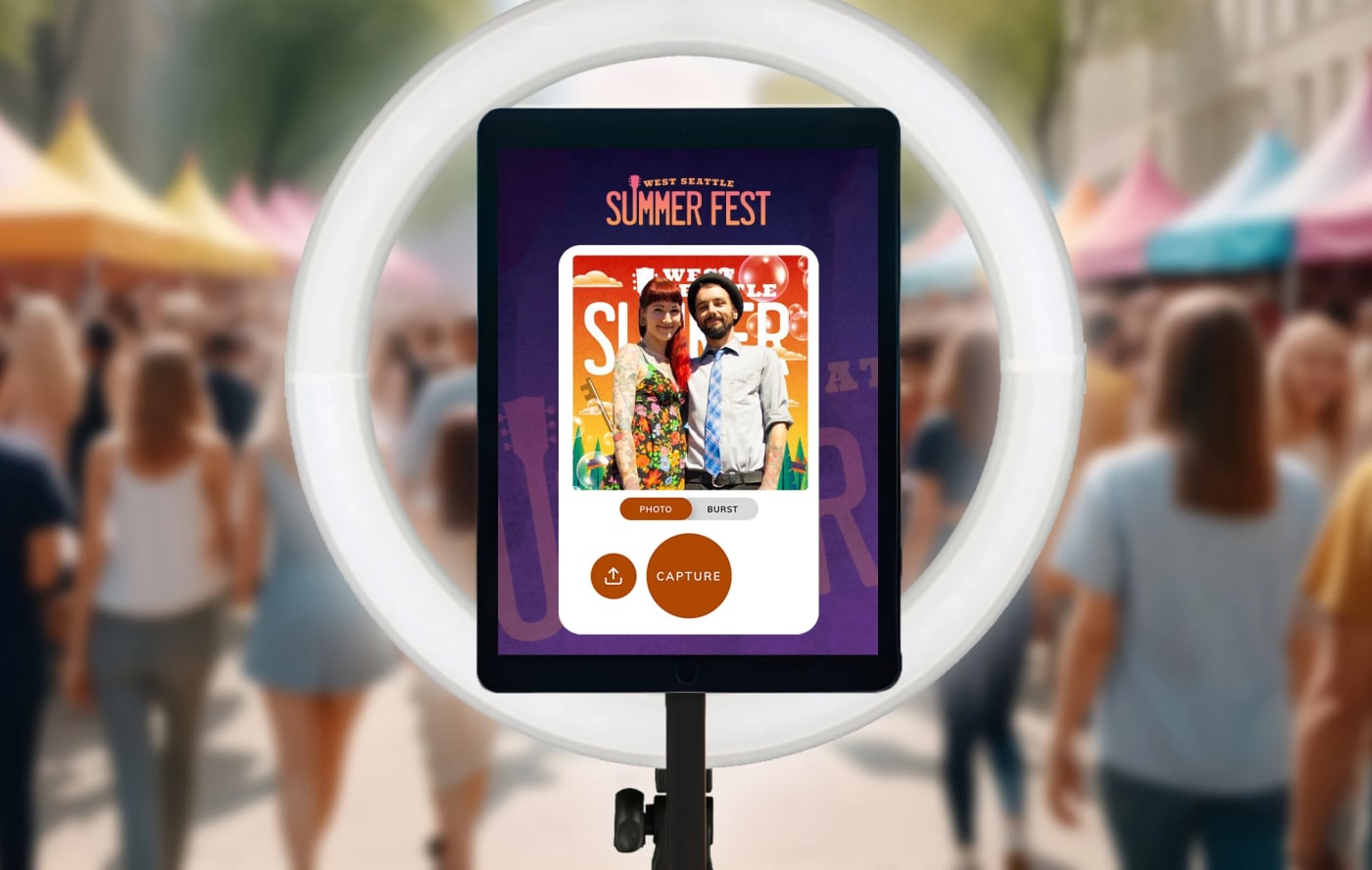
From the guest's side it takes under a minute and needs no app:
- The guest scans a QR code or opens the activation URL on their phone, a tablet, or a kiosk.
- They land on a branded microsite carrying your logo and colors.
- They capture a photo, or skip it if the design doesn't call for one.
- They complete a short form: name, email, and any custom fields the card uses.
- The card composes automatically, pairing the portrait with your artwork and dropping each answer into place.
- The finished card arrives by branded email or text and surfaces on your live gallery.
Everything hard happens before the doors open. We build the artwork, set field positions, choose the photo treatment, and test composition against real submissions. Most activations go from concept to launch in one to two weeks.
What to decide before you brief an activation partner
Six decisions shape the build. Having answers ready is the difference between a two-week turnaround and a month of back-and-forth.
Photo treatment. AI portrait or real photo. Real photos give the authentic sports-card look the EA cards had, but carry framing risk in a busy room. AI portraits are more forgiving, at the cost of literal likeness.
How many fields the card carries. Field count decides the composition path. Several fields that must sit in exact positions are better built on a template overlay, where positioning is reliable. One or two loose fields can run fully generated, allowing more expressive layouts.
Holographic or flat. With the holographic finish on, the front shines and tilts in 3D as a guest moves their phone, and the effect carries into every link they share. Decide early so the artwork is designed with the shine in mind.
One side or two. A back gives the card room for what the front can't hold, like a short bio, a full set of stats, or a sponsor line. It fills in from the same fields as the front, so settle what goes on it before the form is final. Tilt and flip are separate toggles, so you can run either, both, or neither.
Print expectations. If a physical card matters to someone in the room, name it in the brief. You'll need a printer and 4x6 stock on site, and the sheet prints front and back together so it can be folded into one card. Easier to scope up front than to bolt on show week.
What the activation is for. Collectibility and qualification are different goals. If the objective is scoring and segmenting the people who walk up rather than giving them something to keep, a persona quiz activation is the better format.
Trading card marketing works because the guest walks off holding proof they were there, in a form they want to show people, with your brand on it. Get the concept and the fields right and the rest runs itself.
Want to see what your brand's card would look like?
Get a QuoteOr explore: Trading Cards | Activation Concepts