
Table of Contents
The activation is over. The badges are in a bin somewhere, and one more thing your brand sends is still on its way to every guest who took part. That's the event content delivery email: the automated message that hands a guest the photo, video or card they just made. Most teams do brief it. They brief it last, after the backdrop, the prompts and the staffing, which is how a brand surface with a guaranteed audience ends up written by whoever had the file open. Fourteen years of watching that email land, and across our activations it is still the piece of content the most guests actually open.
Key takeaways
- It's the first thing your brand sends a guest after an activation, and it carries the content they made. Email or text.
- They open it because they're collecting something of their own, not because a subject line worked.
- Arrival is a technical question with published rules. A mistyped address and an untrusted sending domain are what quietly break it.
- Brief it like signage. More of your guest list looks at this than at anything else you build.
Sam Eitzen, our CEO, talks through this email in the short video below.
Here's what sits behind it, from the second a guest types their address to the second the content lands.
What is an event content delivery email?
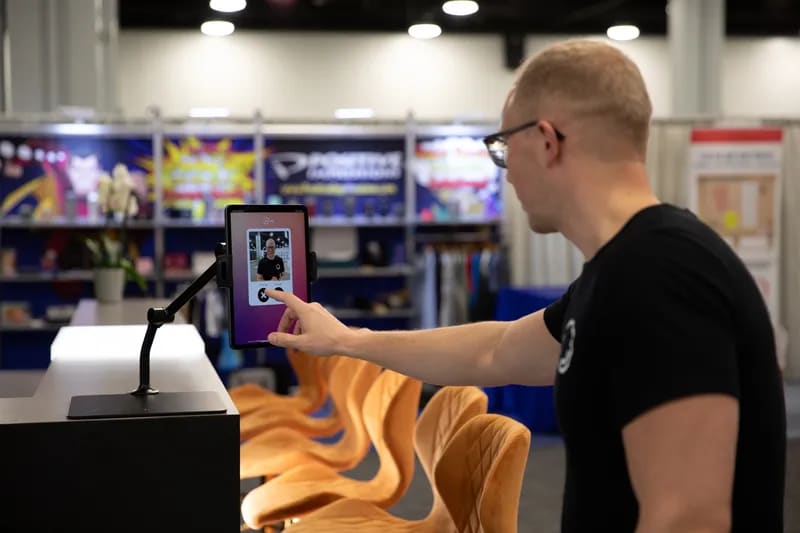
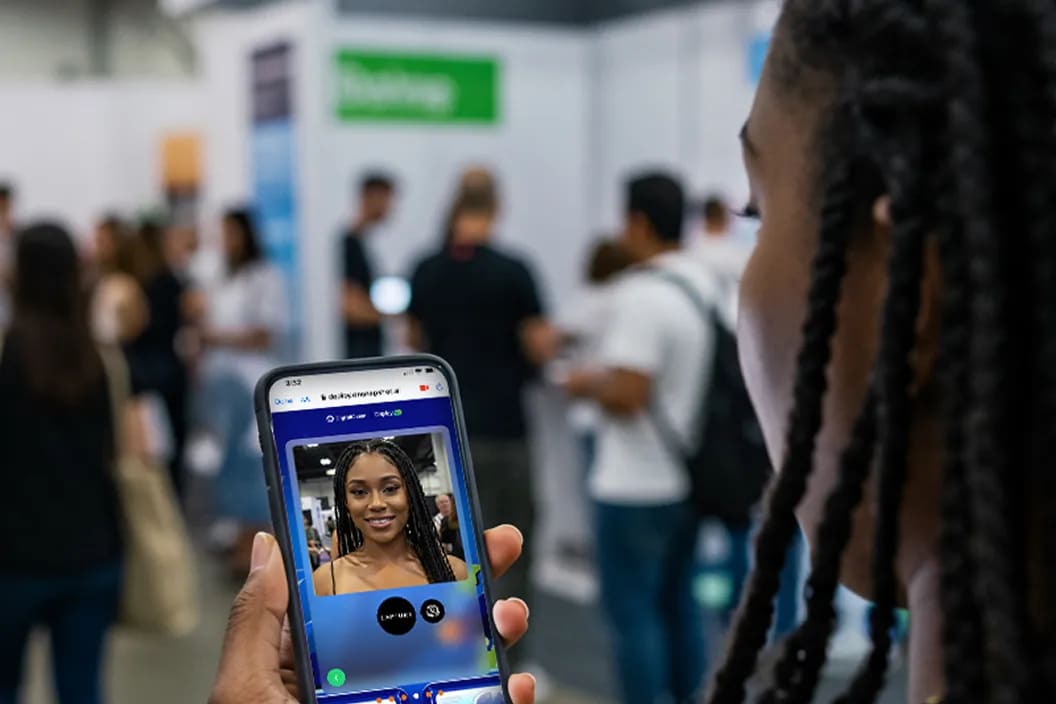
An event content delivery email is the automated message that sends a guest the content they just made at an activation, by email or text, moments later. The address comes from the data capture step inside the experience, where the guest enters their details during their session. Some teams call it the photo delivery email, some the content email. The job is the same.
That makes it a different animal from a marketing send, and the difference isn't tone. A marketing email interrupts someone to make an offer. A delivery email finishes something the guest started thirty seconds ago and is waiting on. Sam described the exchange at a fan-zone activation running on our platform: "it wasn't even a question for people of typing in their email address because that's actually how you're going to receive the outputs."
Same inbox, different contract.
Why do delivery emails get opened when marketing emails do not?
Because the guest made the thing inside it. In the Journal of Consumer Psychology, Michael Norton, Daniel Mochon and Dan Ariely named the IKEA effect: people value what they build above the identical object built by someone else. The boundary they put on it is what matters for an activation.
Labor leads to love, but only to a point
"We show that labor leads to love only when labor results in successful completion of tasks; when participants built and then destroyed their creations, or failed to complete them, the IKEA effect dissipated." Norton, Mochon and Ariely, "The IKEA effect: When labor leads to love," Journal of Consumer Psychology, 2012.
A guest who poses, picks a style and waits on a render has done labor. The task isn't finished when the screen says thanks; it's finished when the content reaches them.
A second effect stacks on top. Kahneman and colleagues found that retrospective evaluations of unpleasant episodes "are often dominated by the discomfort at the worst and at the final moments of episodes." Their study looked at unpleasant experiences, so read it as a lens on how endings get weighted, not a finding about a good afternoon at a trade show. Either way, the delivery email is the last thing that happens.
Measured through 2026, our delivery emails average a 95% open rate, so whatever you put in that message reaches more of your guest list than anything else you make for the event. Our read on visual activations as a lead engine rests on the same pattern.
What decides whether the email actually arrives?
Two things, and neither is the copy. The address has to be right, and the inbox provider has to trust who sent it.
The second stopped being a matter of vendor opinion in 2024. Google's email sender guidelines say that "starting February 1, 2024, all email senders who send email to Gmail accounts must meet the requirements in this section," and those requirements are specific: authenticate the sending domain with SPF or DKIM, keep spam rates "below 0.3%," and at volume add DMARC. The same page draws the line this article sits on. Marketing and subscribed messages "must support one-click unsubscribe." A delivery email is neither, and sending it as though it were is one way a wanted message gets filed as bulk. On our side, guest deliveries go out as transactional mail with an HTML and a plain-text part, so they read to a provider as what they are.
The first is a design problem at the booth, and it's the easier of the two, because you can catch it while the guest is still standing there. The data capture step at the booth now checks the address as it's typed: it spots a typo like gmail.coml, offers a one-tap correction, and blocks undeliverable domains before the guest can submit. Google's own guidance is to "confirm each recipient's email address before subscribing them." This is the activation version of that.
Which loops back to the IKEA effect. A delivery email that bounces isn't only a lead you can't use. It's a guest who did the work and never got the thing.
What belongs in a post-event email to attendees?
The content, first, with no hunting for it. After that, treat it like signage every attendee is guaranteed to read.
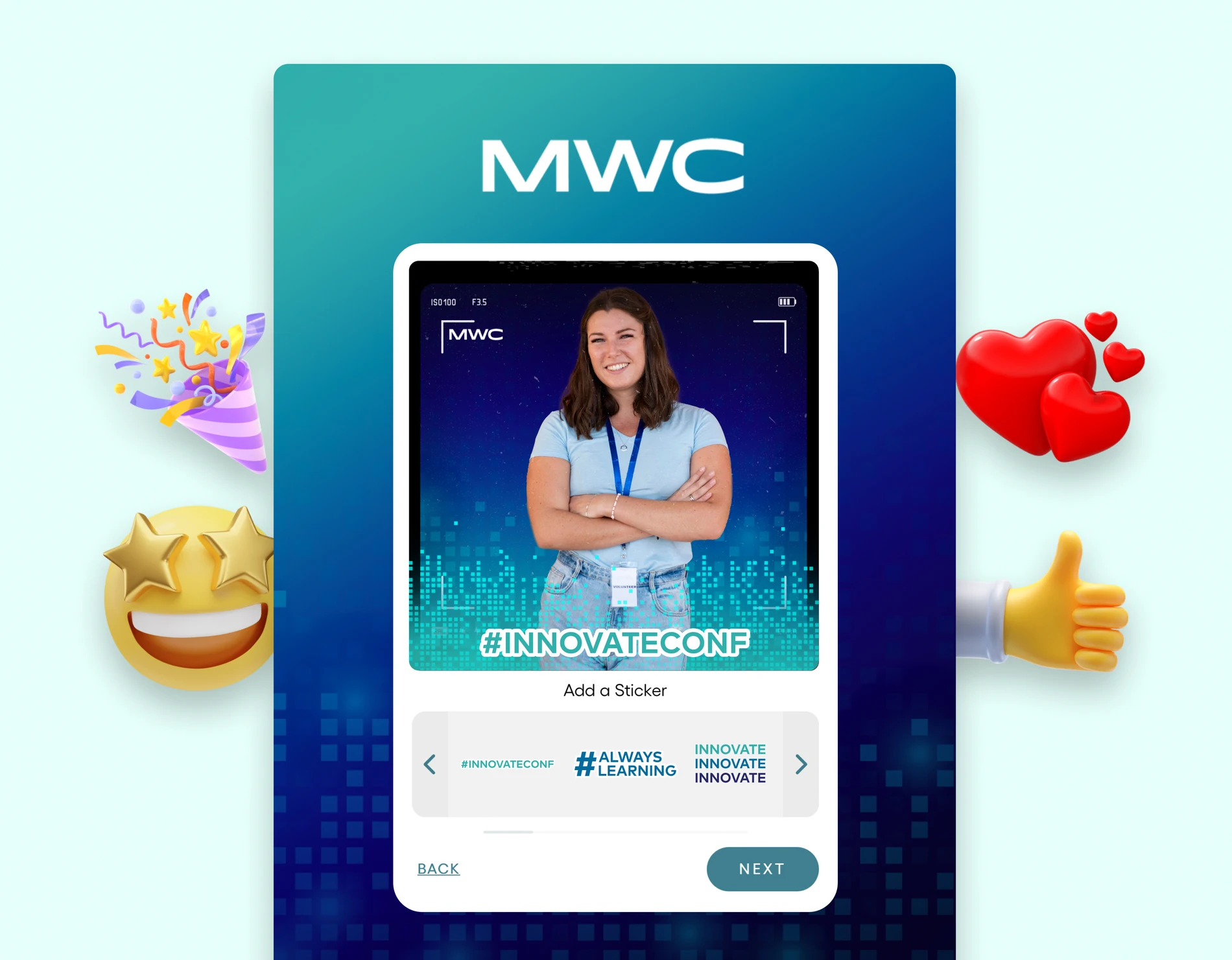
Your branding carries onto the guest-facing surfaces the platform already runs: branded email delivery, the sharing page, the microsite. So it's already a brand surface, behaving like one whether or not anybody wrote it on purpose. The practical version of "brief it" is deciding what the guest should be able to do next. See the rest of the gallery. Repost the image with the frame still on it.
Sam is blunt about how light the ask can be. Some brands, he says, "don't even care for your email address. They literally are just using it to send you something. In the email, they might have a CTA that says, check out our new product XYZ and maybe you click on it." A soft ask to a pleased guest beats a hard one to an unimpressed one.
One decision sits underneath the rest. Guests can get their content by email or by text, and the two aren't interchangeable. Text lands fast and gets read on the floor; email carries more and is still there next week.
How do you know the delivery email worked?
Three numbers, in order of how much they tell you. Open rate says the message arrived and the guest wanted it. Click-through to the sharing page says they went to collect the content rather than glance at a preview. Onward shares say the content left your guest list and travelled somewhere you didn't pay for, which is what turns an activation into marketing fuel.
What they won't tell you is what happened to the lead record attached to that address. That's a separate question with its own answer: where event lead data goes after a guest enters it.
If the delivery numbers look strong and the pipeline numbers don't, the email is doing its job and the hand-off isn't. Better to learn that the week after a show than the quarter after one.
None of this is exotic. The delivery email goes to people who asked for it, it's the last thing the activation does, and it reaches nearly everyone who took part. Give it the half hour you gave the backdrop. Decide what it says, check the address is real, and make sure the brand on it is yours. Themed to the room, delivered to the inbox.
Ready to plan the activation this email comes from?
Get a QuoteOr explore: The Experiential Marketing Platform | How It Works