It's Saturday at a farmers market, stop seven on a twelve-city sampling tour. The tray is empty by noon. The tally clicker says 1,400. Your ambassadors had a great morning, the product landed, and nobody on the team knows a single name.
That isn't a failure. Product sampling events exist because putting the product in someone's hand works, and your team is good at it. What's easy to miss is how much the tour leaves behind: hundreds of people who liked what they tasted, and no way to reach any of them. A branded prize wheel beside the table changes that, without touching the sample. It's one of the simplest things an experiential marketing platform can add to a program you already run well.
Key takeaways
- Keep the sample free for everyone. The wheel is the optional extra, never the price of a taste.
- A shot at a full-size product or a store voucher is the reason a sampler chooses to leave details and consent.
- One spin per email address, and winners get their claim code on screen and by email.
- Count players against your own sample tally. That ratio is the number your tour has never had.
Why do product sampling events lose track of who tried the product?
Because a sampling table is built to hand things out, not to take anything back. The tally clicker counts samples. It can't count people, and it can't tell you which of them would buy.
That gap costs more than it looks. In two field experiments, Kapil Bawa and Robert Shoemaker found that free samples, unlike coupons, can produce sales effects observed "as much as 12 months after the promotion," and that how well sampling works can vary widely, even between brands in the same category (Marketing Science, 2004). The lesson for a tour: sampling pays out slowly and unevenly, so the team that knows who it sampled is the one that can learn which stops, products and audiences paid off.
Most experiential sampling roadshow recaps report the same thing: samples handed out, sometimes a photo of the crowd. Ask what happened to the people in that crowd and the honest answer is usually that nobody knows.
How does a prize wheel turn samplers into known leads?
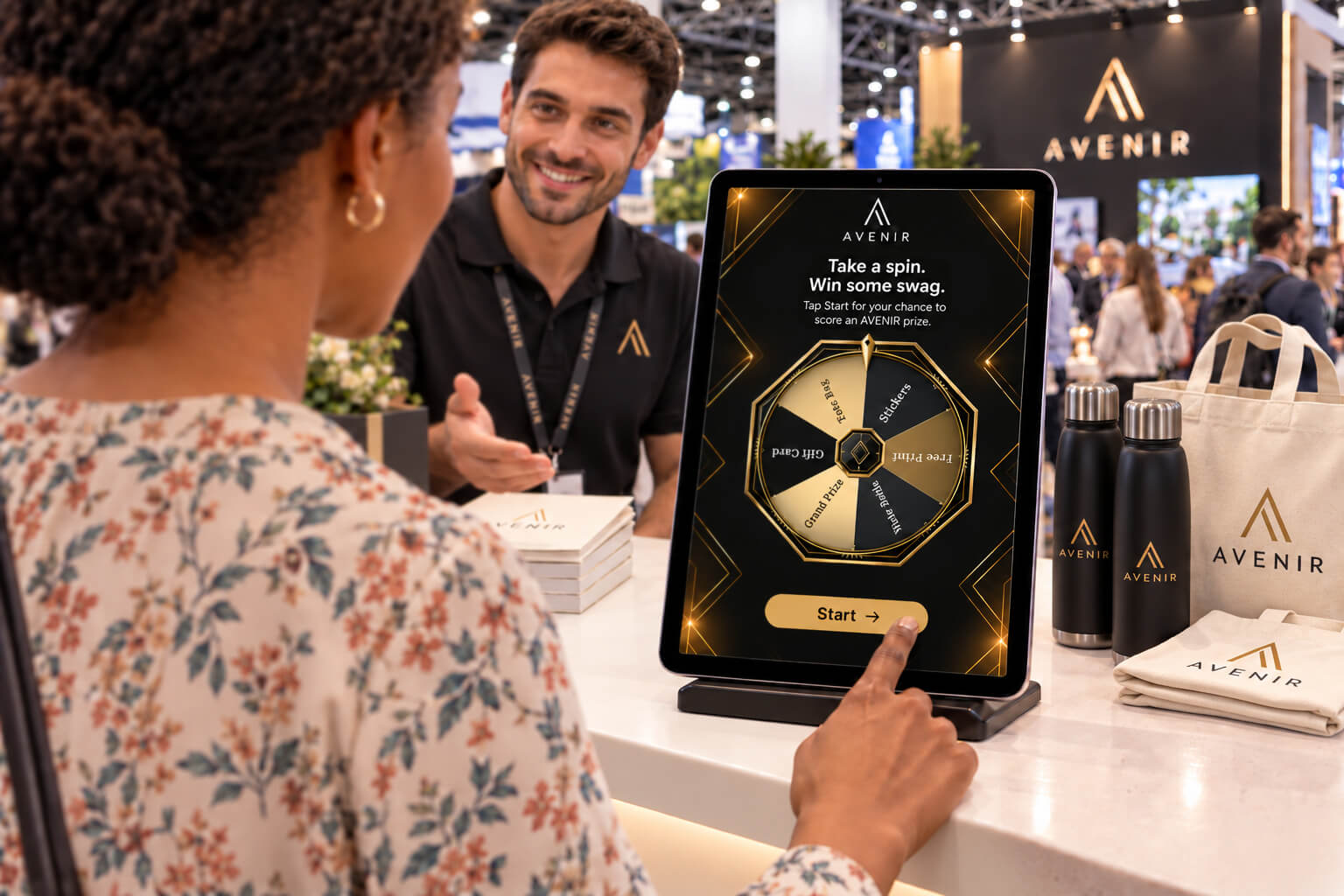
The play is simple. Everyone gets the sample first, free, no questions asked. Beside the table sits a branded wheel with prizes worth stopping for: a full-size product, a bundle, a voucher for the store down the street. A guest who wants a shot taps Enter, adds their details and consent once, and spins.
That entry step is where an anonymous sampler becomes a known lead, by choice. Spin to Win runs it as a data capture step before the spin, so every player arrives with the details you asked for and a record of what they agreed to hear about. People who just wanted the sample walk away happy, and nobody has been made to pay for a taste with an email address.
Be honest with yourself about why it works. A study by Stanford and MIT economists found that people who say they care about privacy will "relinquish private data quite easily when incentivized to do so" (NBER, 2017). A small prize really does move people to share. That's exactly why the brand owes them a clear opt-in, a sample that was free either way, and follow-up about what they actually asked for.
What are the best pop-up activation ideas for a prize wheel?
The wheel fits anywhere a sampling team sets up, from product sampling events in a grocery aisle to a branded shop on a busy street. These are the four setups we'd start with.
The sampling table
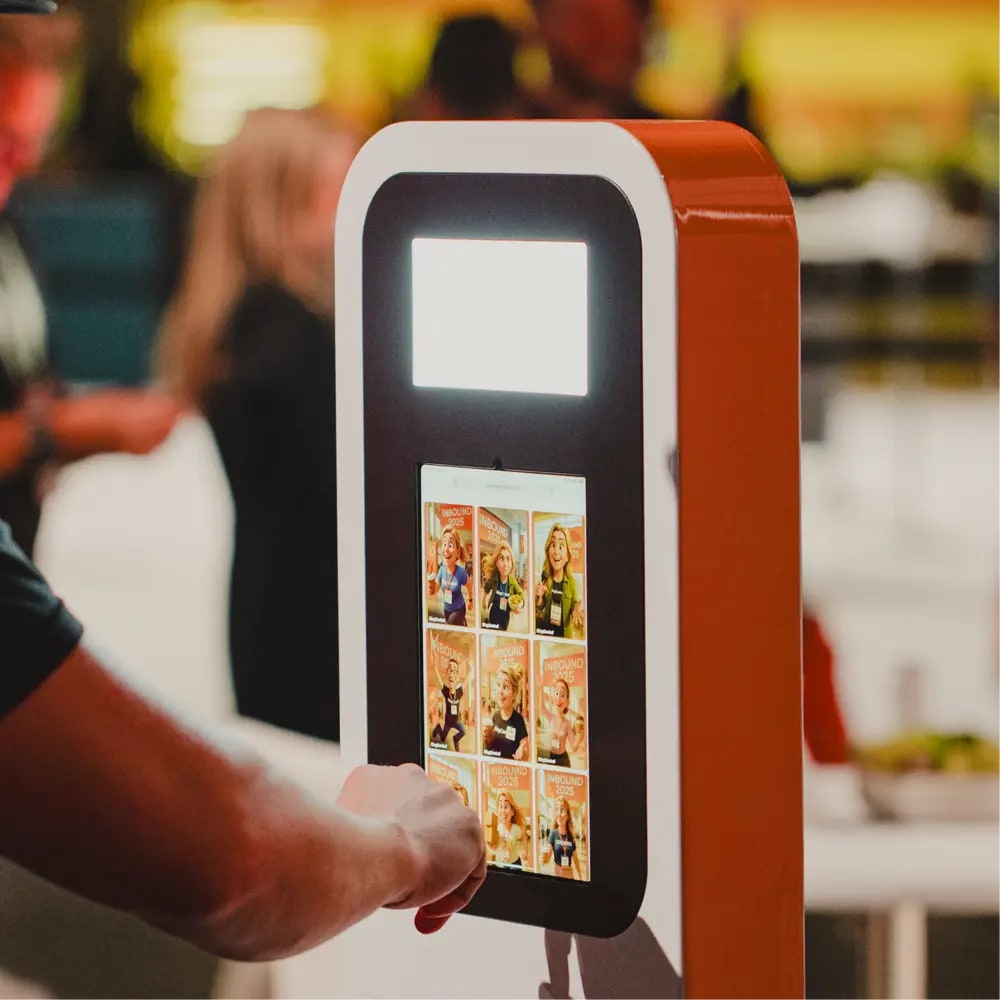
A tablet or kiosk on the end of the table, a few steps from the tray. The ambassador hands over the sample, points at the wheel, and stays free to keep sampling while guests play. When someone wins, the same ambassador hands over the prize, which is the best conversation of the day.
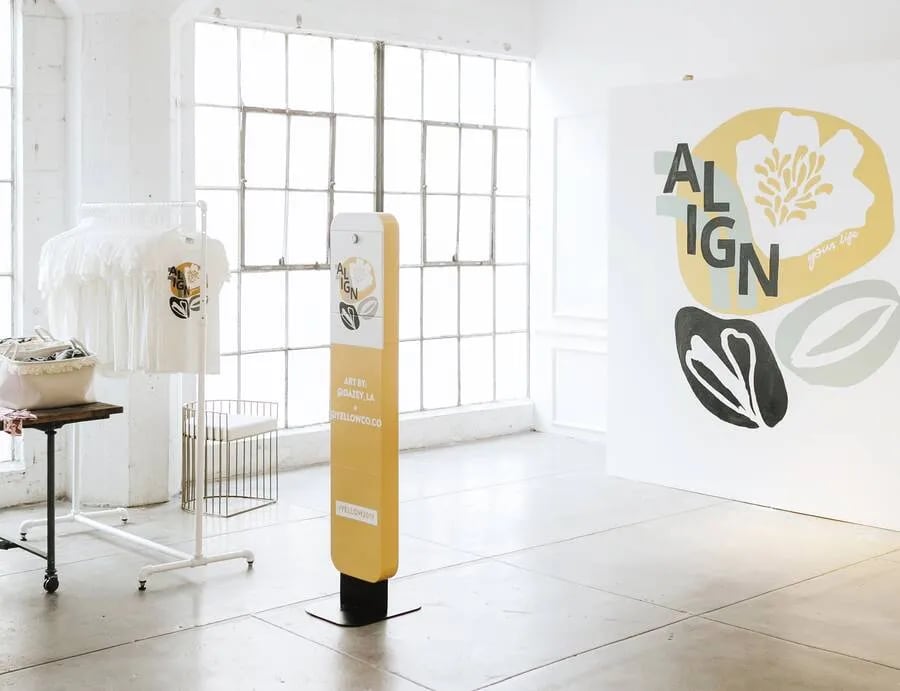
The brand pop-up shop
Put the wheel on a big screen and let guests spin from their own phones. They scan the code on the display, enter their details on the phone, and watch their spin play out on the wall. Spins play one at a time: when the wheel is free, whoever taps spin first goes next. A wheel turning on a screen pulls people in from the doorway, so this is the mode we'd pick for a pop-up that needs foot traffic. If you're planning the shop itself, our page on brand activations for product launches covers the wider set of formats.
Festival and stadium stops
Loud, crowded and short on table space, so phones do the work. A QR code on the tent or the sampling cooler gets guests into the wheel without everyone crowding one screen. Our guide to festival brand activations covers the sponsorship side of these stops.
The launch-day version
Launching the product at a single event rather than on tour? The same wheel works there, with samples or early-access codes as prizes. We cover that setup in our product launch activation ideas.
Whichever you pick, the wheel runs on a kiosk or iPad at the table, or on a big screen with guests spinning from their own phones. Snapbar provides the platform. The hardware, the brand ambassadors, the vehicle and the samples are yours or your agency's.
How do you set up a prize wheel for a sampling tour?
Start with the prizes, because they decide who plays.
Point every prize at a purchase. A full-size version of what they just tasted, a bundle, a voucher redeemable at a retailer that stocks you. Generic swag pulls people who like free things. A prize tied to the product pulls people who might buy it.
Ask one qualifying question. A single button choice in the entry form, such as "Do you buy this for a store, an office or yourself?", gives your retail or sales team something to route on. One question. Sampling moves fast, and a long form empties the wheel.
Brand it to the product. Each prize gets its own artwork and colors, and the winner email can show the prize artwork too, so the wheel looks like part of the launch rather than a carnival game.
Know what one spin per email address means. Each email address gets one spin within an activation session, so nobody can keep replaying under the same address; it counts addresses, not people, so it won't stop someone with a second email.
Build it, then let us approve it. You can create the wheel yourself in the platform, and our team approves it before it goes live. Leave time for that before the first stop.
Plan stops around the calendar. The platform reports plays by day, not by location, so run one stop a day where you can, or log your stop dates, and plays by day becomes plays by stop.
Two rules come before any of it. Check your promotion rules, and any retailer or venue rules, with your legal team before the tour starts. And alcohol, cannabis and other age-restricted sampling programs carry rules of their own, so talk to us and your counsel first.
Odds and inventory deserve their own decisions: you can set how rare each prize is separately from how many you packed. We walk through that in the trade show prize wheel play, and it applies on tour too.
See it in action
Put a branded prize wheel beside your sampling table
Prizes you choose, odds you control, and a lead with consent behind every spin.
Explore Spin to Win
Once the wheel is set, the question every brand manager gets after the tour is what it produced.
How do you measure a sampling tour with a prize wheel?
Read what the platform records against the count your team already keeps. The wheel knows who played; your tally knows how many samples went out. Put the two together and you have a capture rate.
| The platform reports | It doesn't report |
|---|---|
| Players, each with the details and consent they gave | How many samples your team handed out (that's your tally) |
| Winners, and prizes your staff mark as claimed | Which stop a play came from, beyond plays by day |
| Win and claim rates, and prize distribution | Purchases, store visits or sales lift |
| Leads on the lead-capture card, and a Winners CSV export | Whether a sampler who skipped the wheel liked the product |
Two proxies matter. Capture rate is players divided by samples handed out: the share of people who tried the product and chose to stay in touch. Claim rate is the share of winners who came back to collect. Both are proxies. Neither one is a sale, and it's worth saying so in the recap. Our guide to measuring event activation ROI covers how to carry numbers like these through to pipeline and revenue.
What happens to the leads after the tour?
Winners get their claim code on screen and in a winner email; Spin to Win delivers by email only. Your staff mark each prize claimed from the Winners tab, so the list stays clean across stops.
Everyone who opted in should hear from you about what they asked for, and soon, while they still remember the taste. A voucher reminder, a store locator, the launch they asked to hear about. For where the data goes next, read where your event lead data actually goes.
And if the brand wants content from the tour as well as leads, run a capture experience beside the wheel. AI Product Placement, for example, puts the product into the guest's own photo, and our activation concepts collect more ideas like it. Let the wheel decide who stays in touch, and let the capture give people something worth sharing.