
Table of Contents
The best product launch activation ideas give guests something to do with the new product, not just something to look at. You already have the product, the room and the creative. What decides whether the launch gets talked about next month is what people carry out of that room, and whether it keeps reminding them.
Below are 12 ideas we'd put in front of a launch team in 2026, grouped by what the launch needs: product-led content, a reveal the whole room joins, buyers who qualify themselves while they play, and reach beyond the venue. Each one ends on what the brand gets back.
Key takeaways
- Pick launch activation ideas by what the launch needs from the room, not by which format looks newest.
- Interest wins the first conversation. A visible artifact the guest keeps, like a portrait, a card or a clip, wins the ones after.
- Every idea here returns content and lead data from the same moment.
- Launches with custom AI creative tend to book at the longer end of a month, so start earlier than you think.
What makes a product launch activation idea work?
A product launch activation works when the thing guests make or take home keeps the product in view after the night ends. Being interesting gets you talked about tonight. Being visible gets you talked about in March.
That split comes from research on word of mouth. Jonah Berger and Eric Schwartz studied everyday conversations about more than 300 products, plus a field experiment across cities, and found that more interesting products got more immediate word of mouth but no more ongoing word of mouth. The products that stayed in conversation were the ones the environment kept cueing, or that people could see.
Interesting starts the conversation. Visible keeps it going.
Products that were cued by the environment or publicly visible received more word of mouth both right away and over the following months. Interest alone moved only the first wave. (Berger and Schwartz, Journal of Marketing Research, 2011)
A launch has interest covered on the night. The job of the activation is the second half: a portrait with the product in it, a card that keeps moving when it's shared, a clip in the guest's camera roll. Those are the cues. Our product launch activations page collects the concepts teams build these from; the ideas below are how we'd put them to work.
Which product launch activation ideas put the product in guests' content?
Start here if the product is visual and you want it in every photo that leaves the room.
1. Product-placement portraits
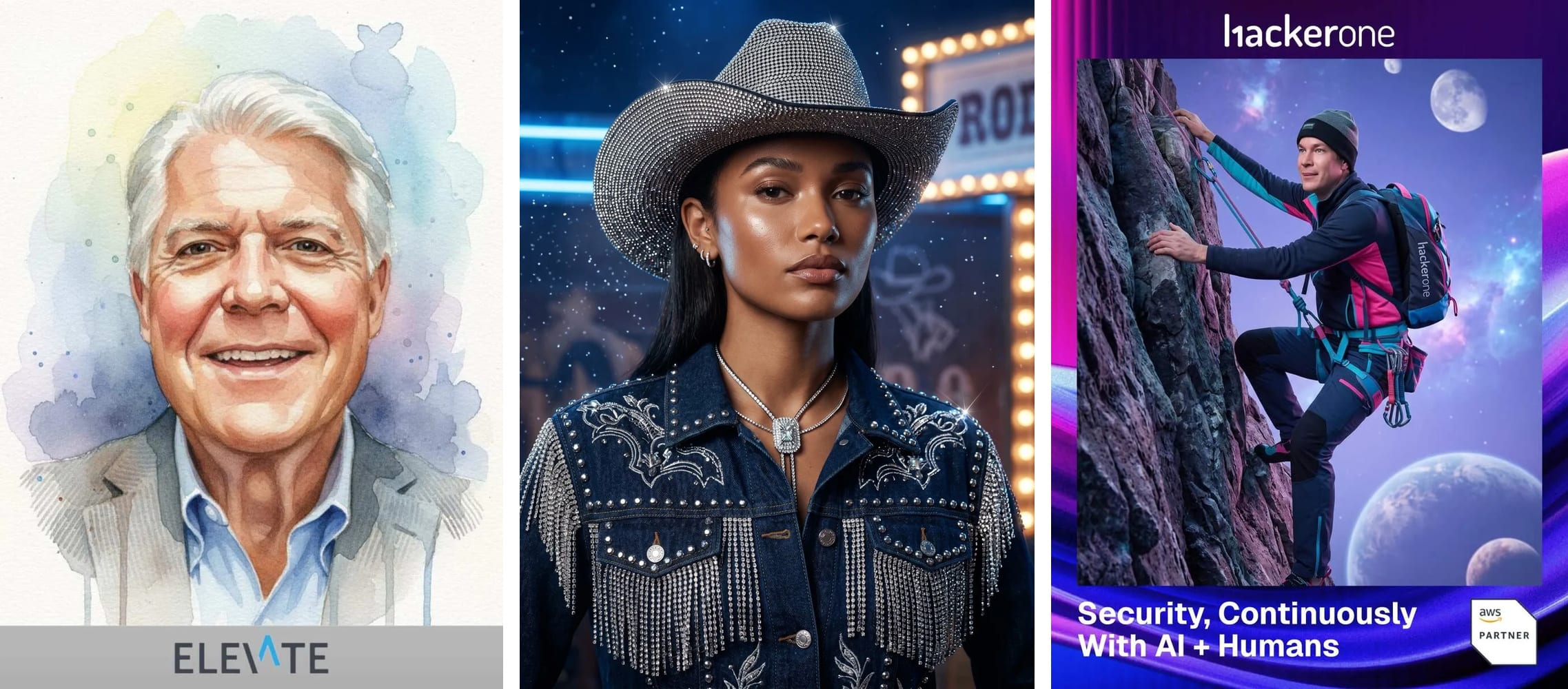
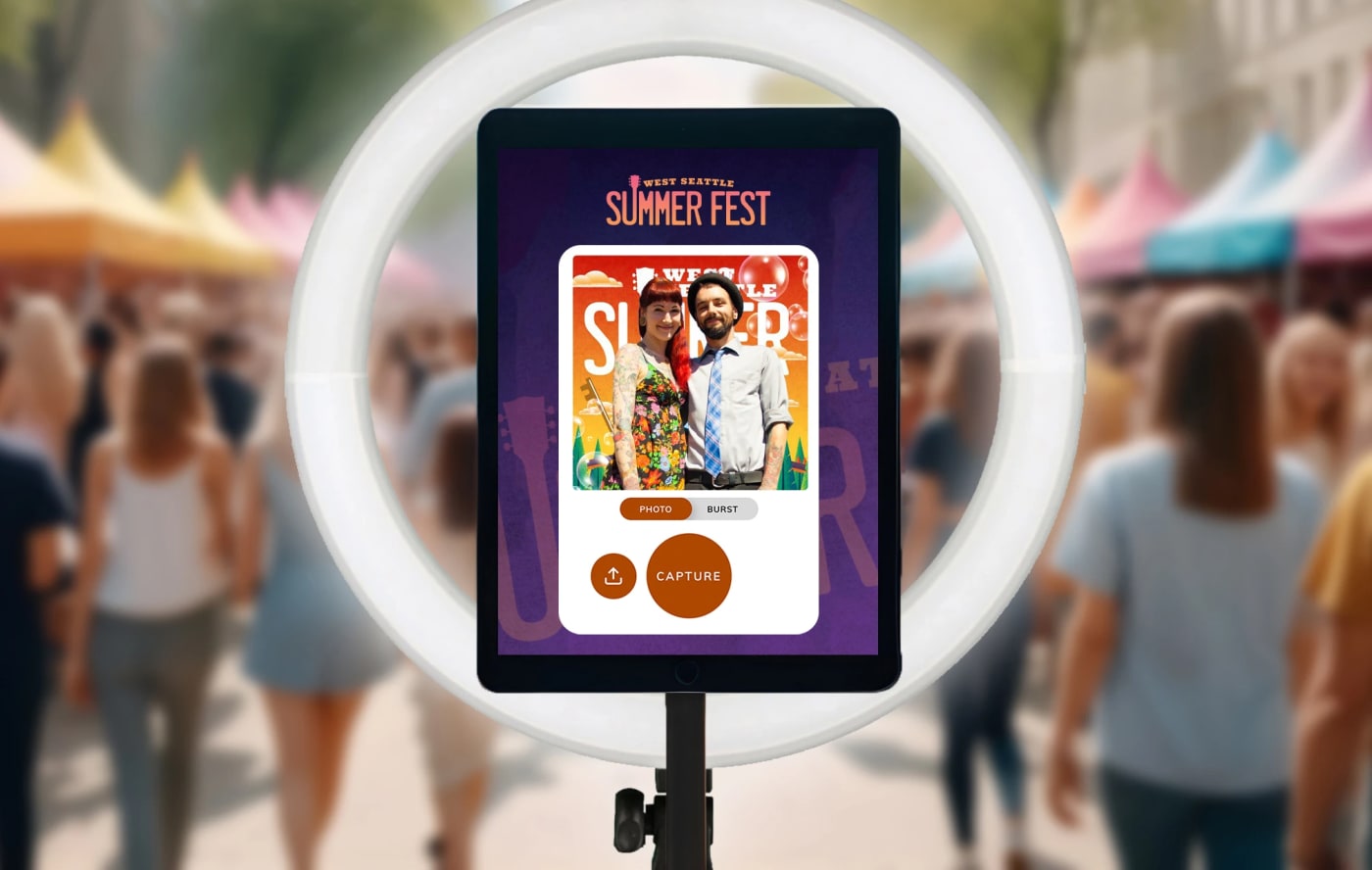
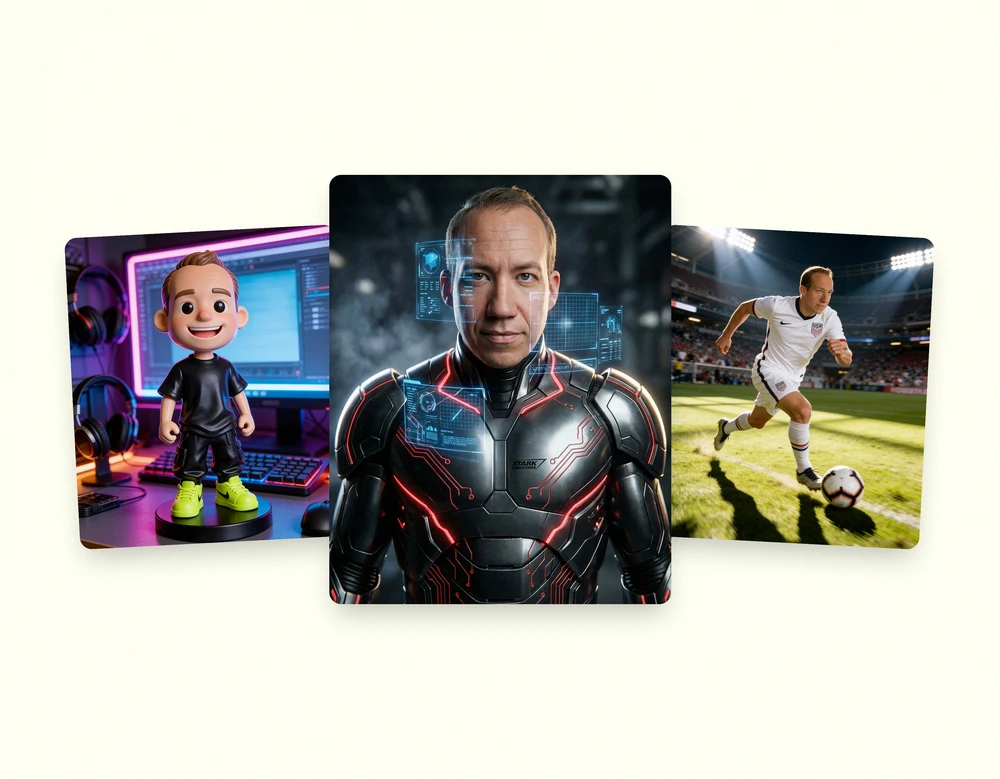
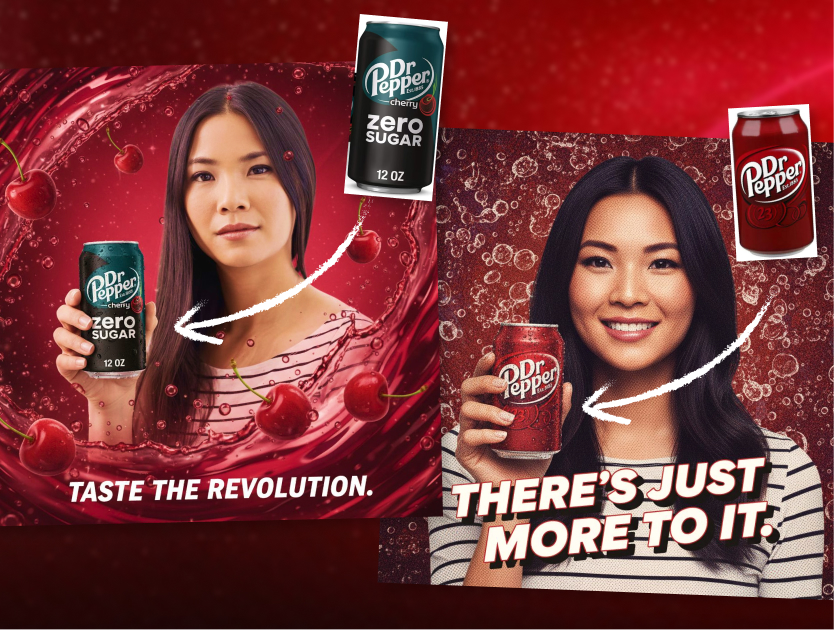
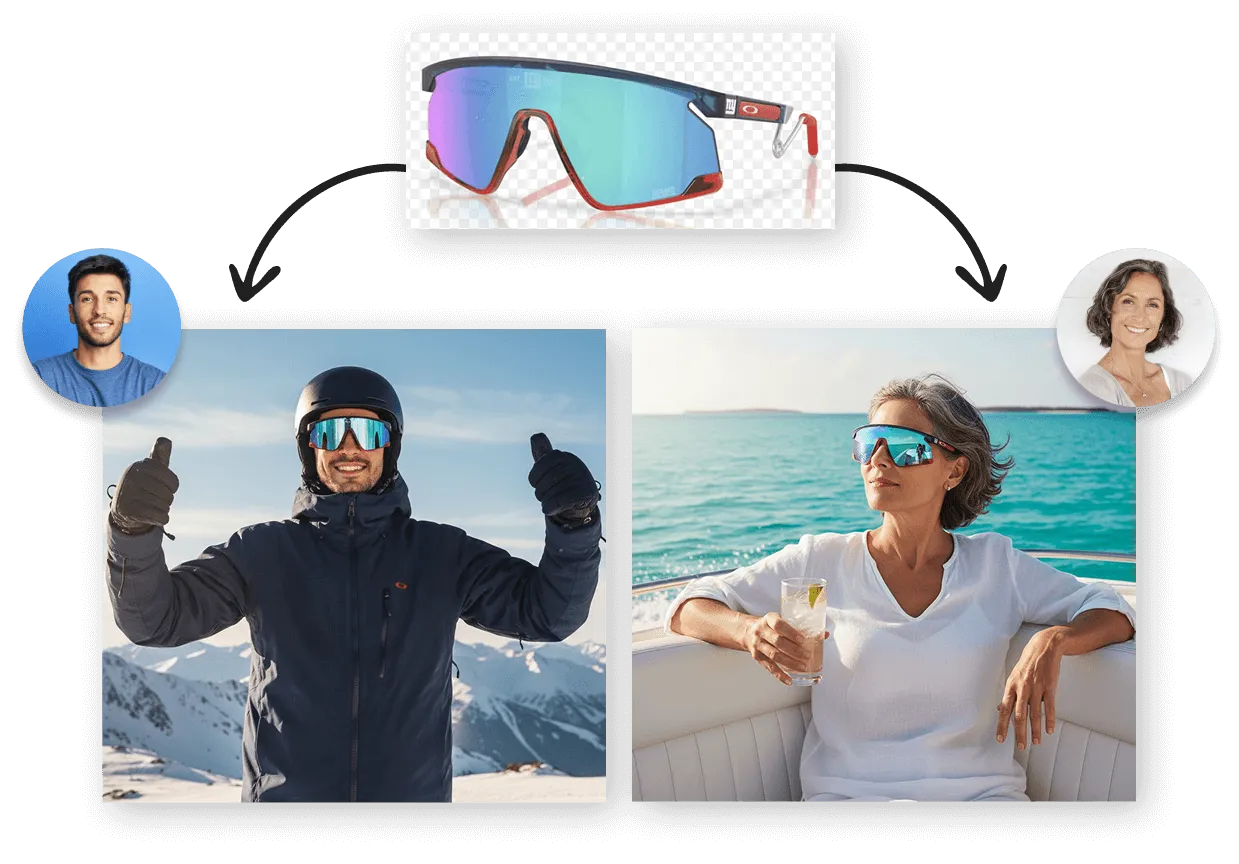
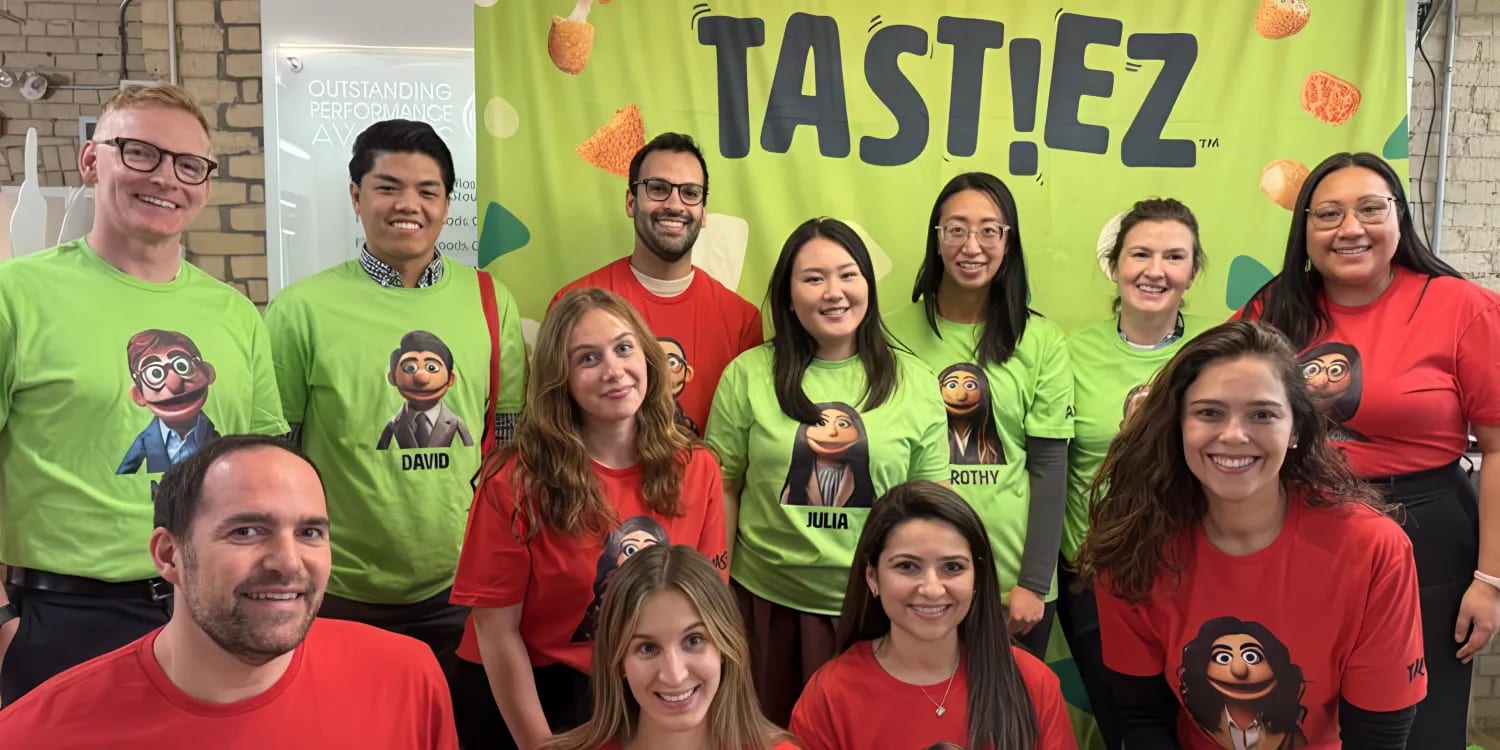
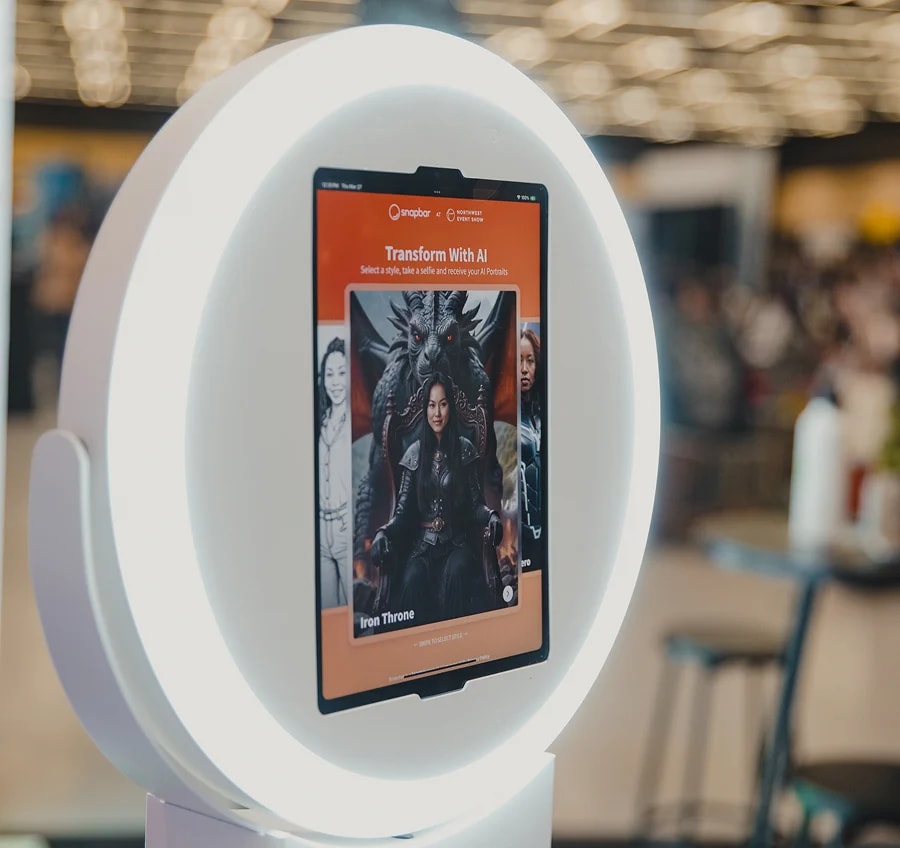
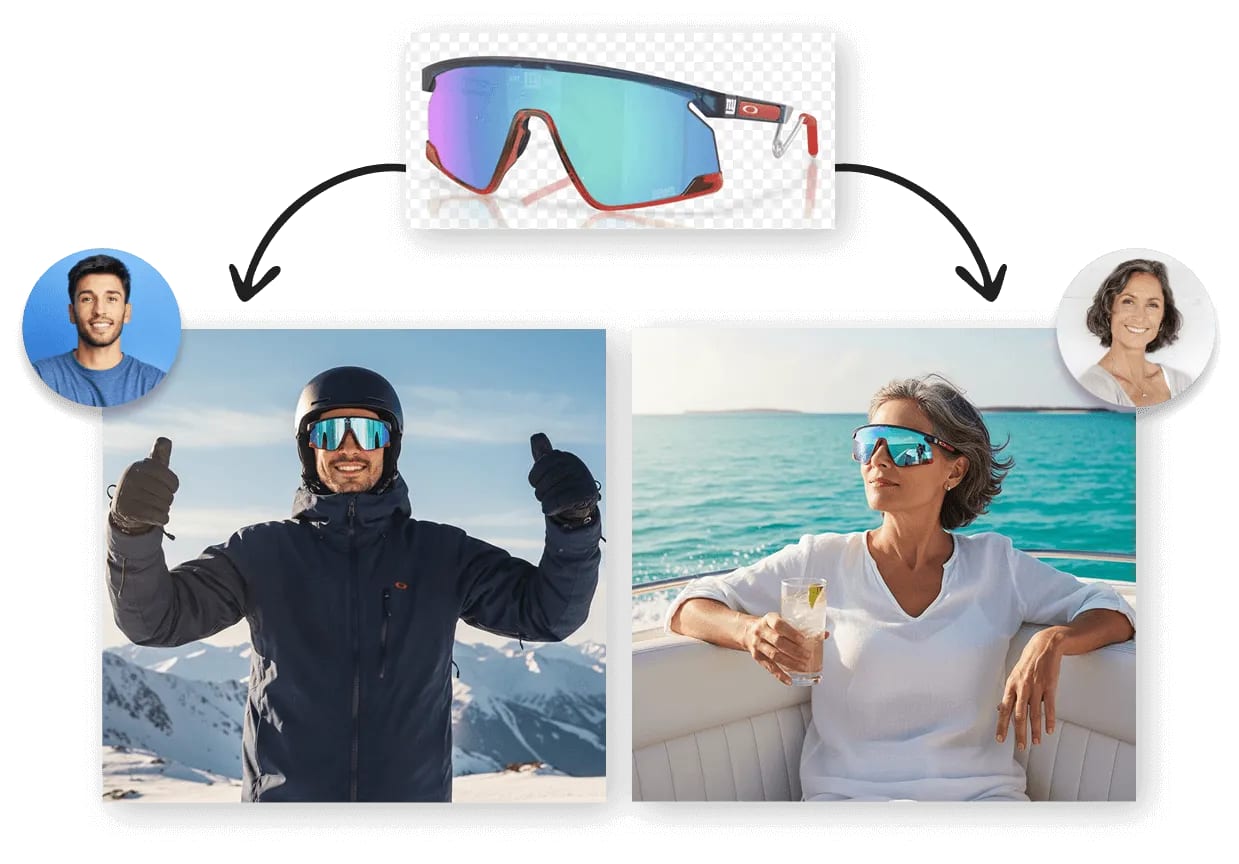
Guests take a photo and get back a styled portrait with the new product in the scene: the can in their hand, the sunglasses on their face, the vehicle behind them. You share reference images of the product, and the AI Photo Booth style is built around them so every guest's version stays on brand. It's the most direct way to turn a launch into a few hundred personal ads. If a photo-led setup is the centerpiece of your launch, our guide to running a photo booth for product launches covers format choice and launch-night logistics.
2. The new customer storyline
Guests fill in a few blanks about their first time with the product ("The first place I'll use this is..."), and AI Stories turns their answers into an illustration of them using it.
There's a reason this lands with really new products. Research on how people judge really new products found that when the benefits are unclear at first, people imagine themselves using the product to work out its value, and the more absorbing that imagined story is, the more favorably they rate the product. The storyline hands guests that story, already drawn. It works best with an audience that already knows the category, the people most able to picture the use.
Our AI Stories explainer covers how to write the blanks so the answers stay on message.
3. Branded mini trailers
Each guest becomes the lead in a short video built for the launch: your branded intro, the guest in an AI-generated scene, your logo and soundtrack to close. It's finished video, sized for sharing, and it gives a launch something a still image can't: motion and sound that carry the campaign's tone.
The video above walks through how an AI Video experience runs at an event, from the guest's photo to the clip that arrives afterwards.
See it in action
Build your own AI Stories activation
Guests answer a few questions and get an illustrated story of themselves with your new product, delivered by email or text.
Explore AI StoriesThose three put the product in the content. The next three put the room in the reveal.
How do you make the reveal an experiential product launch moment the whole room shares?
A reveal is one moment, and most of the audience watches it from the back. These ideas give everyone a part in it.
4. A before-and-after reveal video
AI video can now travel between two images rather than animating one, so a guest's clip can move from the old way of doing things to the world your new product creates. Every guest who picks the style gets their own version of the same transition, which makes the reveal personal without changing the story. Our team turns the transition on for the style when we build it with you.
5. A live mosaic that assembles into the key visual
Guests scan a code and upload a photo from their phone, no booth session needed, and each one becomes a tile in a live mosaic that builds toward your launch image over the evening. The mosaic never runs out of room, so every guest makes it in. It's the one display that comes as an add-on rather than with every activation, and it's worth it when the reveal needs a visual that the crowd literally completes.
6. A crowd vote on every screen
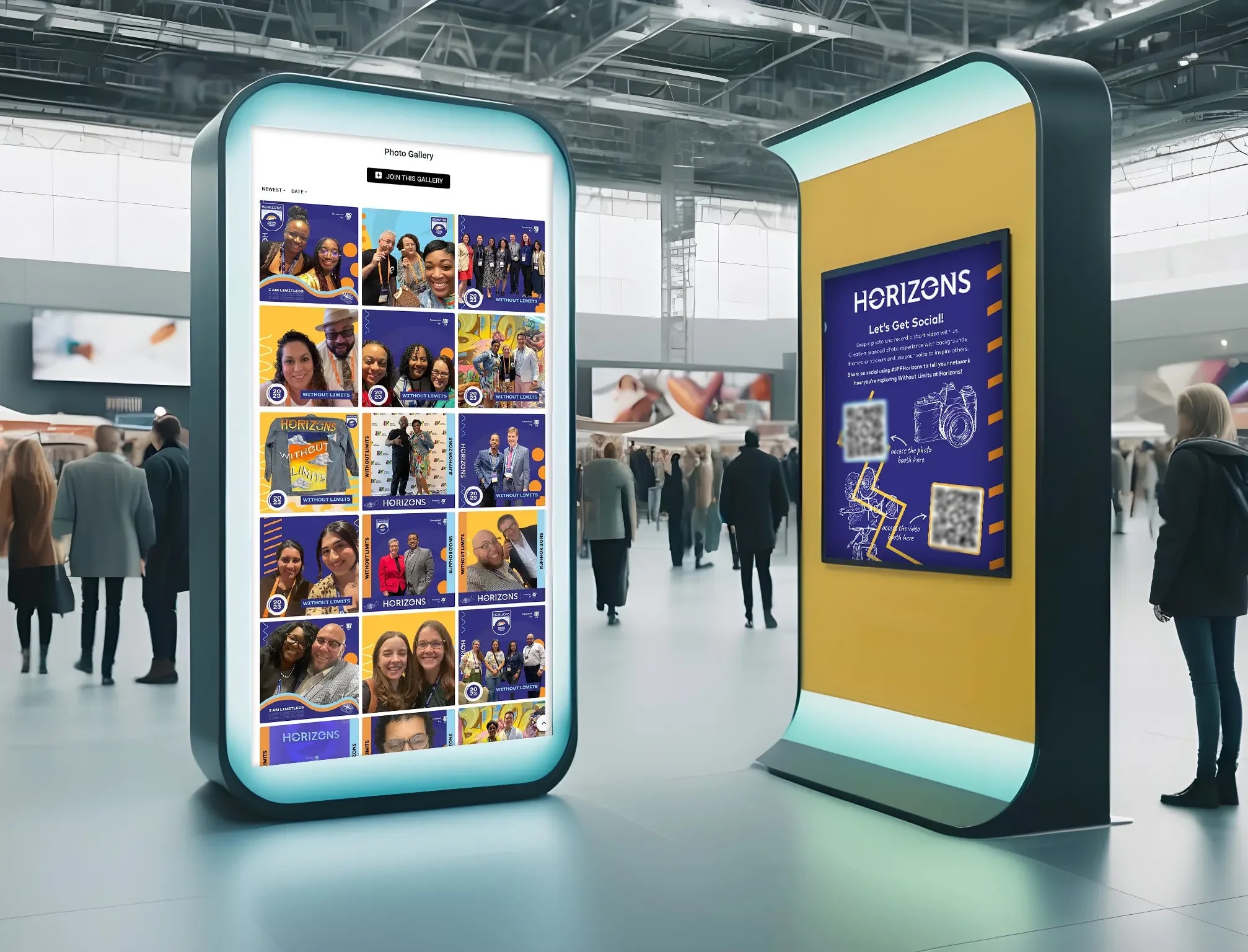
Give the room a decision: name the new colorway, pick the best launch-night look. A leaderboard lets guests upvote entries, and a code on the screen lets anyone walking past vote from their own phone. We switch voting on for the experience. A live gallery and a slideshow come with every activation, and you can run as many of them as the venue has screens, so the lobby, the bar and the stage can all show the same story. If you're choosing between them, our comparison of live event displays covers which one fits which job.
Which interactive product launch ideas qualify buyers while they play?
Launch audiences mix buyers, press, partners and the curious. These three ideas sort them without a sales conversation.
7. A product-match quiz
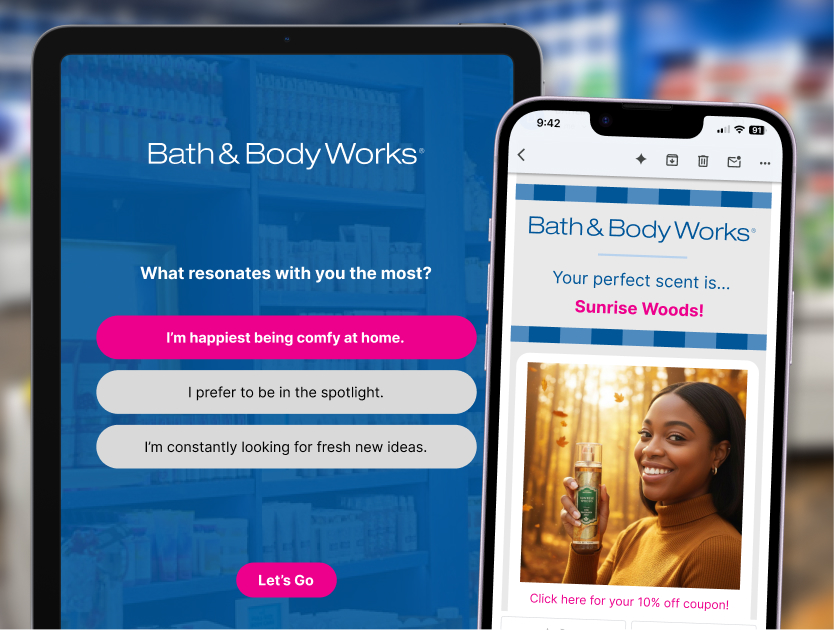
"Which version are you?" A Persona Quiz asks a few playful questions and matches each guest to a variant, flavor or edition, delivered as a personalized image. The answers do double duty: guests enjoy the result, and your team gets a record of which edition each person leaned toward. Entry fields are set per experience, so a qualifying question (team size, current product, buying timeline) can sit in the same form.
8. A launch-day prize wheel
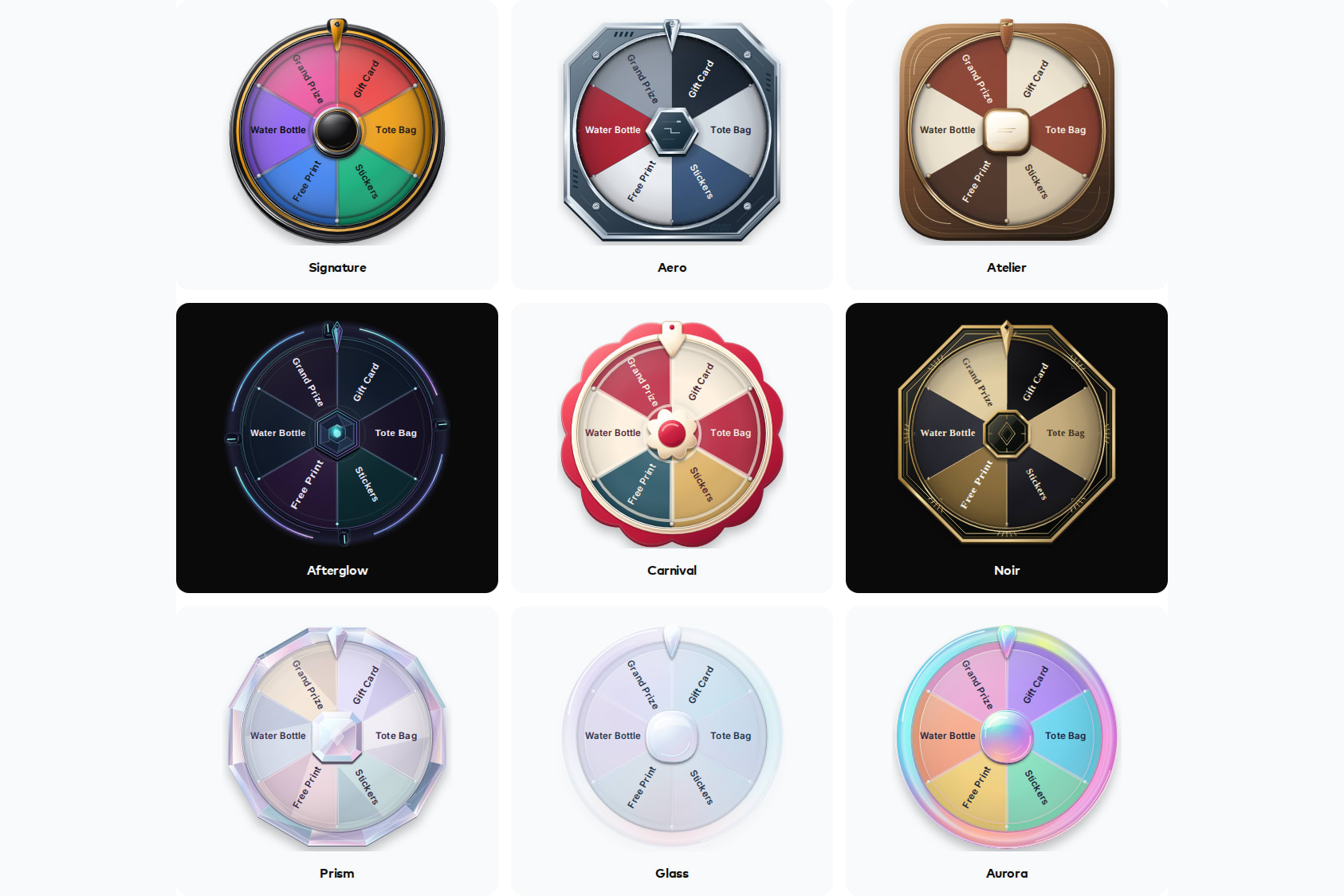
Put first-run units, samples or early-access codes on a branded prize wheel. Spin to Win sits behind an entry step that captures each guest's details and consent, you control the odds for every prize, and sold-out prizes drop off the wheel on their own. Guests can spin at a tablet on the stand, or scan a code on the big screen and spin from their own phone while the wheel plays for the room. One spin per email address keeps the same guest from replaying under one address, and winners get an email with their claim code.
9. Collector launch cards
Trading cards suit launches with a fan audience: games, sport, entertainment, gear. The holographic finish tilts and shimmers on a phone and keeps doing it in every link a guest shares, and the back of each card can carry details from that guest's entry, like a stat they chose for themselves.
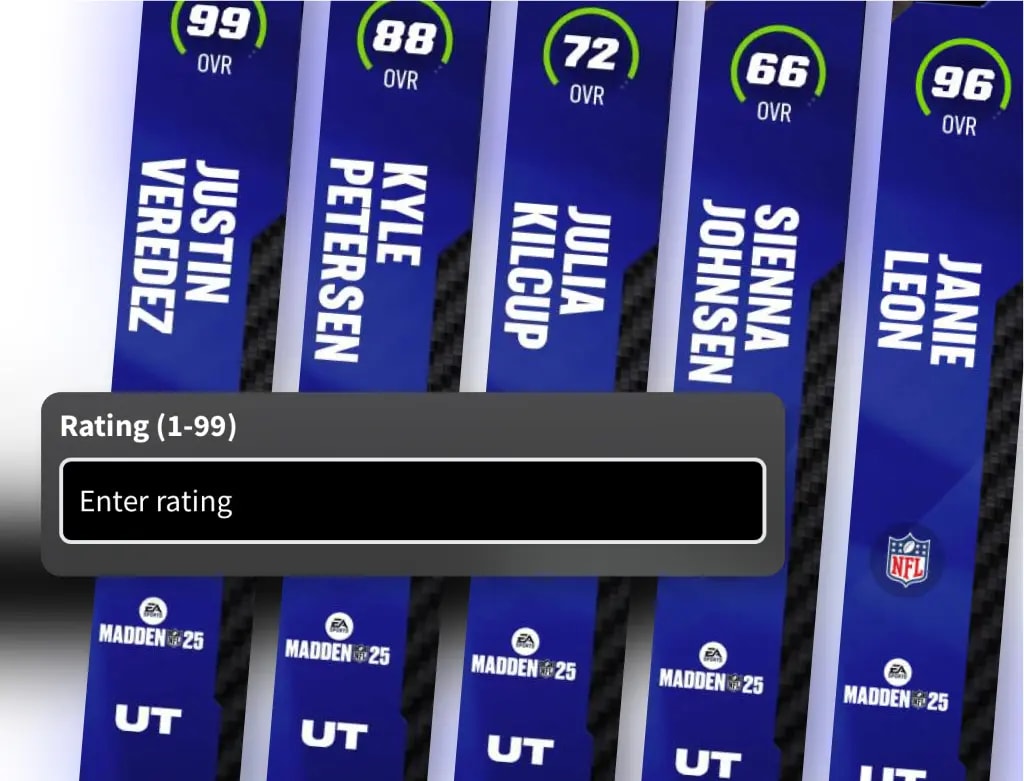
EA Sports and Youth Marketing Company used trading cards at the Super Bowl Experience Fan Zone to immerse fans in Madden NFL 25 while promoting the latest release of the game. Fans took a photo, entered their name and picked their own Overall rating from 1 to 99, and the card arrived by email with a call to download Madden NFL 25 Mobile. Over 600 custom cards were generated and delivered in four days, with a peak of 300 participants in a single day. The detail worth copying for a launch: the next step rode inside the delivery.
More on the format in our trading card activations guide.
How do you extend a product launch beyond the room?
Launches rarely happen in one place on one night. These ideas cover the people who see it first, the markets that see it at the same time, and the audience watching from somewhere else.
10. A partner or employee preview before the public launch
Run the same experience for retail partners or your own teams a week before the public reveal, as a warm-up and a test. We can limit it to guests who enter an email on your domains, or your partners' domains, so the preview stays with the people invited to it. While the product is still under embargo, every photo can wait for approval before it appears on any screen.
11. A multi-market launch in each guest's language
If the launch rolls across cities or countries, one experience can run in each guest's language with built-in translations. It runs on whatever each venue has: a kiosk at the flagship, iPads at partner stores, a laptop at a press desk, guests' own phones by QR, or all of them at once. Snapbar powers the experience; your team sources the hardware and the staff for each site.
12. A remote audience for the livestreamed reveal
A livestreamed or virtual launch still has an audience, it just isn't in one room. Guests can join by link from wherever they're watching and get the same personalized content as the people in the venue, which our virtual and hybrid experiences are built for. It's also the simplest way to include press and partners who couldn't travel.
How far ahead should you book a product launch activation?
Plan on about a month, and more if the creative is custom. Across our booked activations from January 2021 to August 2026, the median lead time was 28 days, and it has sat at 38 days since 2023. AI Photo Booth activations book about a week further out than Digital Photo Booth ones, a 35-day median against 27, and the difference is creative approval: prompt development and a review round on generated output, which matters more when the product has to look right in every portrait. A launch with product imagery to approve and a reveal date that can't move belongs at the longer end. Our event activation planning timeline has the full breakdown, including why October and December need the most runway.
| Idea | What the launch needs | Experience | What you get back |
|---|---|---|---|
| 1. Product-placement portraits | Product in every photo | AI Photo Booth | Branded portraits, lead data |
| 2. New customer storyline | Guests picturing first use | AI Stories | Illustrated stories, guests' answers |
| 3. Branded mini trailers | Motion and sound | AI Video | Short branded videos, lead data |
| 4. Before-and-after reveal video | A personal reveal | AI Video | Transition clips, lead data |
| 5. Live mosaic | A visual the crowd completes | Live Mosaic | A finished wall, guest uploads |
| 6. Crowd vote | The room making a decision | Leaderboard, Live Gallery | Votes, submissions and views by hour |
| 7. Product-match quiz | Sorting buyers by interest | Persona Quiz | Quiz answers, qualifying fields |
| 8. Prize wheel | Launch swag to the right people | Spin to Win | Leads, players, winners, claims |
| 9. Collector cards | A fan audience | Trading Cards | Shareable cards, chosen stats |
| 10. Partner or employee preview | A controlled first look | Any experience | Early content, partner leads |
| 11. Multi-market launch | One launch, many languages | Any experience | Content and leads per market |
| 12. Remote audience | A livestream with participation | Virtual and hybrid | Content and leads from viewers |
Most launches need two of these, not twelve. Pick one idea that puts the product in guests' content and one that gives the whole room a part in the reveal. Start from what the launch needs the room to do, and the format follows. Our activation concepts library has more starting points if none of these fits your product yet.