You've got an activation on the calendar, a budget behind it, and a short list of people who'd love to run it. Working out how to choose an experiential marketing agency, or whoever else should run it, is a bigger call than it looks, and most of the advice on it is written by agencies. That's fair enough. It just means it rarely tells you when the right answer is somebody else.
Snapbar is an experiential marketing platform, so we're not neutral either. But we send work to other companies regularly, and how a partner handles that moment tells you more about them than any pitch deck. Here's how to make the choice from your side of the table.
Key takeaways
- Every activation has three layers: the idea, the experience guests take part in, and the physical setup in the room.
- Agencies, specialist vendors and platforms each cover different layers. Most programs use more than one.
- Ask questions that test fit, not polish.
- The partner worth keeping is the one who'll name a better fit when there is one.
What does an experiential activation partner actually do?
An experiential activation partner takes responsibility for some part of an activation, and the useful question is which part. Every activation has three layers: the idea and the creative, the experience itself (what guests do, the content they get, the data you keep, the screens in the room), and the physical layer of staff, devices, build and logistics.
"Experiential marketing company" and "event activation company" get used for all three, which is where buyers get caught out. You hire a team that's brilliant at the idea and assume the kiosks are handled, or you license great technology and nobody owns who stands next to it when the doors open. Write down which layers you need covered before you compare anyone.
Agency, platform or your own team: who should run your activation?
It depends on the layers you need, and on how often you run activations like this one.
| Partner | What they cover | Best fit when |
|---|---|---|
| Full-service experiential agency | Usually all three layers: idea, build, staff and logistics | A multi-city tour, staffed sampling, a stunt, or anything with heavy on-site compliance |
| Specialist vendor | One piece done really well: printed photo strips, kiosk hire, fabrication or event staff | You know exactly what you need and want an expert in that one thing |
| A platform your team runs | The experience layer: you build, launch and measure it, with expert help where it's hard | You run activations through the year and want each one to build on the last |
| A platform your agency runs | The agency brings the idea and the people; the platform runs the experience and keeps the data | You want an agency's craft without starting from scratch every event |
Mixing these is normal. In the ANA's 2023 member survey, 92% of respondents still used outside agencies alongside their in-house teams, mostly for capacity or skills they lacked. That covers advertising broadly, not activations, but the logic carries over: few teams get every layer from one place. Whether your own team should own this across the year is its own call, and our in-house brand activation playbook covers it.
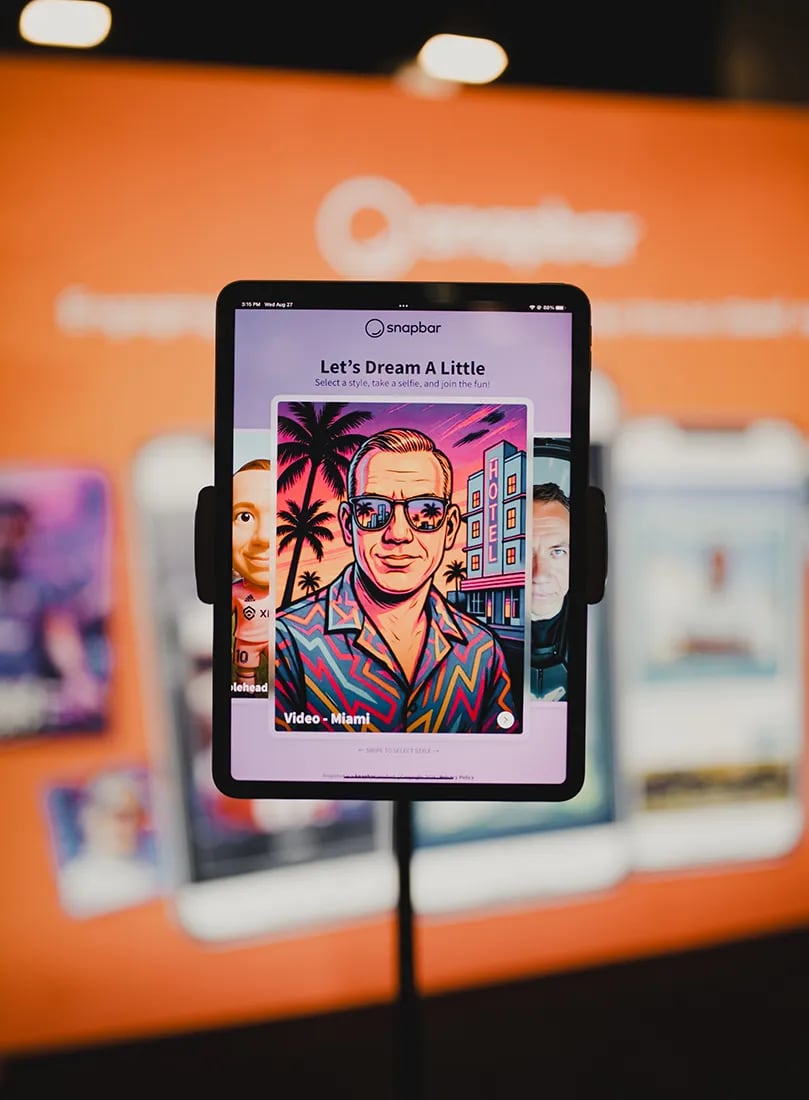
To be plain about where we sit: Snapbar is a platform. Your team or your agency runs it, and our team helps with the harder parts, like AI prompts and how the data flows. Staff and hardware come from you, your agency or a specialist, and the experience runs on a kiosk, an iPad, a laptop or guests' own phones, all at once if you want. Here's why we left the event logistics business, whether to rent or buy the hardware, and how to evaluate a platform if one is on your list.
When should a partner tell you to hire someone else?
Whenever another company does your brief better. Sometimes a client describes an event and it becomes clear they really want a classic photo booth with printed strips. Our CEO made a short video about what we do then.
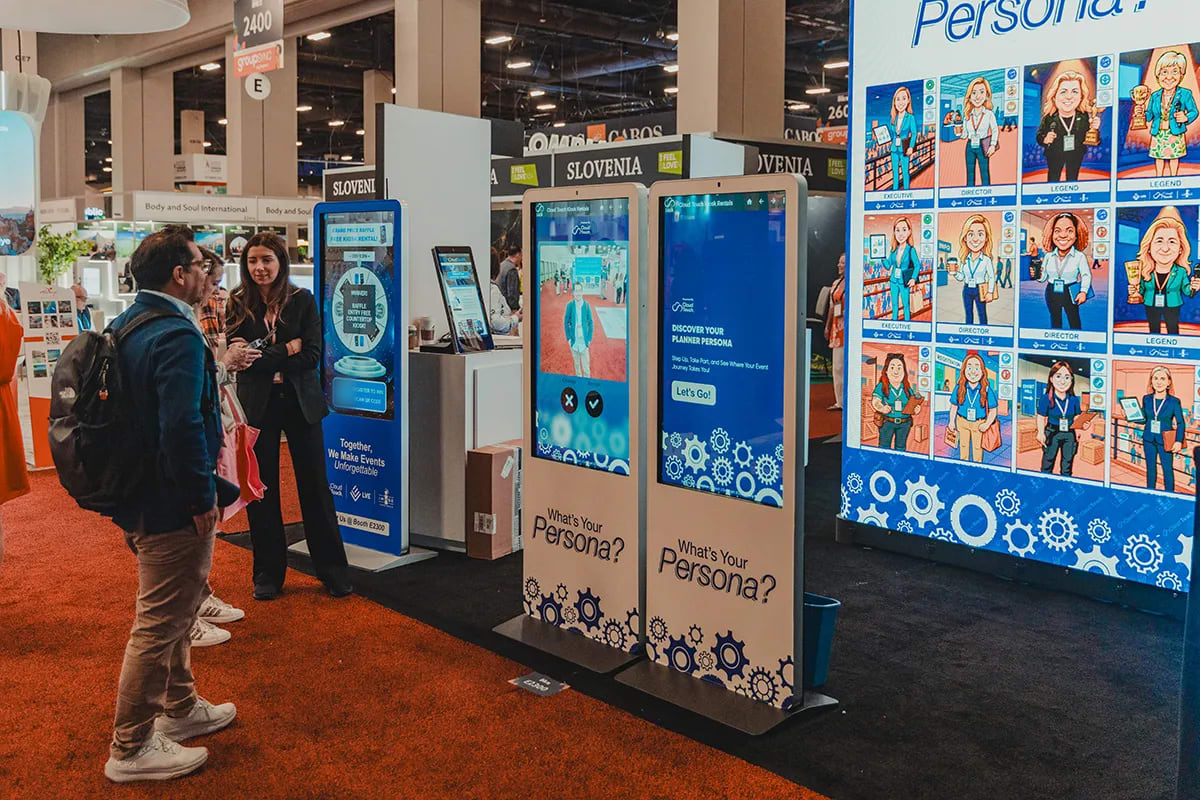
In the words of Sam Eitzen, Snapbar's CEO: "we regularly recommend our clients go with the likes of a CloudTouch," a kiosk rental company we work with closely, or "a traditional real photo booth company like a local one that can do, you know, old school photo booth strips and more." For that brief, the local company is the better fit, and saying so costs us one project. (If you're not sure which kind of experience you want, here's the difference between an experiential and a traditional photo booth.)
Real candor builds trust. A promise of candor doesn't.
In a six-month field experiment, an automaker gave car shoppers real, side-by-side information about competing models. Shoppers trusted the brand more and were more likely to consider it, at least where the comparison held up for the brand. When the company later just signaled it was open to comparisons, the signal didn't move trust or consideration. Liberali, Urban and Hauser, International Journal of Research in Marketing, 2013.
So don't take "we'll always be honest with you" at face value. Ask directly and listen for a name.
What should you ask before you choose an experiential marketing agency?
Ask questions that show whether a partner can do your specific thing, will act in your interest when it isn't in theirs, and will do what they said. Those are the parts of trust researchers who study trust between organizations keep coming back to.
- "Show me this format, at this size, for an audience like mine." A great portfolio in the wrong format tells you little.
- "What part of this would you send to someone else?" A specific answer is a good sign. "Nothing" deserves a second look.
- "Who brings the staff and the devices, and who's on site on the day?" You want names, not "we'll sort it out."
- "Where does the content and lead data go afterward, and in what form?" You should leave with data you can export and use.
- "What will you show me the week after?" Agree on what you'll measure before the event, not after.
If the event is close, ask about lead time too; our booking data on planning timelines shows how far ahead brands commit.
What are the warning signs in a partner pitch?
A yes to every format you mention. No answer, or a vague one, to what they'd hand to someone else. A loose answer about who staffs the day. A pitch that names the concept before anyone has asked what the activation is for.
None of these is a deal breaker alone. But a mismatch between partner and brief is one of the ways an activation goes wrong before it starts, and one of the easier ones to catch. Here's more on why event activations fail.
And if you put that second question to us and our honest answer is a local print booth company, we hope you'll come back the next time the brief changes.
Planning an activation and not sure who should run it?
Tell us what the event needs. If that's us, we'll show you how it works. If it's someone else, we'll say so.
Get a Quote
Or explore: The Platform | Activation Concepts