
Table of Contents
Every event generates thousands of moments. Attendees snap photos, share stories, film clips, and interact with brands in ways that feel spontaneous and personal. But most of that content disappears into camera rolls and forgotten social feeds within hours. The brands that treat events as content creation engines, not just networking opportunities, are the ones turning those moments into months of marketing fuel.
User-generated content (UGC) from events is fundamentally different from UGC collected through social campaigns or influencer partnerships. It's created in real time, fueled by genuine emotion, and tied to a shared experience that attendees want to talk about. When 67% of event attendees say they're very likely to create and share content during an activation, the question isn't whether UGC will happen at your event. It's whether you've designed the experience to capture it.
This guide covers the full lifecycle: what makes events the most powerful UGC source, the types of content that drive real business results, how to design activations that produce marketing fuel at scale, and how to measure what it all means. Whether you're planning a trade show booth, a corporate conference, or a brand activation, this is the playbook for turning attendee engagement into a content engine that keeps delivering long after the event wraps.
What Is User-Generated Content (and Why Are Events the Best Source)?
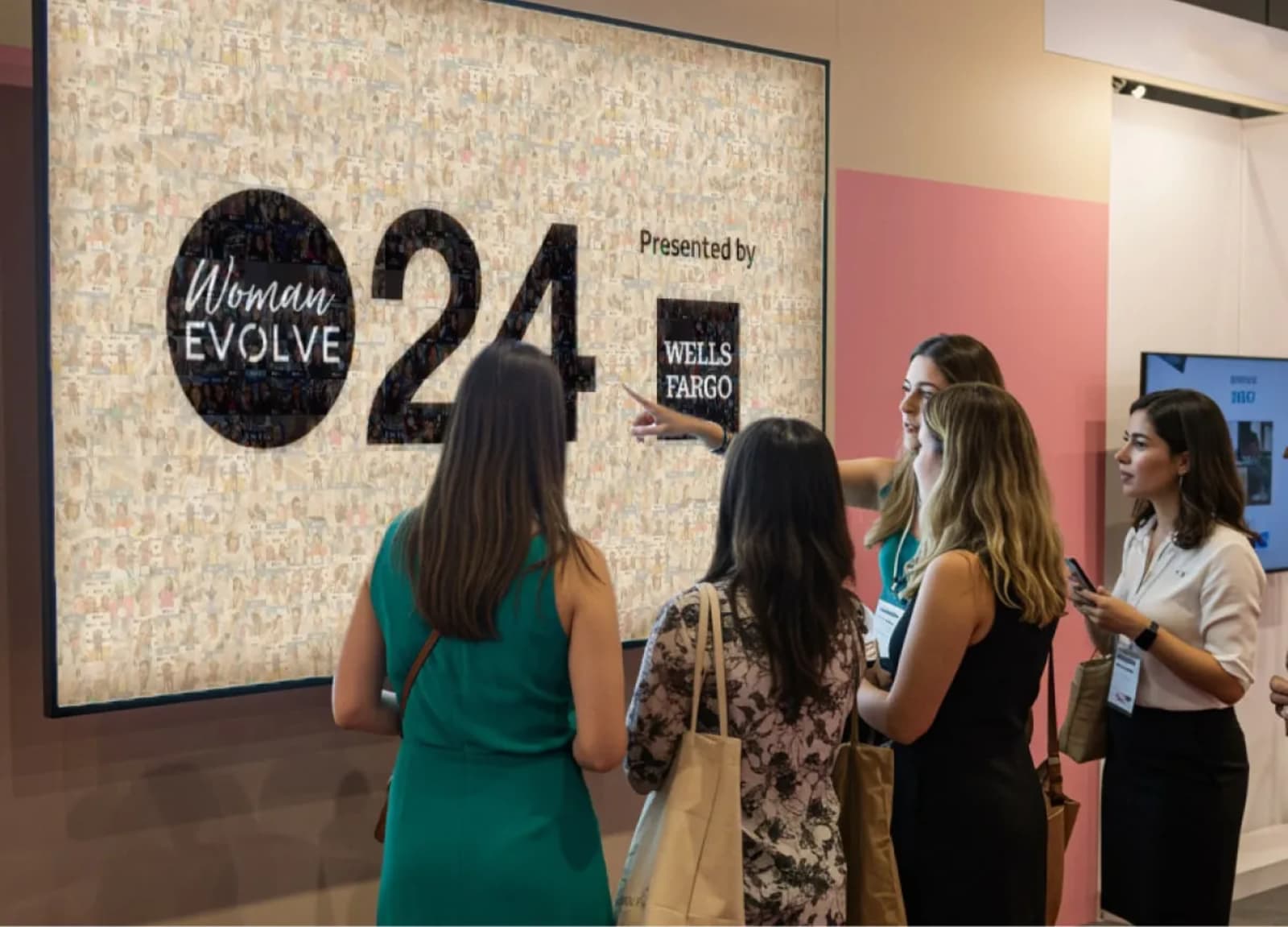
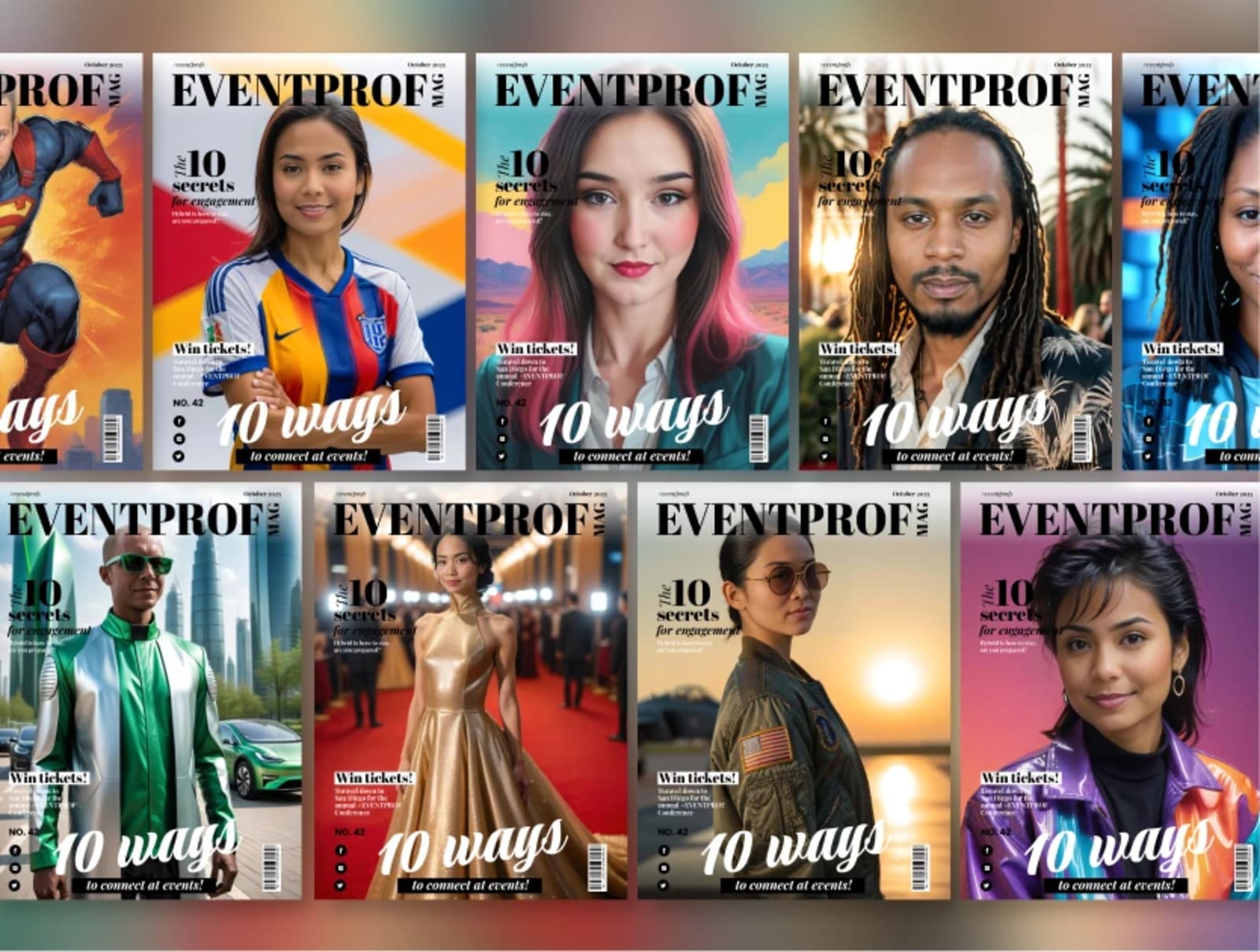
User-generated content is any content created by participants rather than the brand itself. In marketing broadly, that includes product reviews, social media posts, testimonials, and community forum contributions. At events, UGC takes a more dynamic form: branded photos, AI-transformed portraits, video testimonials, social shares, interactive quiz results, and collaborative displays like photo mosaics.
Events outperform every other UGC channel for three reasons. First, the emotional intensity is higher. People at a live activation are engaged, energized, and primed to participate in ways that a follow-up email or social prompt can never replicate. Second, the content is inherently authentic. No one questions whether a photo taken at a trade show booth is “real.” Third, events create a natural exchange: attendees get a memorable experience, and brands get marketing fuel they can use for months.
That last point is worth emphasizing. The best event UGC strategies don't treat content as a byproduct of the experience. They treat it as the point. Every photo generated, every video testimonial captured, every social share triggered is a piece of marketing fuel that can power campaigns, build social proof, fill sales decks, and demonstrate ROI to leadership. The UGC platform market reflects this shift, growing from $8.48 billion in 2026 to a projected $64.31 billion by 2034.
For enterprise event teams, this reframe matters. UGC isn't a “nice to have” social media tactic. It's a measurable marketing channel that starts at the event and extends through every downstream touchpoint.
Five Types of Event UGC That Drive Real Results
Not all user-generated content serves the same purpose. The most effective event strategies layer multiple content types, each targeting a different marketing outcome. Here are the five that consistently deliver for enterprise brands.
AI-Transformed Photos and Video
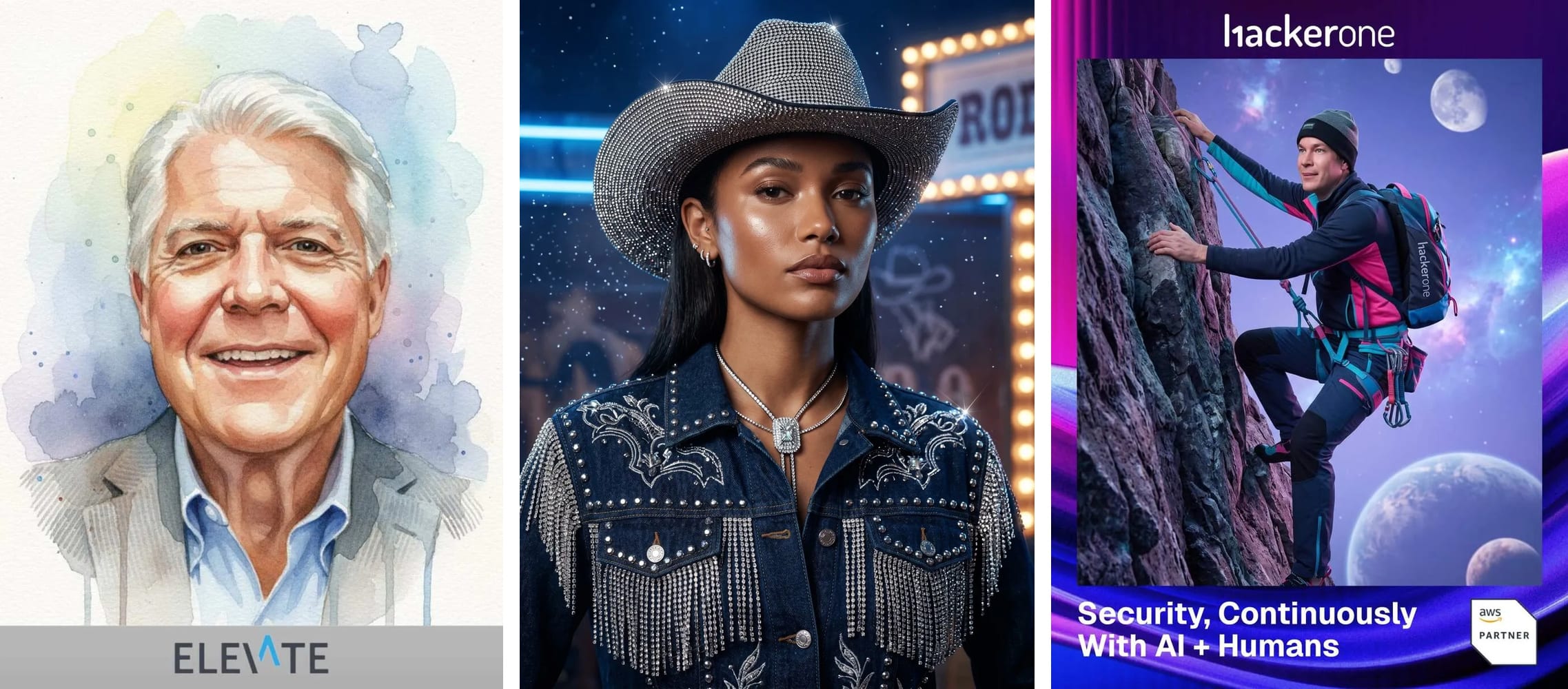
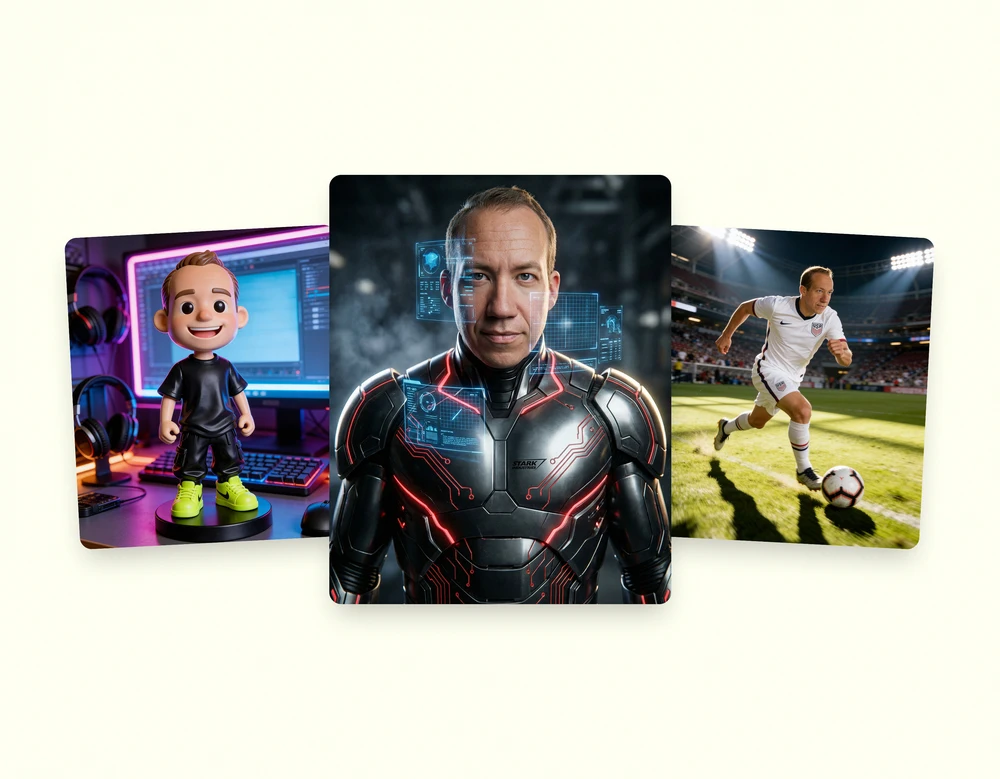
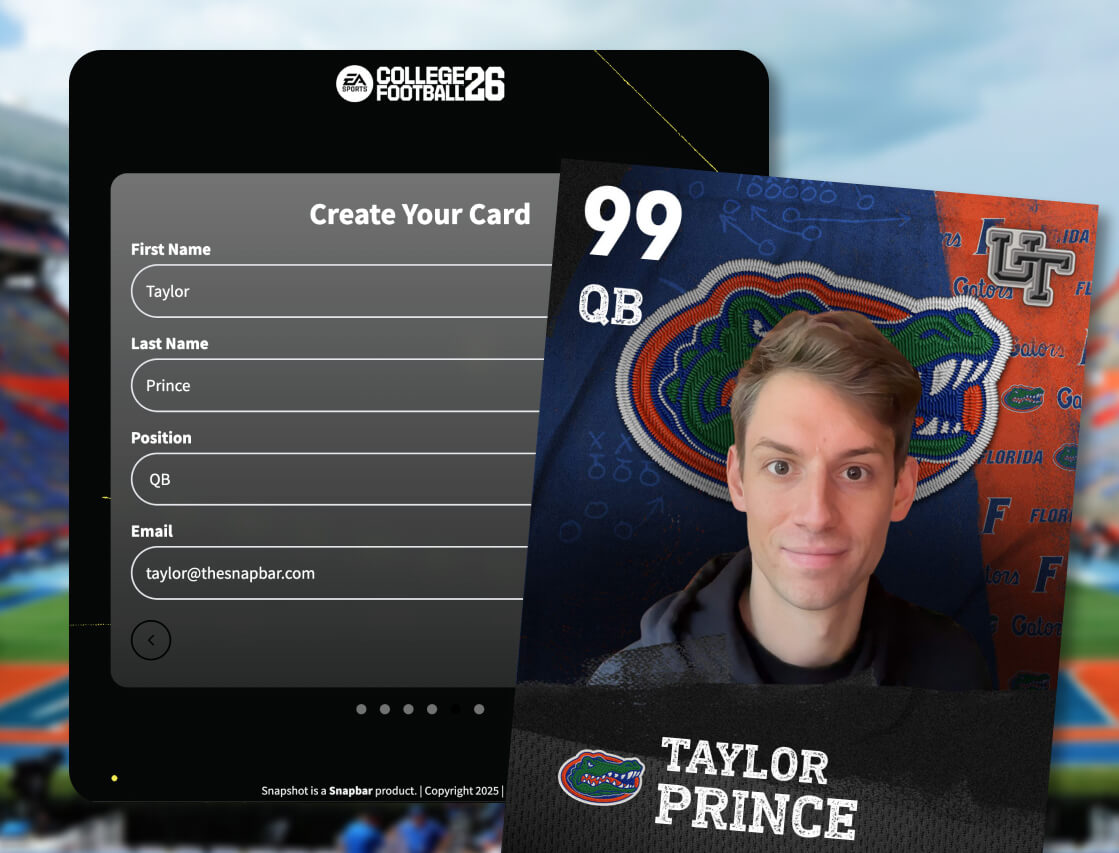
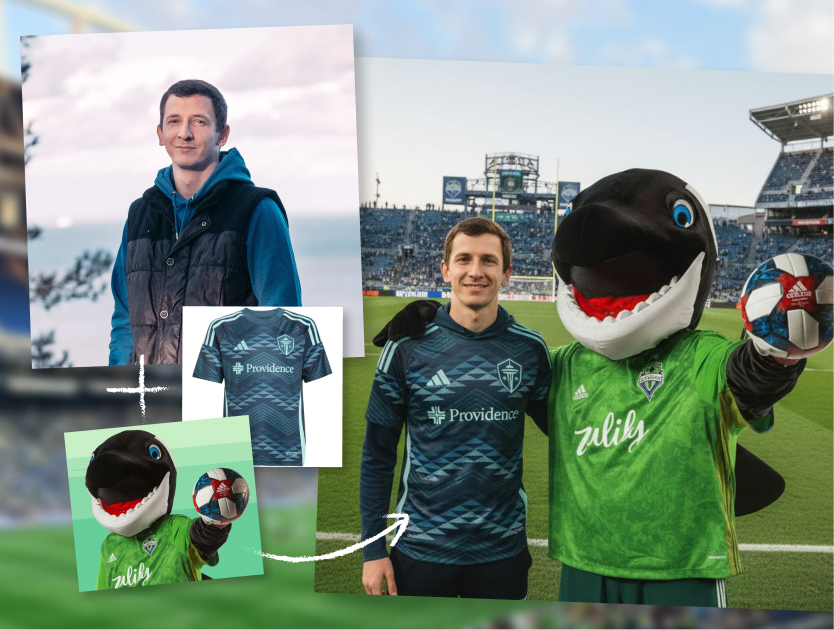
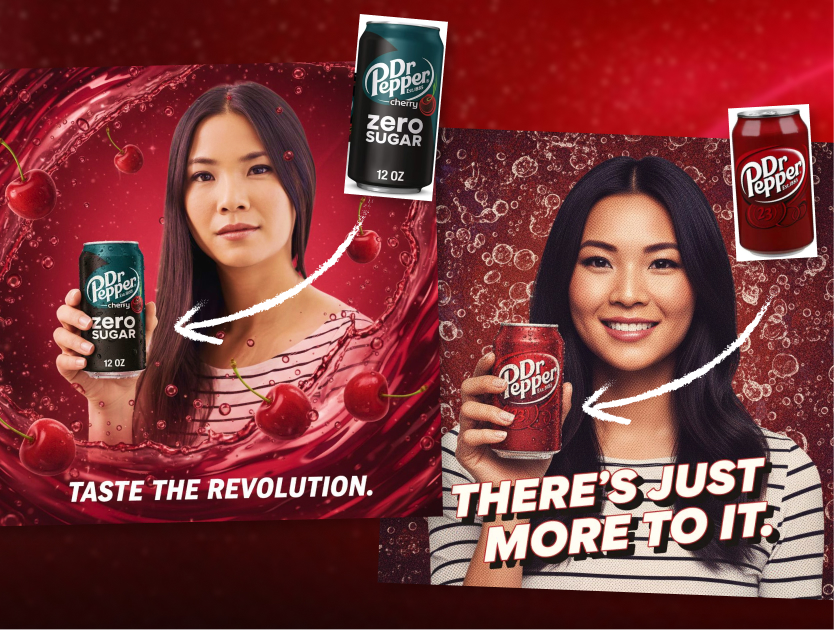
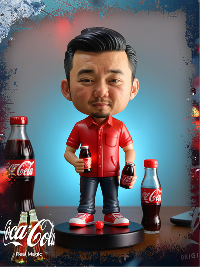
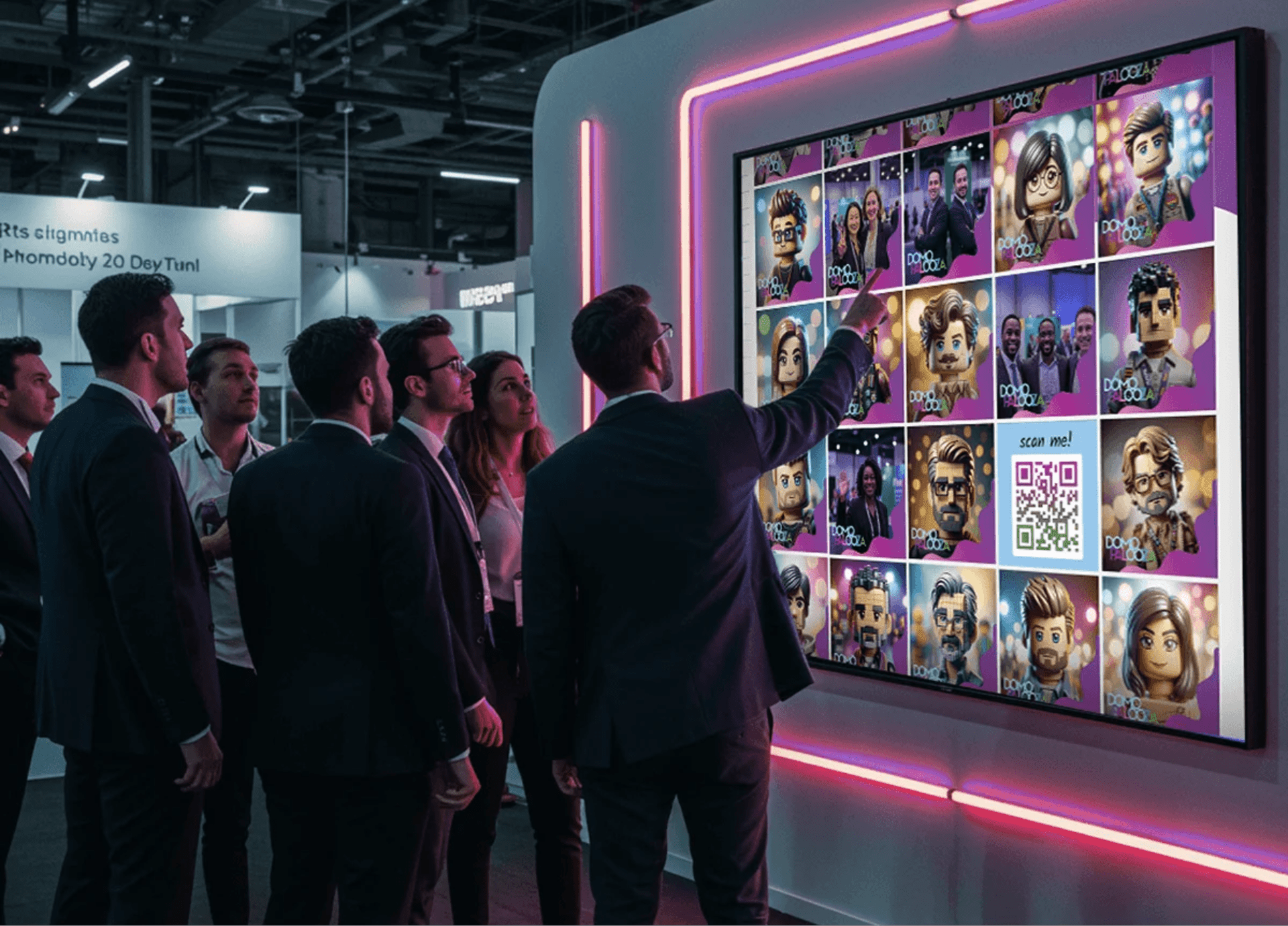
AI photo experiences have become the highest-converting UGC mechanic at events. Attendees take a selfie or step in front of a camera, and AI transforms their image into something they genuinely want to share: an illustrated portrait, a themed character card, a branded visual that ties back to the activation's story. Because the output is novel and personal, sharing feels like the attendee's idea, not a marketing ask. The same mechanic is why photo and video double as a lead engine: the content guests actually want is also where the data gets captured.
AI photo booths that run entirely in a browser eliminate the biggest participation barrier (no app download required) while giving brands complete control over the visual output. The result: high participation rates, high share rates, and a library of branded content that's immediately usable in post-event marketing.
Branded Photo Experiences and Overlays
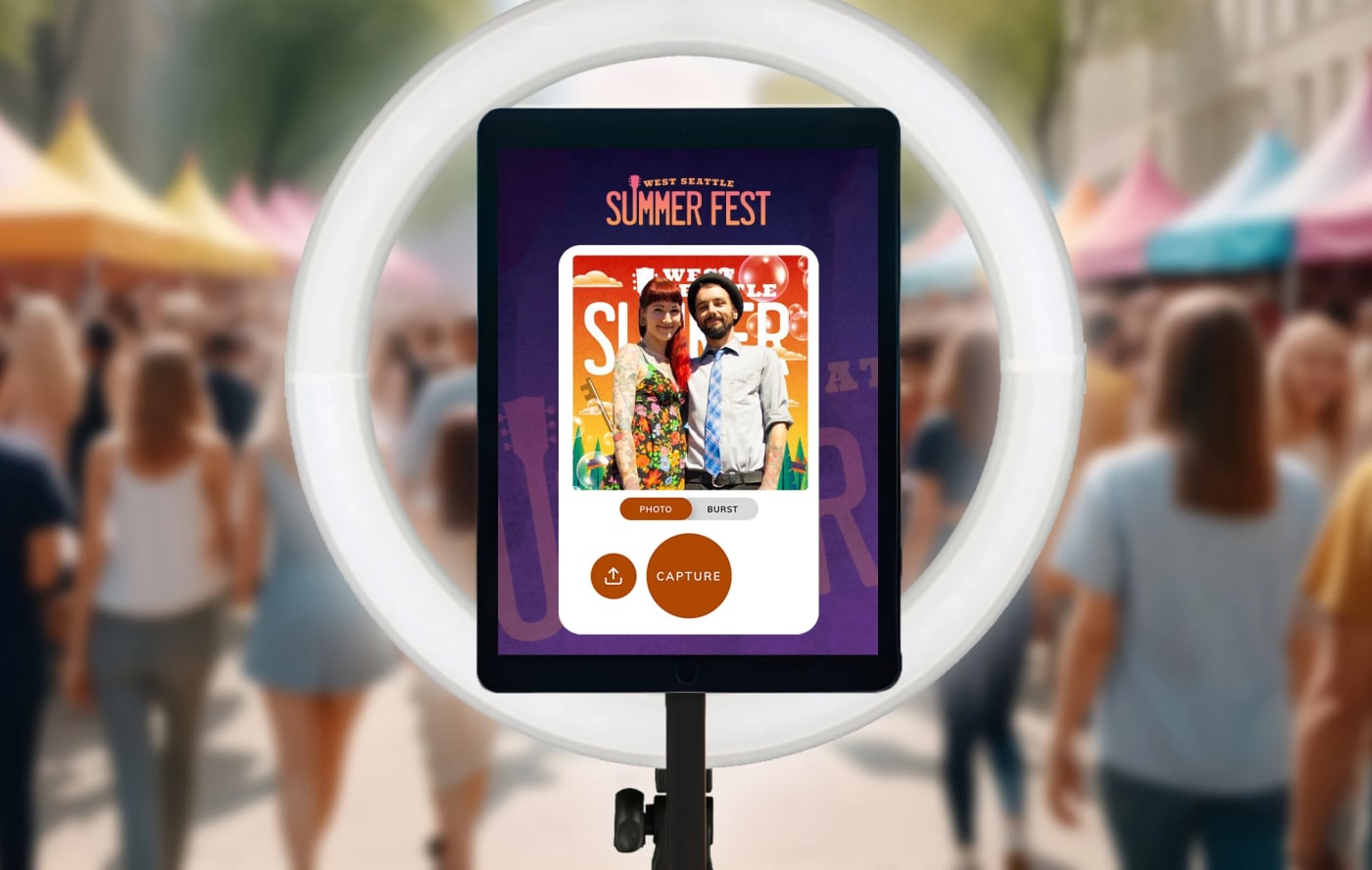
Not every activation needs AI. Branded photo experiences with custom overlays, frames, and backgrounds remain one of the most reliable UGC generators. The key is making the output feel like a keepsake, not a marketing piece. When the branded element enhances the photo rather than overwhelming it, attendees share it because they like the image, and the brand gets organic distribution as a side effect.
These experiences work particularly well for corporate event activations where the goal is broad participation across diverse attendee segments. The barrier to entry is essentially zero: walk up, smile, get a branded photo delivered to your email.
Social Sharing and Hashtag Campaigns
Branded hashtags aggregate UGC into a trackable, amplifiable stream. But the hashtag itself isn't what drives participation. The activation is. A hashtag without a compelling reason to post is just a string of characters. A hashtag paired with an experience people genuinely want to share becomes a content engine.
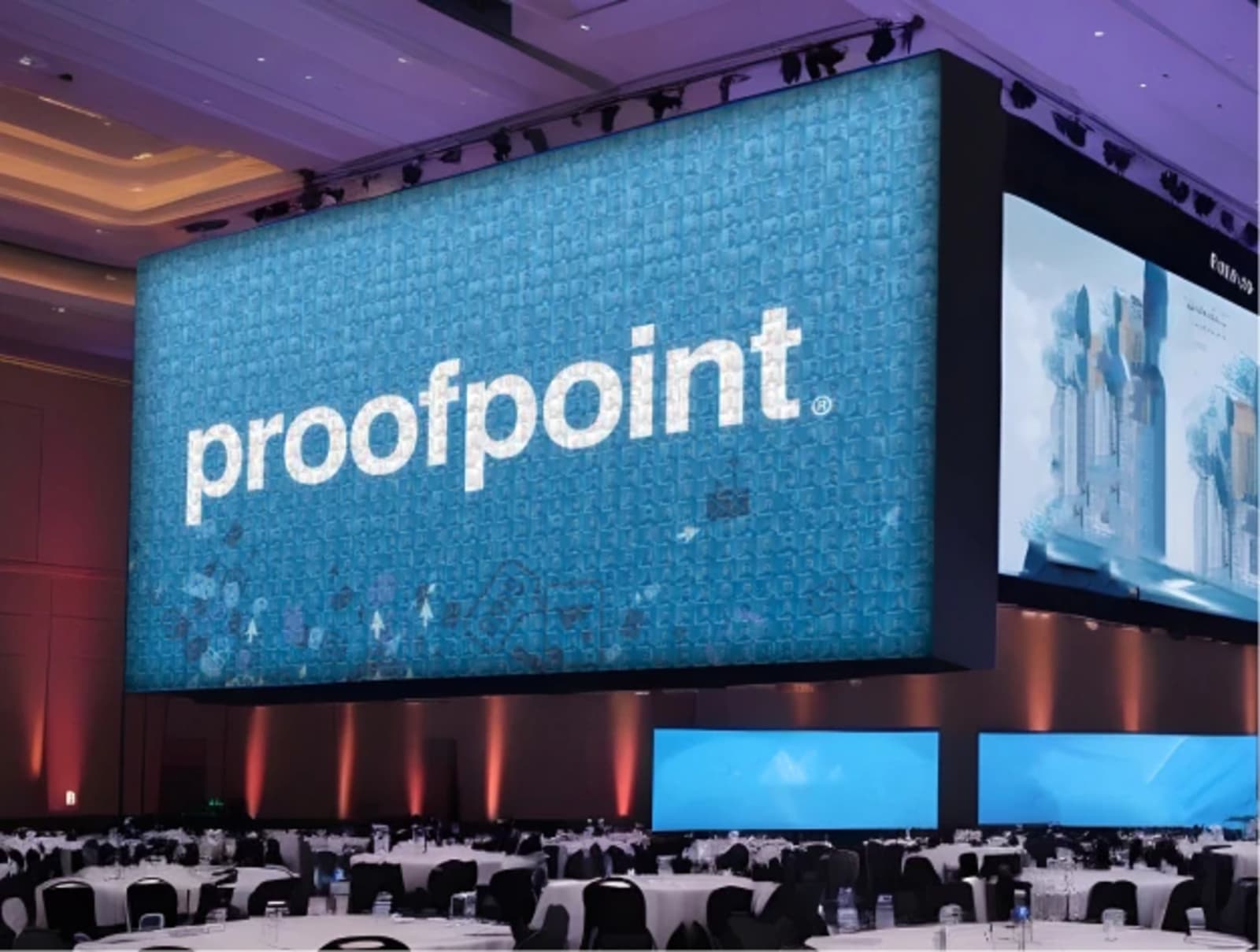
The most effective approach combines a unique hashtag with a live social display at the event. When attendees see their posts appear on a big screen, it creates an immediate feedback loop: participation begets visibility, which begets more participation. That cycle can generate thousands of branded social posts during a single event.
Interactive Content: Quizzes, Trading Cards, and Stories
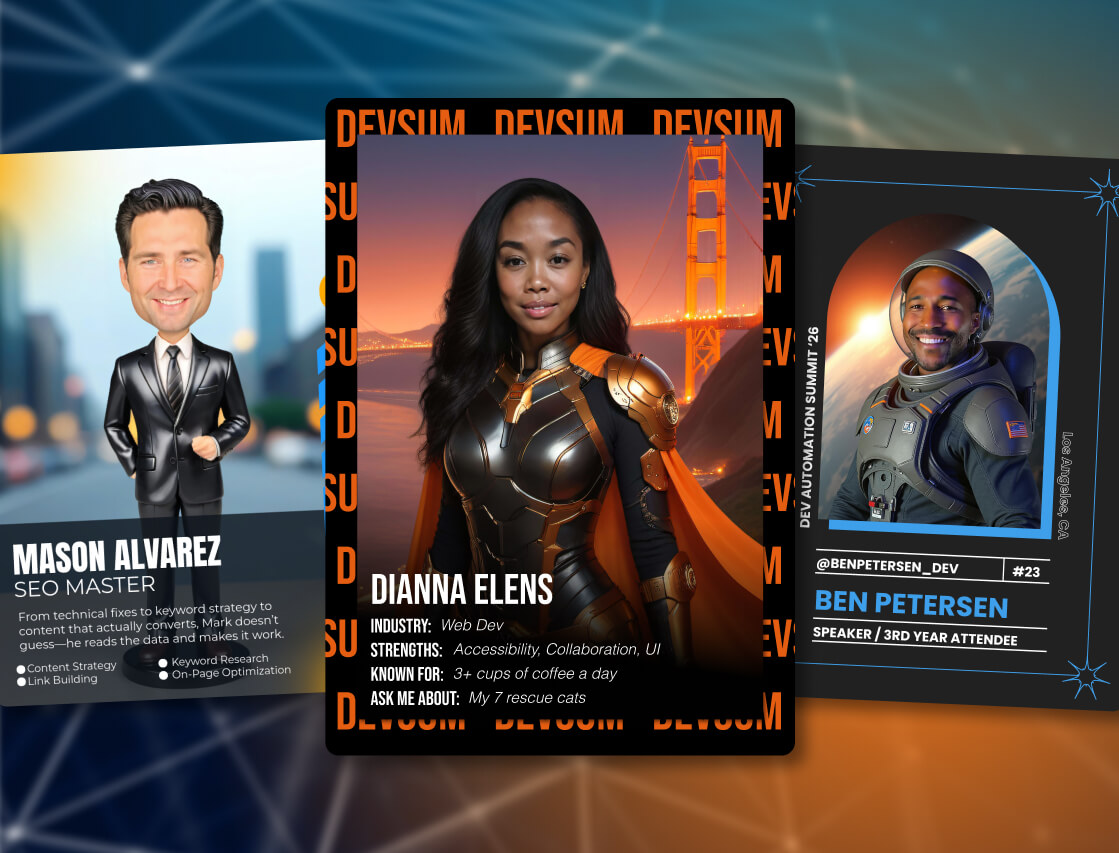
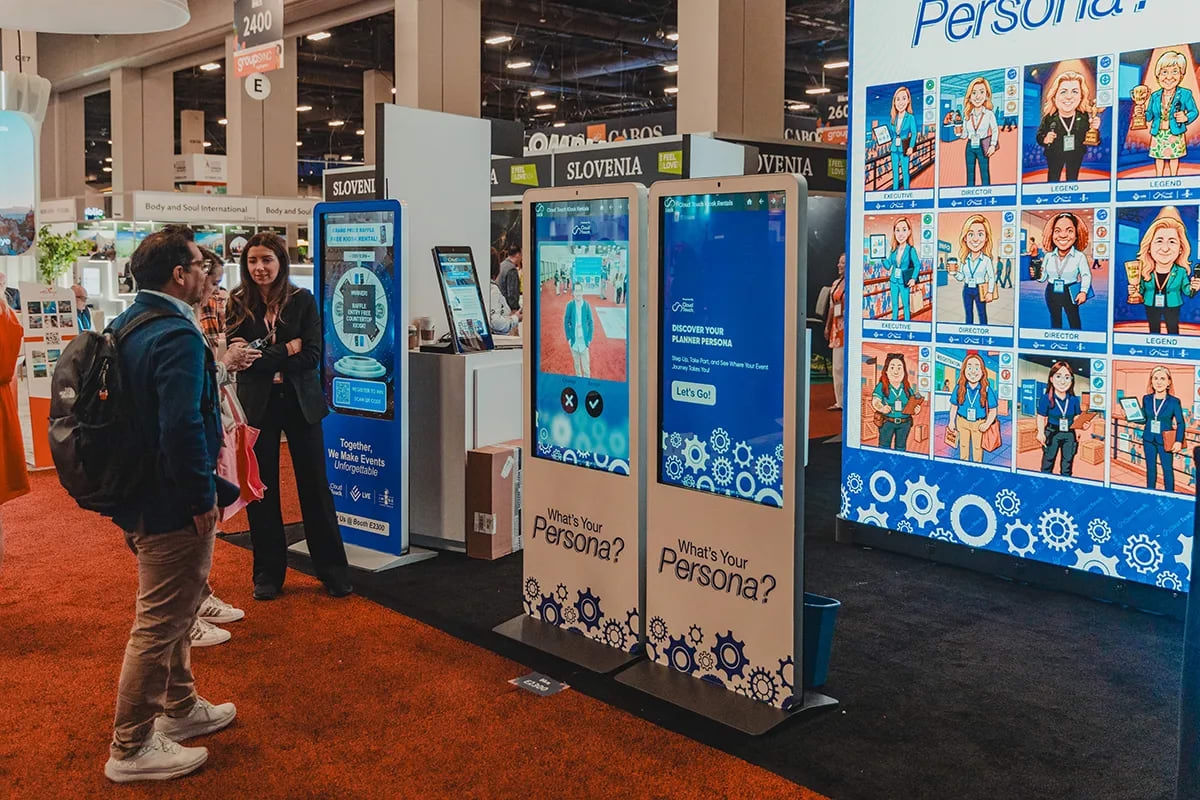
Interactive formats like persona quizzes, trading cards, and AI-generated stories add a layer of personalization that static photo experiences can't match. These formats ask attendees to make choices, answer questions, or contribute creative input that shapes their output. The result is content that feels uniquely theirs, which makes it more shareable and more memorable.
From a marketing perspective, interactive UGC also generates richer data. When someone completes a persona quiz, you learn about their preferences and priorities alongside their contact information. That context makes follow-up outreach more relevant and more likely to convert.
Live Testimonials and Customer Stories
Events are the best environment for capturing authentic customer stories. The energy is high, the experience is fresh, and people are more willing to talk on camera when they're already in a positive, social mindset. A video testimonial captured at a trade show carries more weight than one filmed in a conference room three weeks later.
The tactical move is to build story capture into the event flow rather than treating it as an afterthought. A dedicated space with good lighting and simple prompts (“What brought you here today? What problem are you solving?”) produces testimonials that fuel lead generation and sales enablement for months.
Taylor Prince, Design Director: “Successful activations usually pair the output with strong visual engagement: a pre-populated gallery people can immediately see, large displays, and a landing page with a clear, intuitive prompt. That clarity drives participation.”
How to Design Events That Generate UGC at Scale
UGC doesn't happen by accident. The brands that consistently produce high volumes of quality content from events are designing for it from the start, building content creation into the event architecture rather than bolting it on as an afterthought.
Start with a Genuine Value Exchange
The foundation of effective event UGC is a genuine value exchange. Attendees willingly share their attention and contact information in return for something genuinely valuable: a personalized photo, an AI-generated portrait, a branded keepsake, or an interactive experience they can't get anywhere else. That voluntary exchange produces higher-quality leads than forced badge scans or generic form fills, because the person actually wanted to participate.
Design every activation around this principle. Ask yourself: what is the attendee getting that's worth their time and data? If the answer is “a chance to be in our marketing materials,” the participation rate will reflect that. If the answer is “something cool they'll actually want to share with their network,” you'll see participation rates climb toward the 80-90% range that the best activations achieve.
Remove Every Friction Point
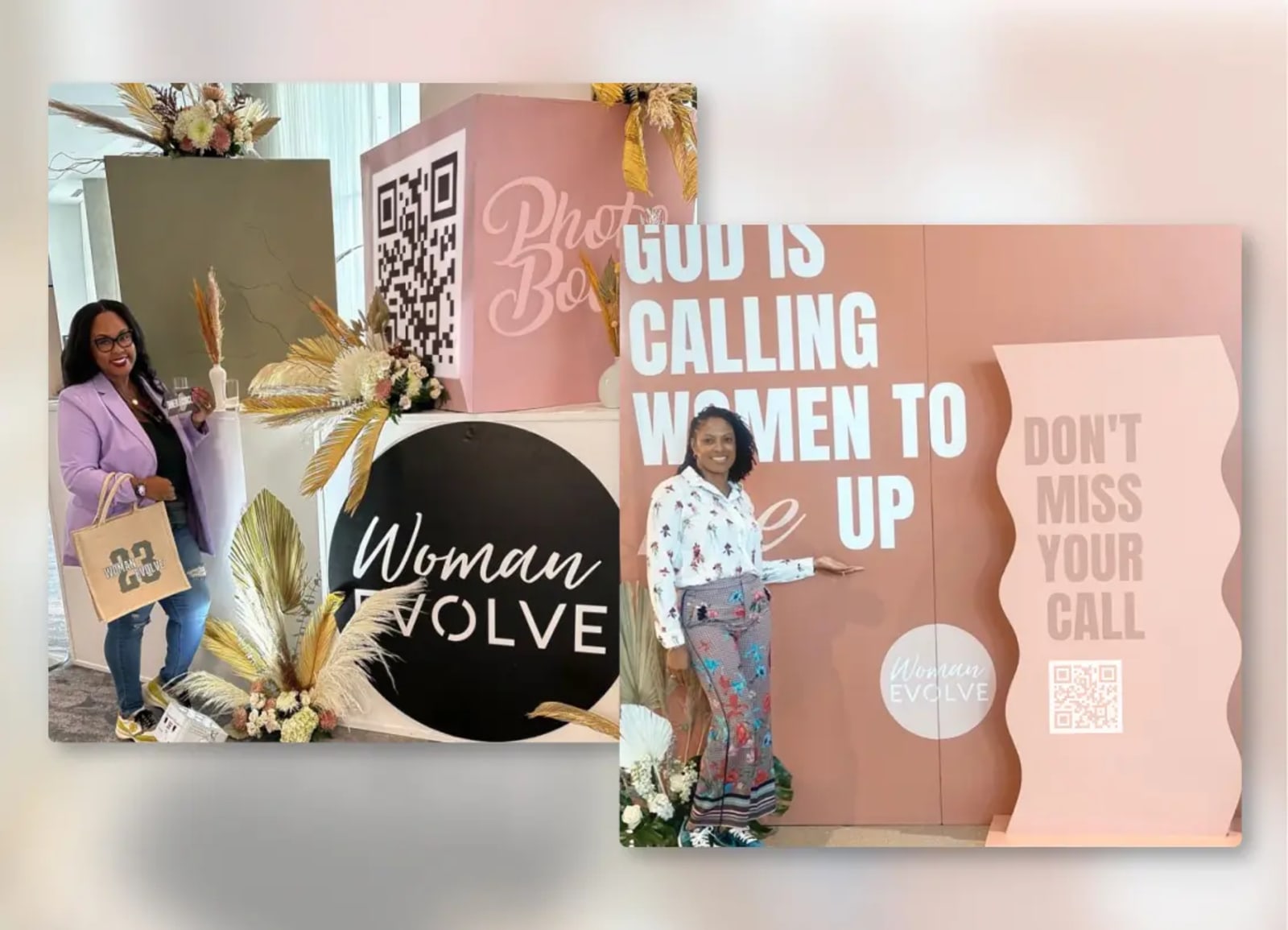
The biggest killer of event UGC is friction. Every additional step between “I want to do this” and “done, shared” costs you participants. Browser-based experiences that work on any device eliminate app downloads. QR codes eliminate the need to type URLs. Automated email delivery eliminates the “I'll share it later” problem that ensures most content never gets shared at all.
The technology should be invisible. When a experiential photo booth activation works well, attendees don't think about the technology. They think about the experience and the output. That's the goal.
Design for Shareability, Not Just Participation
There's a difference between getting someone to participate in an activation and getting them to share the result. Participation gives you a lead. Sharing gives you organic reach. The best activations accomplish both, but only if the output is genuinely worth posting.
This means the visual quality has to be high enough that people are proud to put it on LinkedIn or Instagram. The branding has to enhance, not overwhelm. And the format has to be native to the platforms where your audience spends time. For B2B events, LinkedIn-ready professional portraits and branded cards outperform casual social formats. For consumer activations, Instagram Stories and TikTok-friendly content drives reach. Festival brand activations are the clearest test of that principle, since festival crowds only share what genuinely earns a place in their day.
Dylan Bell, Technical Account Manager: “AI works best when you embrace the dynamism that comes along with those idiosyncrasies. Trying to force AI into a box tends to breed more disappointment.” The same principle applies to UGC: give people a creative framework and let the authenticity come through.
Layer Multiple Content Types
The most successful UGC strategies don't rely on a single activation. They layer multiple content types across the event journey. A quick photo experience at the registration desk catches the broadest audience. An AI-powered transformation at the main booth creates standout moments. A live social wall in the networking area sustains engagement throughout the day. A video testimonial station near the exit captures reflections while the experience is fresh.
Each layer serves a different marketing goal (awareness, engagement depth, lead capture, social proof), and together they create a content engine that produces a diverse library of assets from a single event. The reason this design work pays off is that each step feeds the next, which is the argument behind the participation loop.
Measuring UGC Impact: From Engagement to Pipeline
The biggest mistake in UGC measurement is stopping at vanity metrics. Likes and impressions matter, but they're not the metrics that justify budget. Effective UGC measurement tracks three layers: creation, distribution, and business impact.
Creation Metrics
These tell you whether the activation worked. Participation rate (what percentage of attendees created content), content volume (total pieces generated), and completion rate (of those who started, how many finished) are the foundation. A high participation rate with a low completion rate signals friction in the experience. A low participation rate signals a positioning or visibility problem.
Distribution Metrics
These tell you whether the content traveled. Social shares, earned impressions, hashtag volume, and gallery views measure how far beyond the event the content reached. Personalized content delivery emails are particularly powerful here: experiential marketing activations that deliver branded content via email see open rates as high as 95%, because people actually want what's in the email.
Business Impact Metrics
These are what matter to leadership. Leads captured through content delivery gates, email engagement rates on follow-up sequences, cost per lead, and post-event conversion rates connect UGC directly to pipeline. The goal is a story that sounds like this: “We generated 3,200 pieces of content, drove 18,000 organic social impressions, captured 1,400 qualified leads at $12 per lead, and converted 8% within 60 days.”
That's the kind of reporting that turns UGC from a “marketing nice to have” into a funded, recurring budget line. When you can demonstrate that every event activation is producing measurable marketing fuel, the conversation shifts from “should we do this?” to “how do we scale it?” For a deeper framework on connecting event metrics to business outcomes, see our guides on how to measure event success and how to measure experiential marketing ROI.
UGC Best Practices for Enterprise Events
Scaling UGC across a multi-event program introduces challenges that single-event activations don't face. Here's what enterprise teams need to get right.
Legal Permissions and Content Rights
Transparency is the only approach that works at scale. Include clear content usage terms in your event registration, display signage at activation points, and build consent into the experience interface itself (attendees agree before they participate). For high-profile content you want to feature in major campaigns, reach out to the creator directly for explicit written permission. A personal message goes further than fine print.
Content Moderation and Brand Safety
If you're displaying UGC on live screens at the event, moderation isn't optional. Use platforms with approval queues that let you review content before it goes public. For hashtag campaigns, assign a social media manager to monitor the feed in real time during peak hours. The vast majority of event UGC is positive (people are having a good time), but having a moderation workflow prevents the rare off-brand post from appearing on a 10-foot screen in front of your CEO.
Scaling Across Multi-Event Programs
Enterprise brands don't run one event per year. They run dozens, sometimes hundreds. The UGC strategy that works at scale is one built on consistent infrastructure with customizable creative. A web-based platform that can be themed for each event, branded for each client, and measured through a single analytics dashboard eliminates the per-event setup burden that makes UGC programs unsustainable.
The operational advantage of browser-based experiences is significant here. No hardware to ship. No apps to install. No on-site technical staff required. QR codes posted at the booth, a tablet or screen showing the live gallery, and an internet connection. That's the entire footprint, and it works whether you're activating at a 50-person executive dinner or a 10,000-person trade show.
Integration with CRM and Marketing Automation
UGC-generated leads are only valuable if they flow into your existing systems. The activation should feed contact data directly into your CRM (HubSpot, Salesforce, or whatever your team uses) with source attribution that distinguishes “AI photo booth at Trade Show X” from “badge scan at Conference Y.” That attribution is what allows you to compare activation ROI across events and make data-driven decisions about where to invest.
The best setups also trigger automated follow-up sequences. When someone creates content, they receive their photo via email (the 95% open rate touchpoint). The follow-up sequence then nurtures that warm lead with relevant content, case studies, or a meeting request, all automated and all traceable back to the specific activation that generated the lead.
Ready to turn your next event into a content engine?
Book a DemoOr explore: Activation Concepts | How It Works