Table of Contents
If you run lead capture at events, you have probably been sold the same idea more than once: the way to turn a booth into a pipeline is interactive content. Quizzes, polls, spin-to-win, scratch-offs, branded surveys. The pitch is consistent, and the supporting stat shows up everywhere: interactive content converts at roughly twice the rate of static content. It is a real number, and for pure qualification it holds up.
But there is a quieter question underneath it that most engagement tooling never answers. A quiz can capture a lead. Can it also hand the guest something they actually want to keep, and produce branded content your team uses for the next six months? Photo and video activations do all of that in a single motion. That difference is not cosmetic. It changes what the activation is worth long after the event ends.
The trade most event marketers have learned to accept
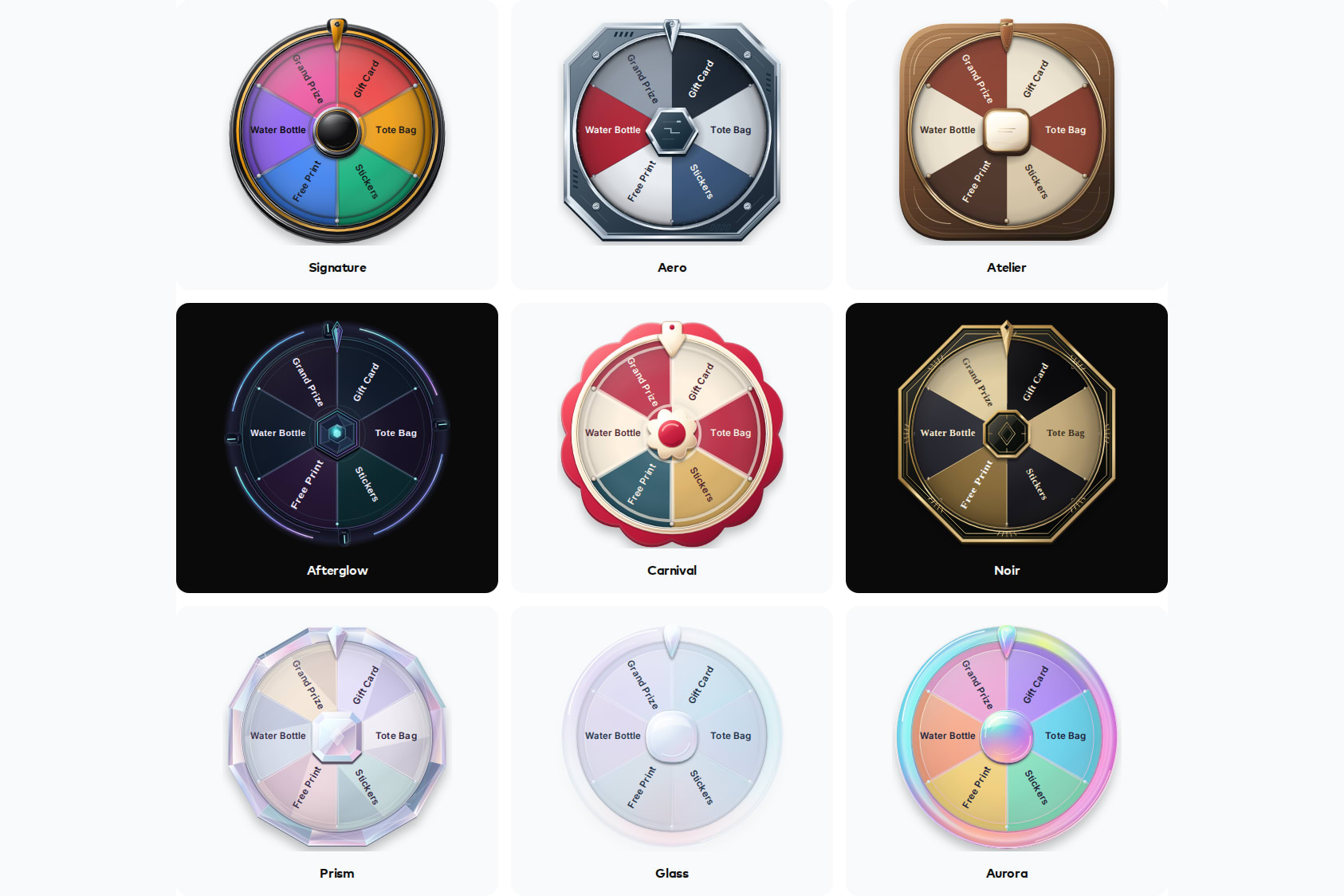
Engagement platforms have trained the market to think of "interactive content" as a set of question-and-answer mechanics. You build a quiz or a poll, you gate the result behind an email field, and you walk away with contacts. It works, and we are not here to argue that quizzes don't capture leads. They do.
The trade you accept when that is the whole strategy is subtler. The engagement is transactional. A guest answers a few questions to see a score or win a prize, hands over an email, and moves on. Nothing leaves with them. Nothing leaves the event. The brand gets a row in a CRM and a participation count, and that is where the value stops.
What quiz mechanics leave on the table
Think about the asset a quiz produces. For the guest, it is a result screen they forget by the time they reach the next booth. For the brand, it is a data record and not much else. There is no artifact that travels, no piece of content the guest is proud to post, no reach beyond the people who physically stood at your booth.
That last point is the one marketers feel at budget review. You paid for the space, the staff, the build, and the tooling, and the return is bounded by foot traffic. Whatever happened at the booth stayed at the booth. The activation had no second life.
Why photo and video work as a lead engine
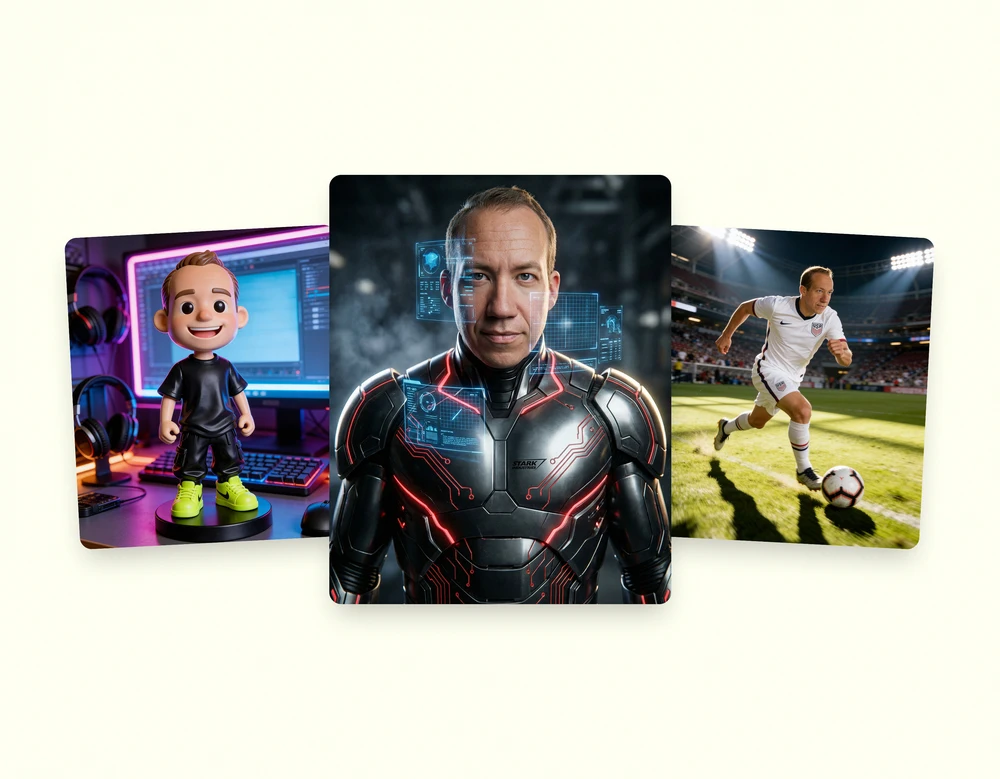
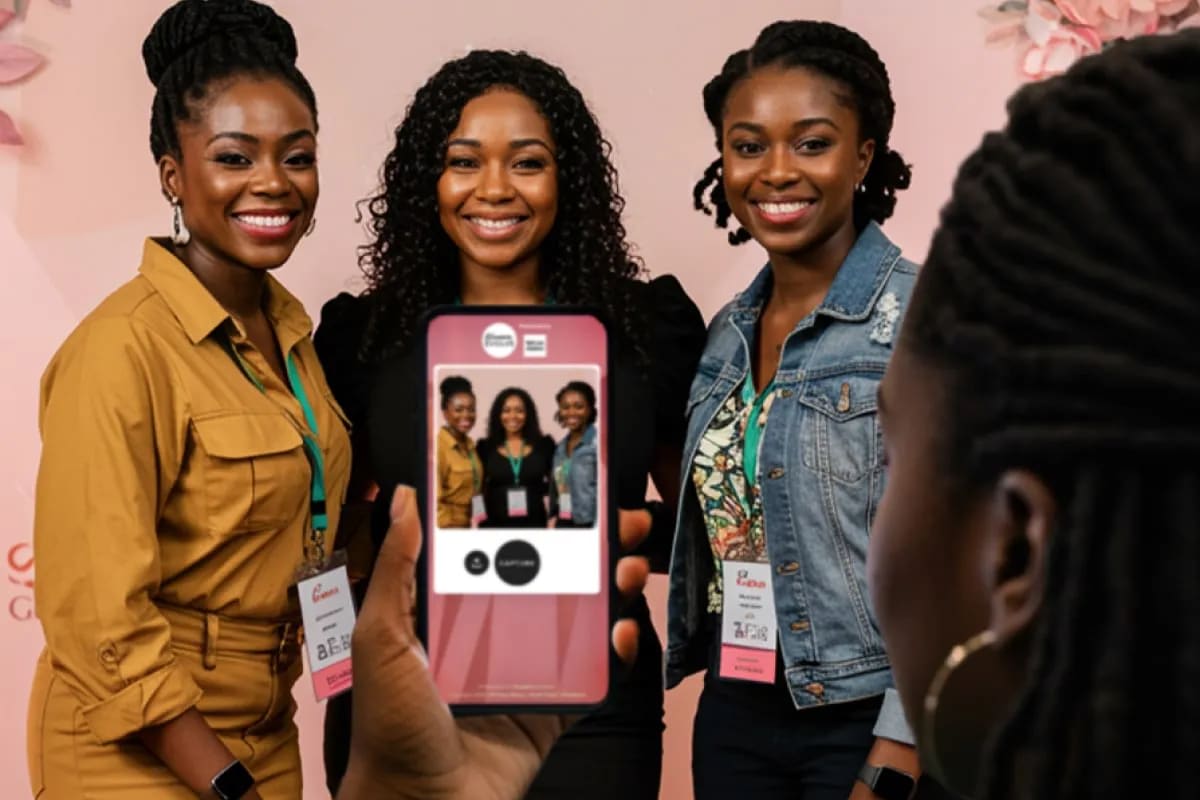
Photo and video activations capture marketing data better than quiz-only tooling because the thing the guest wants and the thing the brand wants are the same moment. A guest opts in to receive a branded portrait, a stylized video clip, or a themed photo because they want the output. The data exchange happens naturally inside that opt-in, not as a toll booth in front of a prize. Leads in, content out.
This is the part of the category that gets underrated, and our CEO has strong feelings about why.
Sam Eitzen, Snapbar CEO: "People underrate the power and influence of photo and video content. Things like photo booths, or event photography, or UGC are kind of seen as trivial social media, selfie culture add-ons, and not the powerful data collection and brand reach tools they can be if done well."
When the engagement surface is something a guest genuinely wants, three things happen at once instead of one. That is the whole thesis, and it is worth naming the parts.
The three jobs every activation should do
Sam frames a strong activation as doing three jobs together. Most tooling is built for one or two of them. Visual media is one of the few formats that delivers all three in the same interaction.
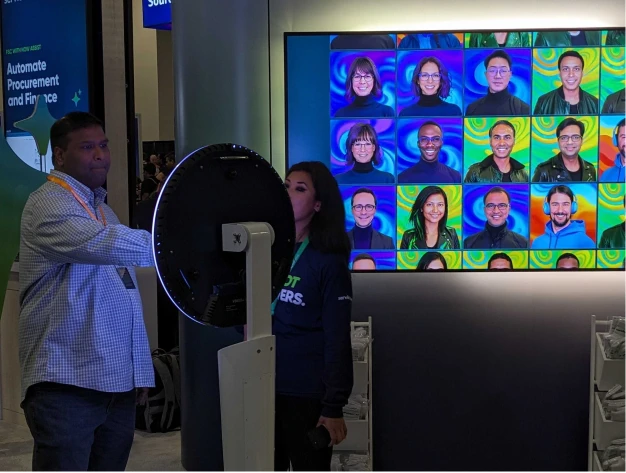
Engage. People will line up for a branded AI portrait or a short video they can post. They will not line up for a survey. The pull of a visual activation is the experience itself, which means higher participation rates and a queue that markets the booth to everyone walking past.
Gather data. The contact information, segmentation signals, and opt-ins arrive inside the experience, captured at the peak moment of intent. Where that data then goes, and whether it reaches your CRM during the event or waits for a CSV export, is its own procurement question: where your event lead data actually goes. A guest who just made something with your brand is in a different attention state than a guest checking a box to clear a popup. Lead quality reflects that.
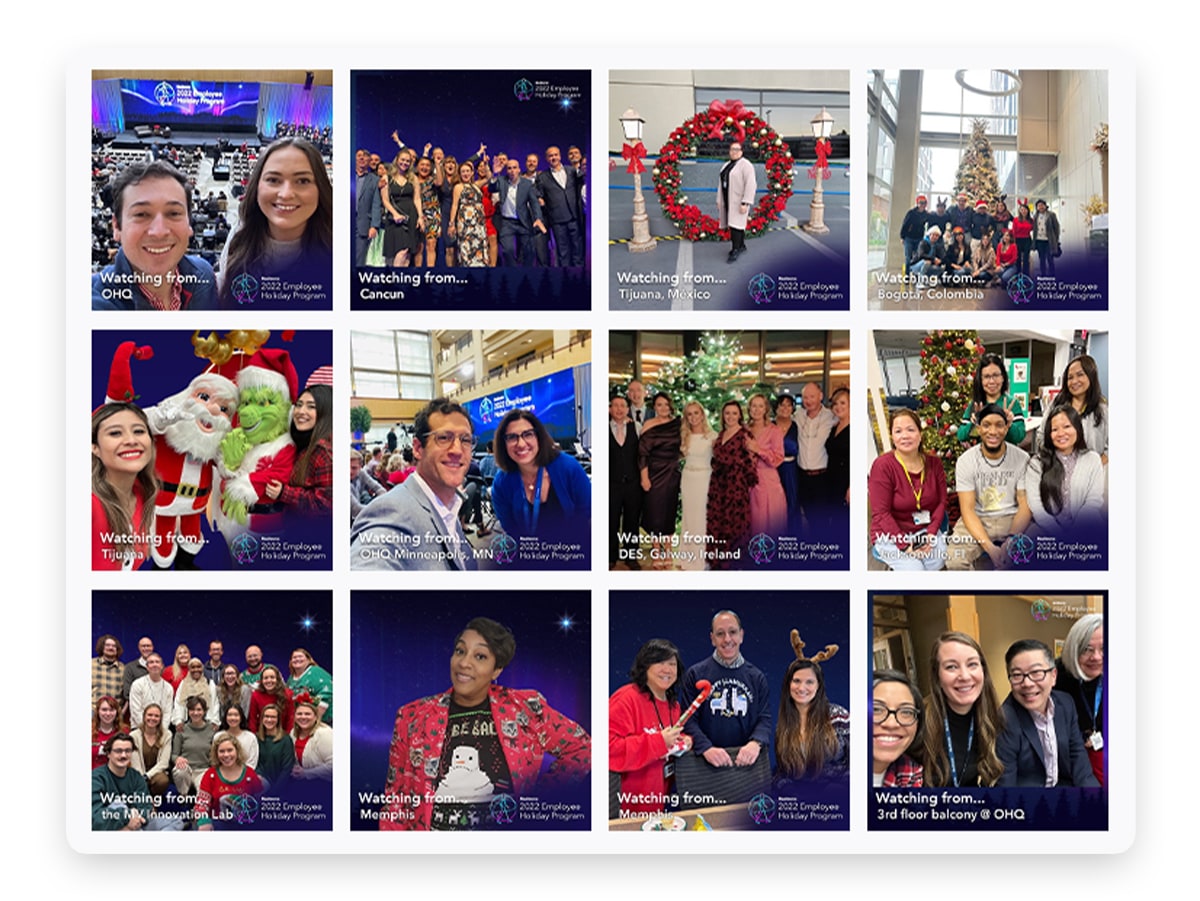
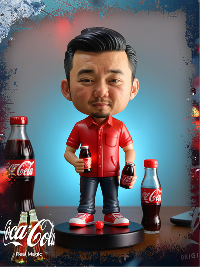
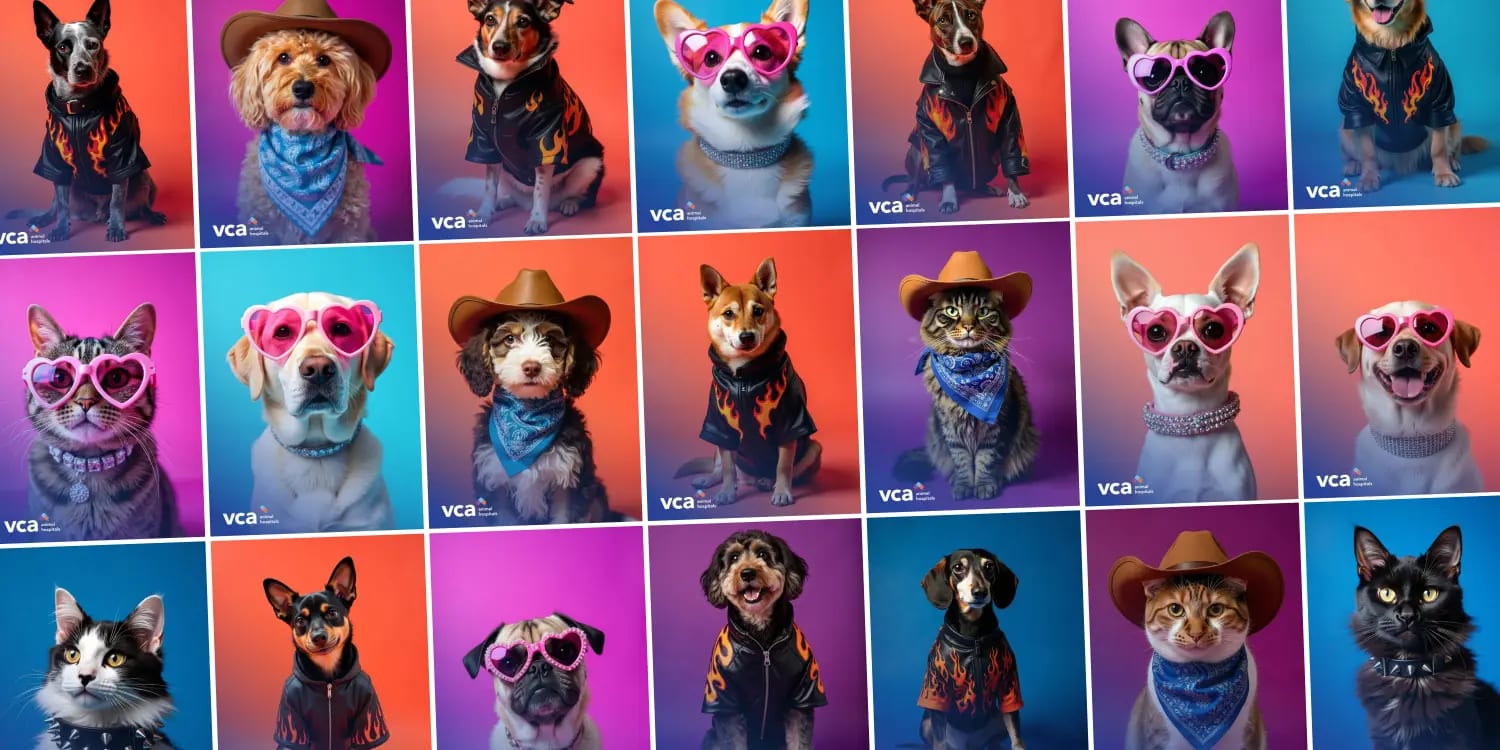
Generate content. Here is the leg quiz mechanics structurally cannot reach. Every participant walks away with branded photo or video, and a meaningful share of them post it. The activation produces marketing fuel your team uses across organic social, paid, lifecycle email, sales follow-up, and case studies, and it extends your brand's reach to the networks of everyone who participated.
A quiz platform does the first two jobs. It cannot do the third, because a quiz produces no asset worth keeping. That is not a knock on quizzes as a mechanic. A persona quiz or a poll can be a great front door, and pairing one with a visual capture is often the strongest setup of all. The point is what happens when the engagement itself is the content. If a quiz is the front door you have in mind, our guide to persona quiz activations walks through how the mechanic captures and qualifies leads on its own.

Why the content leg changes the math
The content leg is what turns an activation from a cost line into an asset that compounds. A single visual activation can produce hundreds to thousands of pieces of brand-controlled content, and that content keeps working for months after the event closes. First-party data, qualified leads, and marketing fuel come out of one motion instead of three separate line items.
This is also where the difference stops being a feature gap and starts being a capability gap. An engagement platform can add a photo feature. What it cannot quickly add is the years of creative and production experience that make the output good enough that people actually want to share it. Sam draws the line clearly.
Sam Eitzen on what makes the difference: "We are specialists in the photo and video experiential realm and that helps differentiate us from everyone else. I highly doubt they'll expand into our services because of how creative they are and how much experience you need in that world."
AI is part of how the outputs get made now. It is the mechanism that turns a quick capture into a branded portrait or a stylized video at the speed an event demands. It is not the headline. The headline is the result the guest wants to share and the data your team gets to keep.
What a visual lead engine looks like in practice
The reach side of this is easy to picture. The pipeline side is where skeptics live, so it's worth being concrete. Visual content doesn't just get shared, it gets used inside the sales motion. We've watched clients run AI Stories activations and then watched their salespeople pull the outputs into follow-up emails, where a personalized branded asset does more work than another "great to meet you" note. The activation captured the lead, and the content the guest made became the reason the follow-up got opened.
Sam Eitzen, Snapbar CEO: "What stands out to me in these stories is the marriage of a fun experience for the user and a helpful task for the salesperson. It completes the business cycle. People want results from their activations and marketing and events, not just smiles and good vibes."
That's the difference between an engagement number and a lead engine. The fun moment and the business outcome are the same artifact, moving through the funnel together. A quiz can tell you who someone is. A visual activation tells you who they are, hands them something they want, and gives your sales team a reason to reach back out.
The pattern holds at scale. Activations we've run for brands like Coachella, Dreamforce, and CES throw off thousands of branded assets per event, and the contact data captured alongside them performs. Delivered content lands at a 95% email open rate, because a guest who just made something is a guest who opens the email to go get it. That open rate is the tell. The data isn't just captured, it's engaged.
What to measure
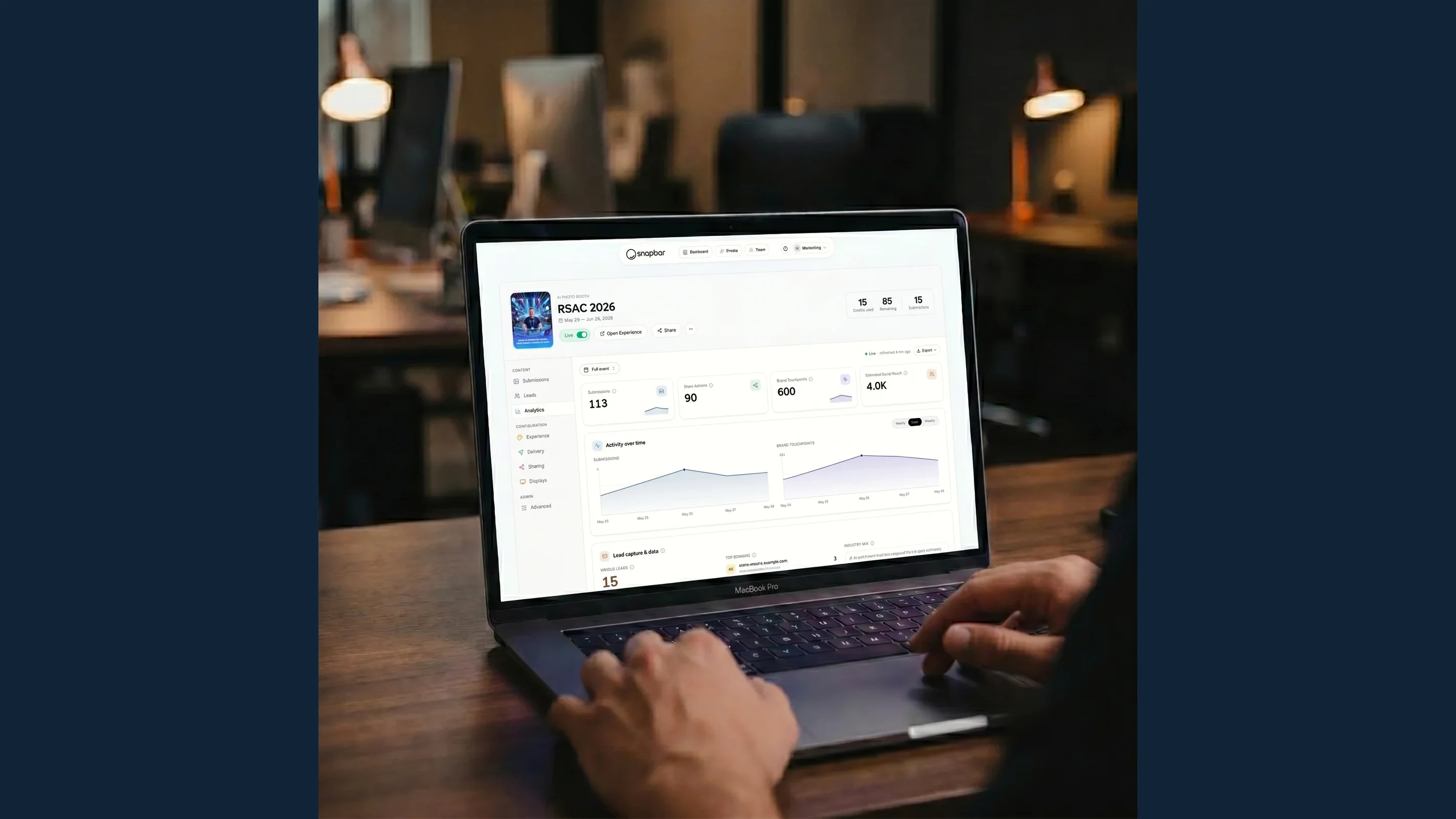
If you are evaluating a visual activation as a lead engine rather than as entertainment, measure it like one. Four numbers tell the story, and they map directly to the three jobs above plus the reach the content earns you.
The four numbers that tell the story
Participation rate. What share of attendees engaged? Visual activations tend to run high here because the experience sells itself, pulling the majority of a room rather than a motivated slice of it.
Capture rate. Of those who participated, how many opted in with usable contact and segmentation data? Because the data exchange is folded into something they want, this number tends to outrun gated-quiz capture.
Content output and reach. How many branded assets did the activation produce, and how far did they travel through attendees' own channels? This is the line item quiz tooling cannot report at all.
Qualified pipeline. How many of the captured leads progressed, and did the content show up in the sales follow-up that moved them? This is where the activation proves it belongs in the marketing budget, not the events budget.
When a visual activation is the right call, and when a quiz is enough
Visual media is not the answer to every activation brief, and pretending otherwise is how you lose a room's trust. A simple quiz or poll is plenty when your only goal is qualification, the event is small, and brand reach is not on the scorecard. If you need to sort 200 attendees into three buckets, you do not need a portrait engine to do it.
A visual-first lead engine earns its place when the event has real traffic, when you want the activation to keep producing value after the doors close, and when demographic or behavioral data matters as much as the headcount. High-traffic trade shows, brand activations, customer summits, and any program where the content itself is part of the goal. That is where engaging, capturing data, and generating shareable content in one motion stops being a nice-to-have. Once that's the brief, the next question is which platform you run it on, and our guide to comparing photo booth software for corporate events covers the criteria that separate them.
For a long time, photo and video at events got filed under "fun." The marketing teams getting the most out of them have stopped treating them as a luxury add-on and started treating them as a tool that does a job no quiz platform can. The platforms that capture engagement are useful. The ones that also capture data and produce content you keep are the ones that start to feel less like something you want and more like something you need.
Want an activation that captures leads and produces content you'll use for months?
We'll help you scope a photo or video activation that engages the room, fills your pipeline, and gives your team marketing fuel long after the event.
Get a QuoteOr explore: AI Photo Booth | AI Video