
Table of Contents
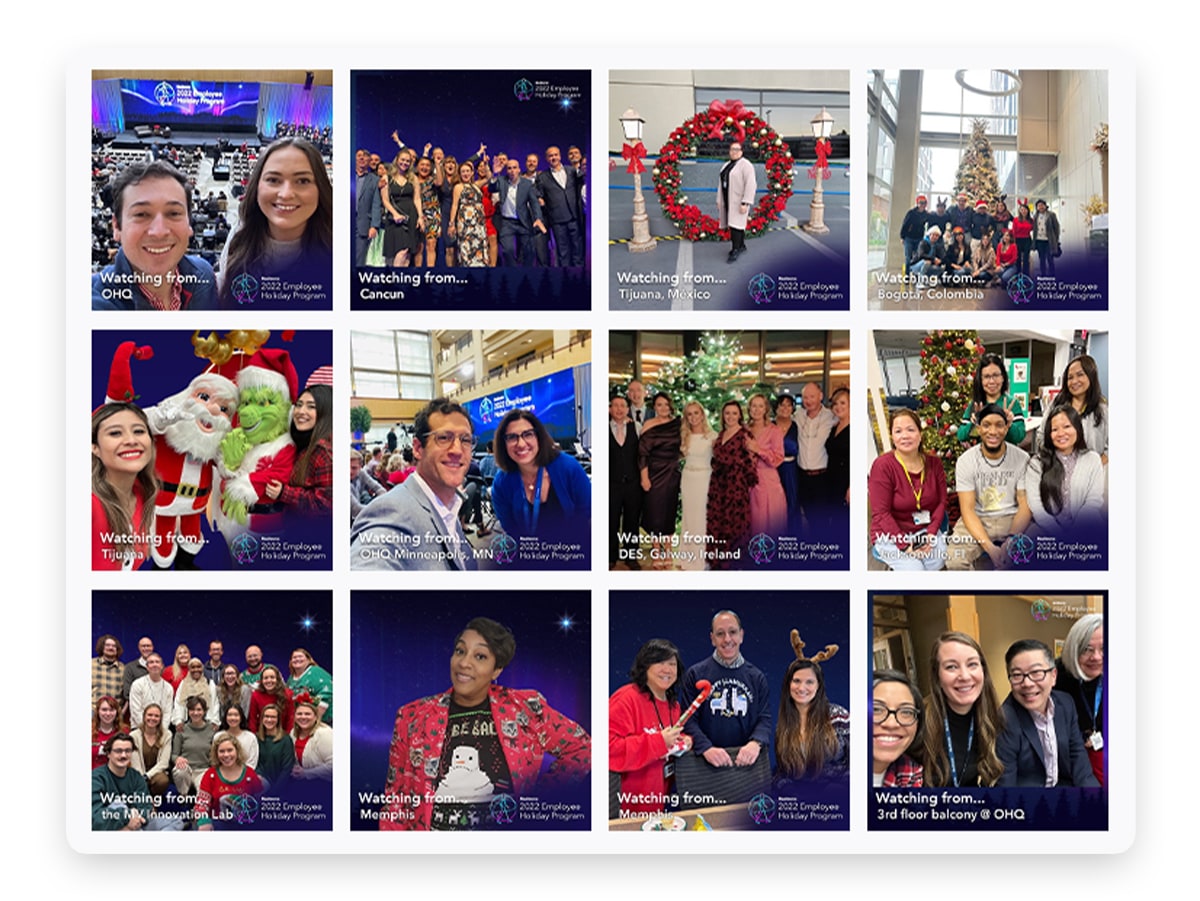
You already run the polls. The Q&A is open, the icebreaker is loaded, and the stream is up in four time zones. Most all-hands meeting engagement ideas stop there, and the room still splits in two: the people in the auditorium, and the people watching it. Here's the idea we keep coming back to for kickoffs and town halls: one company-wide photo mosaic that every office and every remote employee adds to from their phone, at the same minute, and watches fill in on the same screen.
The picture is the excuse. The outcome is a participation count you can put next to headcount, and a company image that only exists because most of the company showed up in it.
Key takeaways
- One wall, every location. HQ and the remote stream contribute to the same image, not a local version of it.
- Phone and QR code. No booth session, no app to install, no login.
- The mosaic never runs out of room, so every guest makes it in.
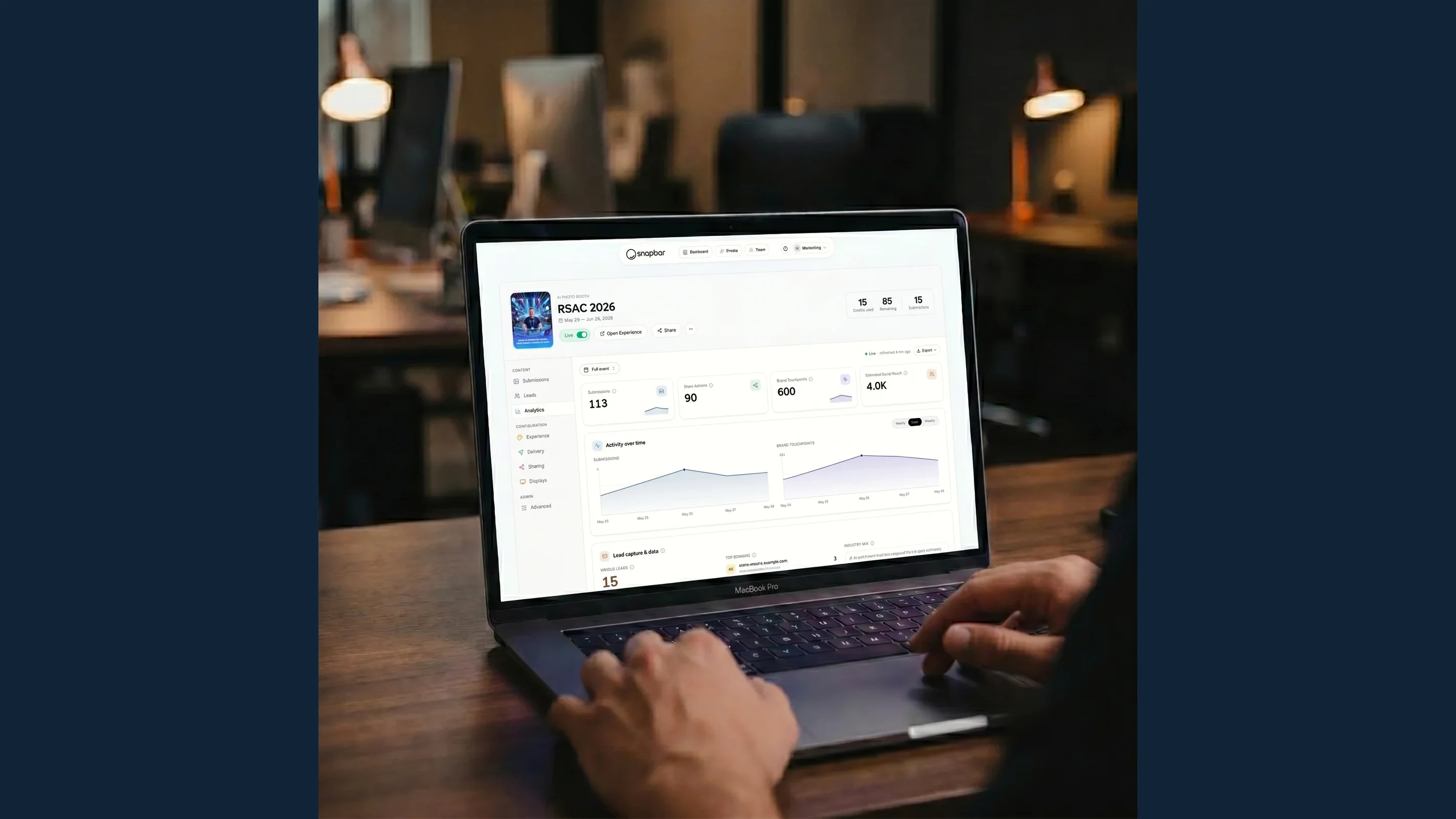
- The dashboard reports uploads placed on the wall. Divide by invitees and you have a participation rate.
Why do all-hands meetings and sales kickoffs lose the people who are not in the room?
Because nearly every interaction in the agenda was designed for the room. The applause, the side conversations, the walk to the coffee station between sessions: none of it reaches a laptop in Manila. Remote and hybrid employees don't disengage because they care less. They disengage because the meeting keeps handing them a seat with no way to act.
The numbers on this are not subtle. In Microsoft's 2022 Work Trend Index, a survey of 31,102 workers across 31 markets, 43% of remote employees and 44% of hybrid employees said they do not feel included in meetings. In the same report, just 27% of organizations had set any new meeting etiquette for hybrid work, and 43% of leaders named relationship-building the hardest part of remote and hybrid work. A year later, Gallup's 2023 read on remote workers, drawn from a panel of 18,871 U.S. employees, found only 28% of exclusively remote employees strongly agreed they feel connected to their organization's mission and purpose. That tied the lowest figure Gallup had recorded for the group since 2011. Hybrid employees came in at 35%.
Read those together and the problem behind most sales kickoff engagement ideas gets clearer. The gap isn't content; remote staff hear the same keynote. The gap is participation parity: whether the person on the stream can do the same thing, at the same moment, as the person in row three. Town hall engagement ideas that close that gap need an activity where location doesn't change what you're allowed to do. That's a high bar for most formats. It's the whole premise of this one.
What is a company-wide photo mosaic?
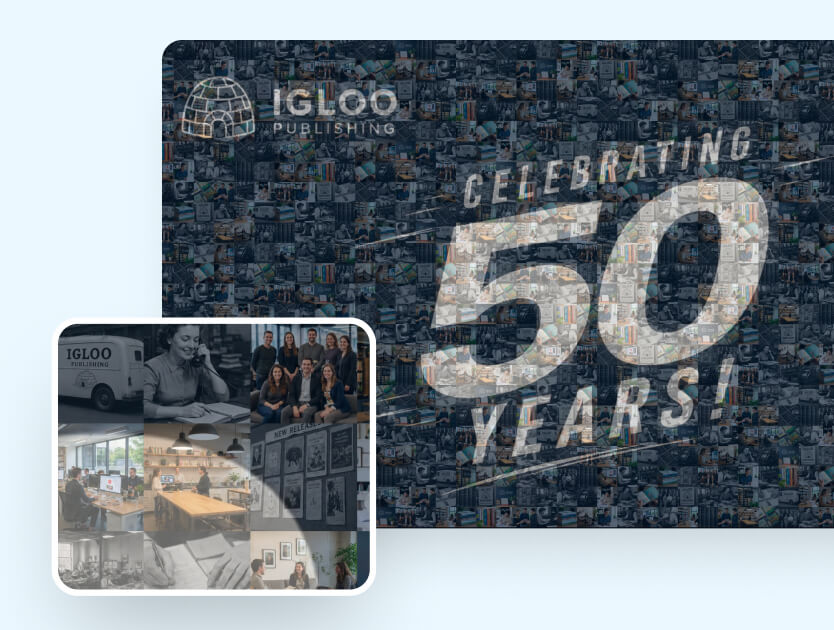
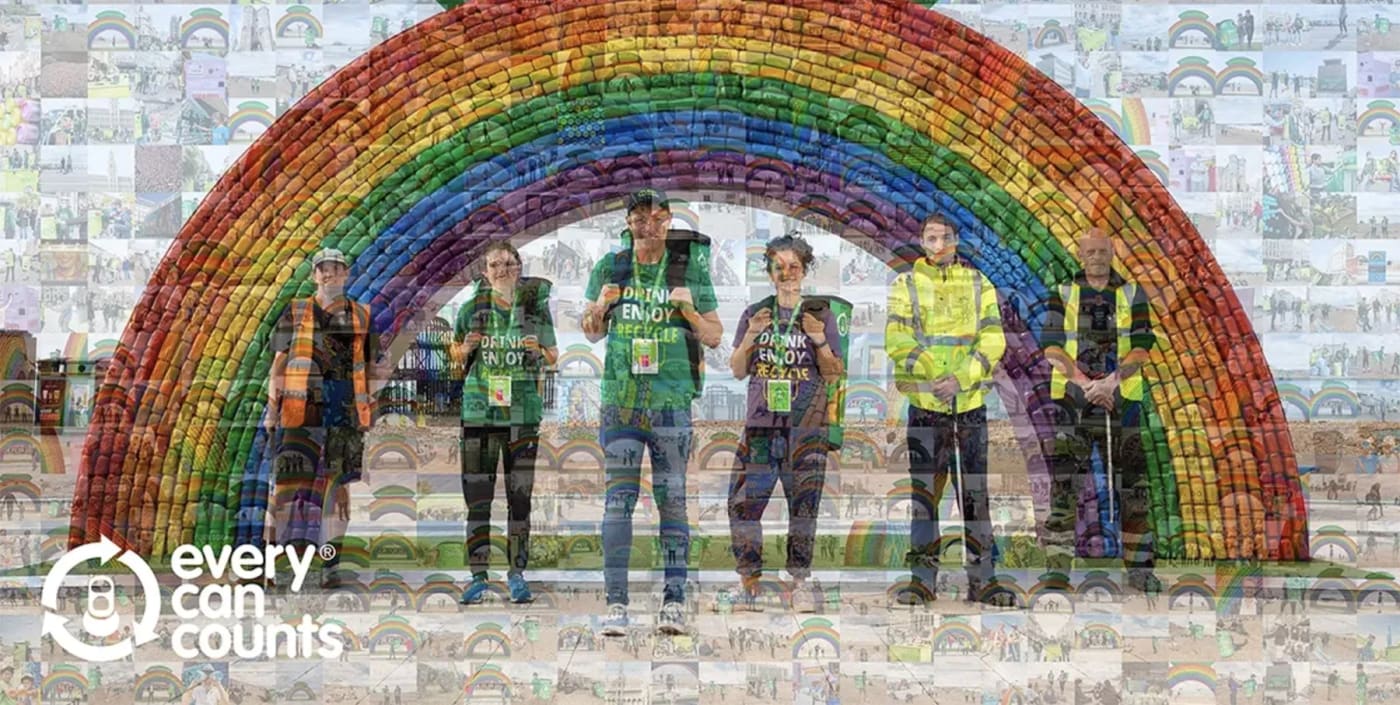
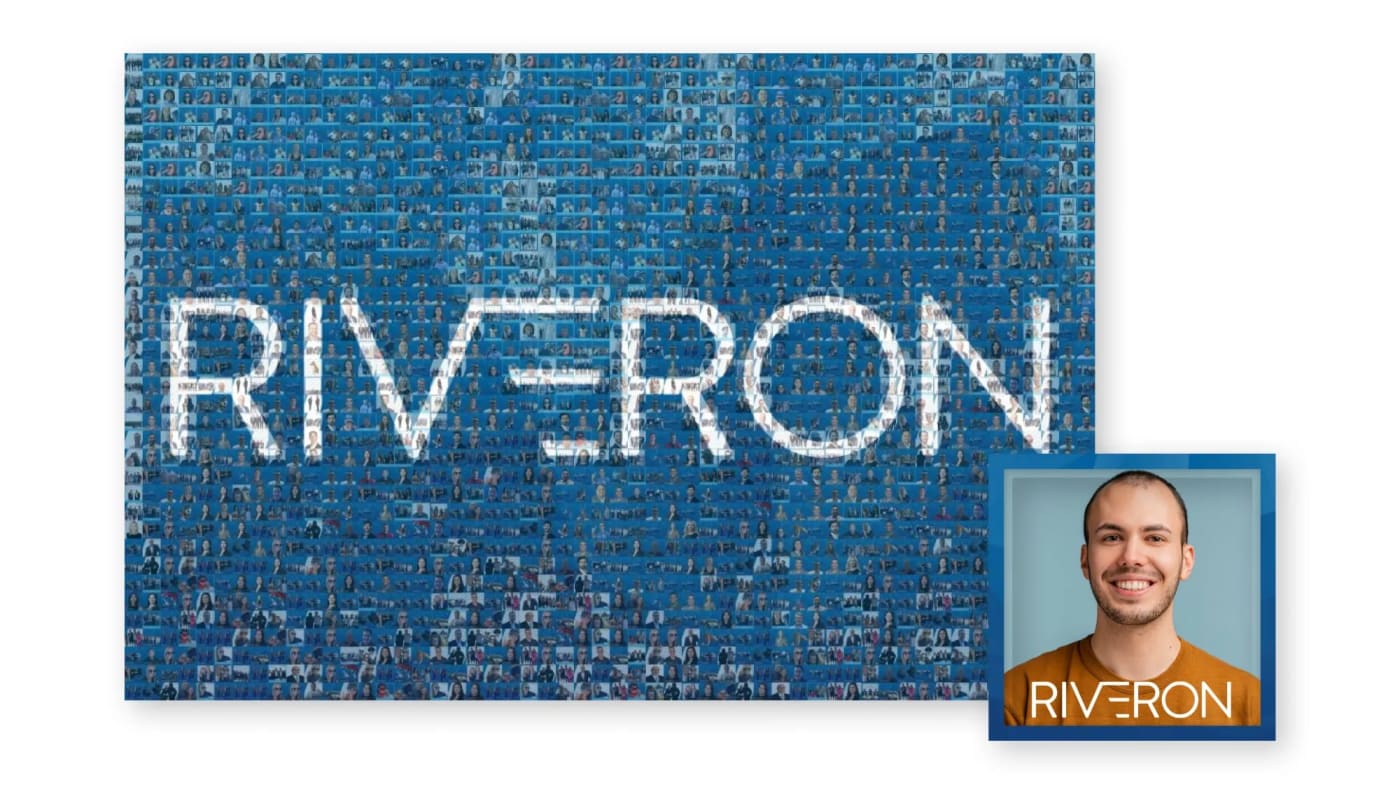
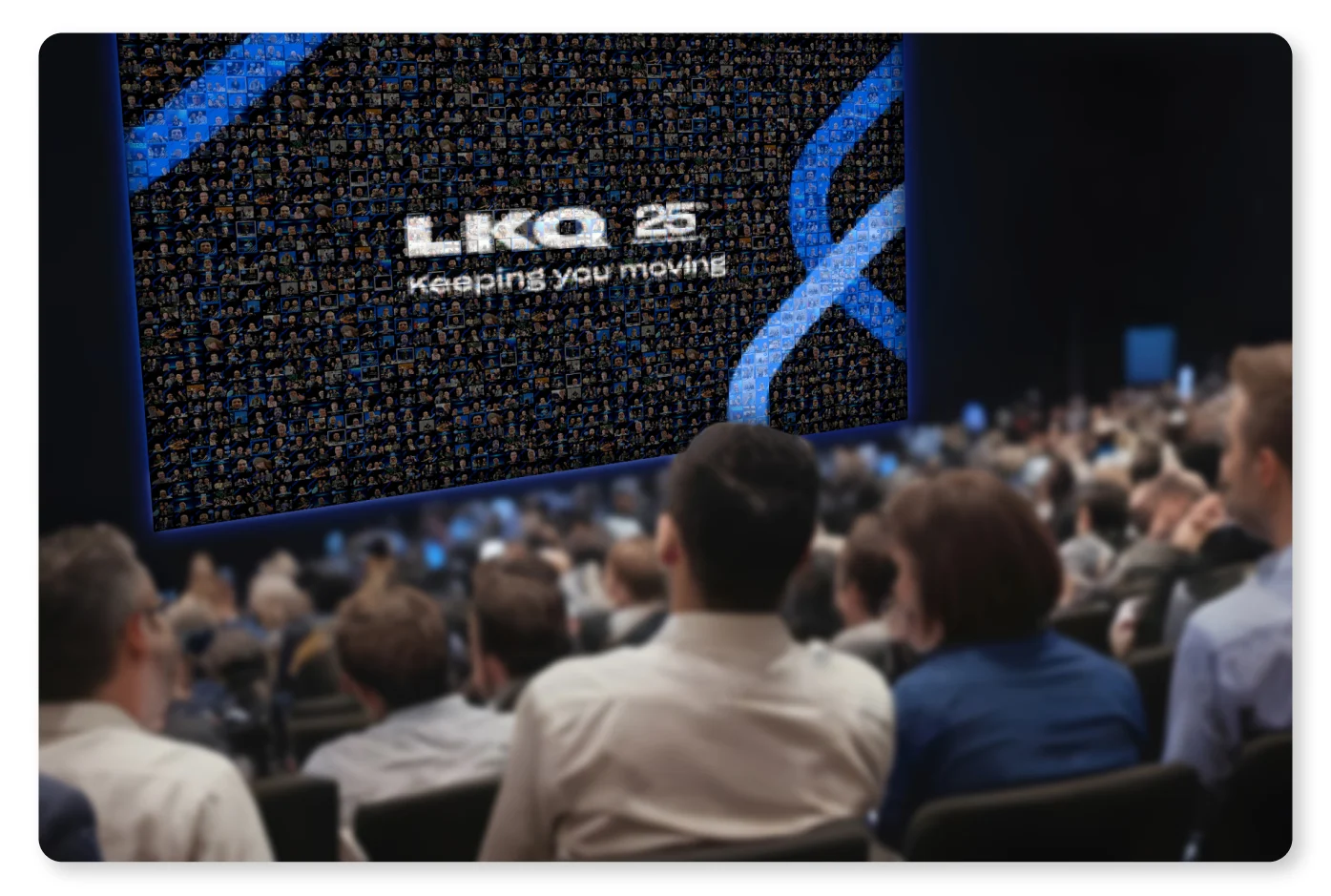
A company-wide photo mosaic is one branded image, usually your logo, assembled live from photos employees add by scanning a code with their phone. No booth, no app, no session to book. Each photo becomes a tile, the wall fills in on the main screen and the stream, and the finished piece is the company, made of itself.
Two recipes from our internal-events catalog cover most versions of this. Global Company Kick-Off Galleries is the live-gallery build: teams in every region capture photos styled to the kickoff theme, and a shared gallery grows as they contribute. Then & Now Mosaic preloads the wall with photos from the company's history, then lets employees add themselves live from their phones, so the finished image blends the archive with the people currently in it. Both are packaged on the internal events activation page. For how a live photo mosaic works at any event, that explainer covers it; this piece stays on the distributed-meeting version.
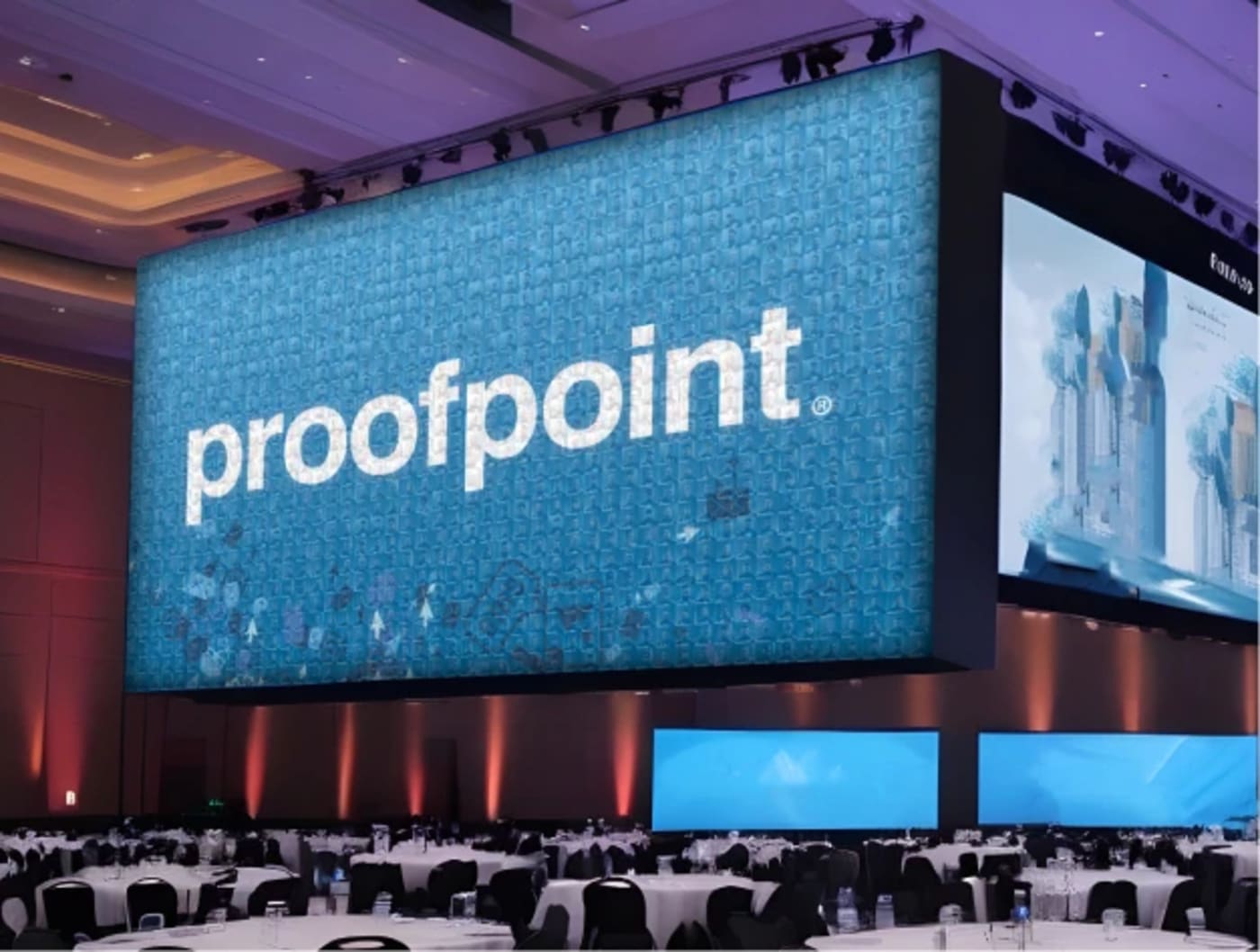
The part that makes a company photo mosaic work at this scale is capacity: the mosaic never runs out of room, so every guest makes it in. A late upload from a sales rep in Dublin gets a tile just like the first one from the front row, which is the only fair version of this activity when you're asking three thousand people to take part.
How do you run the mosaic play at a distributed all-hands or kickoff?
Put the code everywhere at once, name the moment on the agenda, and keep the wall visible where remote people are looking. Most of the work is in the run of show, not the technology. The table below is the version we'd hand a comms lead.
| When | What to do | Who owns it |
|---|---|---|
| Before | Pick the target image: logo, the year's theme, or the Then & Now history preload. Set the corner logo and choose portrait or square tiles. Write the one-line upload prompt (for example, "your desk, your view, your team"). | Internal comms |
| During | Show the QR code on the stream overlay, every office screen, and table cards at the same minute. Give the upload moment a name and a slot in the agenda. Keep the wall on the stream, not only in the auditorium. | Producer / AV |
| During | Watch the moderation queue. Guest uploads run through the same moderation and export flows as booth submissions. | A named moderator |
| After | Drop the finished image into the recap email and internal channels. Ask us to export an MP4 recap of the wall assembling itself if you want the video version. | Internal comms |
Three of those rows carry a product detail worth knowing. Each wall takes a custom corner logo (white, alternate, or sponsor variants) and portrait or square tiles, and both settings carry through the viewer, the deep zoom, and the high-resolution export. Uploads land on the wall in seconds after the scan. The recap video isn't something you generate yourself; you ask us, and we export it for the event.
One mistake we've watched a few teams make: putting the code on the auditorium screen and forgetting the stream overlay. The office fills the wall in four minutes and remote staff watch it happen without a way in, the exact exclusion the play exists to remove. If your producer can't overlay a code, pin it in the stream chat and the calendar invite, and say the word "now" from the stage.
Why does one photo change how people feel about the company?
It's not the photo. It's doing the same thing as everyone else, at the same time, and watching one shared object change because of it. The mosaic gives a distributed company that shared act in about two minutes, and the research on collective gatherings explains why it lands.
There's a body of research behind that claim. In 2015, Dario Páez and colleagues published four studies in the Journal of Personality and Social Psychology on what happens to people who take part in collective gatherings. The honest caveat first: they studied folkloric marches and protest demonstrations, not company meetings, so we're borrowing the mechanism, not the setting.
Perceived emotional synchrony
Across four studies (two correlational, one semi-longitudinal, one experimental), taking part in a collective gathering strengthened collective identity, identity fusion, and social integration, and the mechanism that carried the effect was perceived emotional synchrony: the sense of feeling the same thing as the people around you, at the same moment. Source: Páez, Rimé, Basabe, Wlodarczyk & Zumeta, Psychosocial effects of perceived emotional synchrony in collective gatherings, Journal of Personality and Social Psychology, 2015.
A mosaic is a synchrony device. Everyone acts at once, everyone watches the same wall fill, and the person at a kitchen table in Denver sees their own face land next to the CEO's. The agenda item is two minutes long. What it produces is the feeling Gallup's 28% were missing, for the people who couldn't be in the room as much as the ones who could.
What does the platform report, and what does it not?
It reports uploads placed on the wall. Divide that by invitees, or by headcount, and you have a participation rate for the meeting. That's the number the play is built to produce, and the one we'd put first in the post-event report.
Two limits, stated plainly. First, the dashboard counts uploads for the wall; it doesn't split them by office. If you need per-location numbers, run one wall per region and compare rates, which turns one company image into several and is a real trade-off. Our default advice is one wall and one company-wide rate, because parity is the point. Second, no dashboard reports whether anyone felt more connected afterward. Your next pulse survey is the proxy for that, and it should be named as one. If the remote connection score moves after a kickoff where most of the company uploaded, you've got a correlation worth repeating, not a proof.
For a broader frame on how to measure employee engagement events, and for participation-rate benchmarks on voluntary internal events, both siblings go deeper than this play needs to. One note from our side of the desk: phone-first, no-app participation is a recurring ask in our inbound this year, and the reason is usually the one above. Companies want a number for the whole company, not for the auditorium.
See it in action
Build your own Live Mosaic activation
One branded image, filled in live by every office and remote employee from their phones. Uploads counted in the dashboard, finished wall exported for the recap.
Explore Live MosaicThat's the whole mechanic. What's left is the short list of decisions that separates this from the rest of the all-hands meeting engagement ideas on your list, and most of them belong to you rather than to us.
What to decide before you brief the play
Five calls, in the order they usually come up.
- Which displays are in the quote. A live gallery, a slideshow and a leaderboard come with every activation; the Live Mosaic is a paid add-on, so confirm it is in the quote before you promise the wall to leadership.
- One image or one per region. One image gives you parity and a single rate. Several give you regional comparisons and a harder story to tell on stage.
- Who moderates during the meeting. Someone with the queue open for the length of the upload moment, not the person presenting.
- What the finished image is for. Recap email, intranet banner, lobby print, the MP4 we export for you. Decide early so tile shape and corner logo match the destination.
- Language. Every experience has built-in translations, so a global office scans the same code and reads the guest-facing pages in its own language. Tell us which languages matter.
To see the two recipes next to the rest of what we run for internal events, browse the activation concepts catalog. Of all the all-hands meeting engagement ideas on it, the mosaic is the one we'd start with for a distributed company, because it's the only format where the remote employee and the front row get exactly the same job.
Want every office in the same picture at your next kickoff?
Let's TalkOr explore: Live Mosaic | Internal Events