
Table of Contents
As everything becomes more digital, less in-person, and harder to know whether it's real, the experiences you take part in personally go up in value, not down. Meeting people in person goes up in value, not down. Standing in a room where something happens once and is never repeated goes up in value, not down. Events are one of the ways we still connect in person in a more and more digital-everything world.
So it's strange that the thing people show up for is the thing most programs schedule least. Structured networking events, meaning sessions with a format, a clock, and an assigned reason to talk, still get treated as the soft layer around the real agenda. Planners aren't wrong about what matters here. What's easy to miss is that believing connection is the point and reserving program time for it are two different acts, and as of 2026 we can finally measure the distance between them.
Key takeaways
- Nearly half of event professionals rank peer networking the most important factor in event success. Only 8 percent give more programming to structured connection.
- Open mixers reliably fail on their own stated terms. In a badge-tracked study of a real executive mixer, guests were about 223 percent more likely to encounter someone they already knew.
- The barrier isn't the conversation. It's starting one. People rate opening a conversation as harder than ending it, and they badly underestimate how willing the other person is.
- Structure works because it moves the cost of the first sentence off the attendee and onto the format.
- You rarely need a new session on the agenda. You need a reason to talk attached to something already on it.
What are structured networking events?
Structured networking events are sessions where the format does the introducing. There's a defined activity, a time box, and a stated reason two strangers should be talking to each other. A cocktail reception is the opposite arrangement: it hands people an open room and asks each of them to invent a reason, unassisted, in front of an audience.
The line that matters isn't formal versus casual, and it isn't scripted versus spontaneous. It's who carries the cost of starting. In a structured format, the organizer absorbs that cost once, on behalf of everyone in the room. In an open mixer, every guest pays it individually, a few hundred times over, and a large share of them quietly decline to pay.
The gap, measured
The 2026 Experience Design Report, produced by Encore with Boldpush and based on a survey of 447 event professionals, put a number on the contradiction. In their words:
"Nearly half of respondents (49%) rank peer networking as the most important factor in event success, yet only 8 percent dedicate more programming to structured connection."
Read that twice. Half the profession names peer connection the biggest driver of whether an event works; fewer than one in ten gives it more room on the schedule. Jill Hunt, Vice President of Customer Experience and Insights at Encore, said it plainly when the report was released:
"The data makes one thing very clear: connection isn't a 'nice to have' anymore, it's the core outcome of live events but the industry hasn't fully operationalized that priority."
Operationalized is the right word, and I'd push it further. This is not a belief problem. Nobody needs convincing that people come for each other. It's a scheduling problem, and scheduling problems have fixes.
It's also what people travel for. Talking about trade show attendees on Sorgatron Media's Awesome Chat, I put it this way: "Yes, they want business value, yes, they want to learn, but they really want connection."
Why doesn't unstructured networking work?
Because an open room quietly sends people back to the contacts they already have. That's not a hunch about human nature; it was measured. In 2007, Paul Ingram and Michael Morris published a study in Administrative Science Quarterly (volume 52, issue 4, pages 558 to 585) that put electronic badges on the guests at a real executive mixer and logged every encounter over 80 minutes. Ninety-two executives participated. Ninety-five percent of them said, going in, that their goal was meeting new people.
223%
How much more likely guests were to encounter someone they already had a strong relationship with, versus a stranger, at a mixer where nearly everyone said they came to meet new people. Source: Ingram & Morris, Do People Mix at Mixers?, Administrative Science Quarterly, 2007.
They circulated. They moved around the room. They just kept landing on people they already knew. The paper's title asks whether people mix at mixers, and the answer it produces is not really, and not with strangers.
Here's the mechanism. A mixer is not a neutral room. It's a room with a default, and the default is the cheapest social move available. Walking toward the colleague you had lunch with is free. Walking toward a stranger costs something, and the cost is paid in public. Given a free option and a costly one, people take the free one, then tell the post-event survey they wish they'd met more people. Both things are sincere.
To be fair to the format: mixers are very good at one job, which is deepening relationships that already exist. If you want an established community to have time to catch up, an open reception is the right call and structure would get in the way. The failure is narrower than "receptions are bad." We schedule receptions, then expect them to produce new relationships, which is the one thing the evidence says they don't do.
Why don't attendees start conversations on their own?
Because they're running a forecast that turns out to be wrong, about the hardest ten seconds of the interaction. Two lines of research from Nicholas Epley and Juliana Schroeder pin this down with unusual precision.
The first, "Mistakenly Seeking Solitude" in the Journal of Experimental Psychology: General, sent commuters to talk with strangers. Participants predicted fewer than half of the people around them would even be willing to engage, and they predicted they'd have a better ride keeping to themselves. They were wrong on both counts. The people who struck up conversations enjoyed the trip more, and across the field studies not a single participant reported being rebuffed. Not one.
The second, "Hello, Stranger?" from Schroeder, Lyons and Epley in the same journal (DOI 10.1037/xge0001118), isolates which part people actually dread. They found that starting a conversation is rated meaningfully harder than ending one (3.43 versus 2.53 on the same difficulty scale), and that people believe only about 25 percent of the room would be willing to talk with them.
Put the two together and you get the whole problem in one sentence: the barrier is the first sentence, not the conversation. Your guests are not antisocial and they're not too busy. They're standing in your ballroom underestimating, by roughly a factor of two, how welcome they'd be, and the thing they're afraid of takes about four seconds and has almost never gone badly for anyone.
That reframes what an organizer is actually buying when they build structure. You're not buying rapport, and you're certainly not manufacturing chemistry. You're buying the first four seconds.
Networking formats for conferences that remove the initiation cost
Every format worth running follows from that one idea. If the job is to remove the cost of the opening line, the only useful question about a networking format is whether it supplies two strangers a reason to speak or leaves them to find one.
Four families of format pass that test.
- Time-boxed roundtables with an assigned question. Six to eight people, a fixed clock, and a real question on the table. The question is the introduction, so nobody has to be the one who starts.
- Moderated small groups. A host who knows the room and makes the connections out loud. Expensive in human attention, and the most reliable format there is when the guest list is senior.
- Shared-task and challenge formats. Give people something to do together and conversation happens as a side effect of the task. Challenge-based networking is a deep topic on its own; our event gamification guide covers the mechanics, so we won't restate them here.
- Identity-led formats. Give each guest something specific and personal to compare: a result, a card, a category they land in. Comparison is the most reliable conversation starter humans have, because the opening line writes itself.
Collaborative session design belongs in the same conversation, since the breakout and small-group structures in our interactive presentation ideas do the same work inside content hours rather than around them. And if you're thinking about the wider program rather than networking specifically, our B2B audience engagement strategies guide is the companion piece to this one.
How do you build peer connection into a program you have already scheduled?
You don't usually need a new session. You need a reason to talk attached to something already on the agenda, which is a much smaller ask of a schedule that's already full.
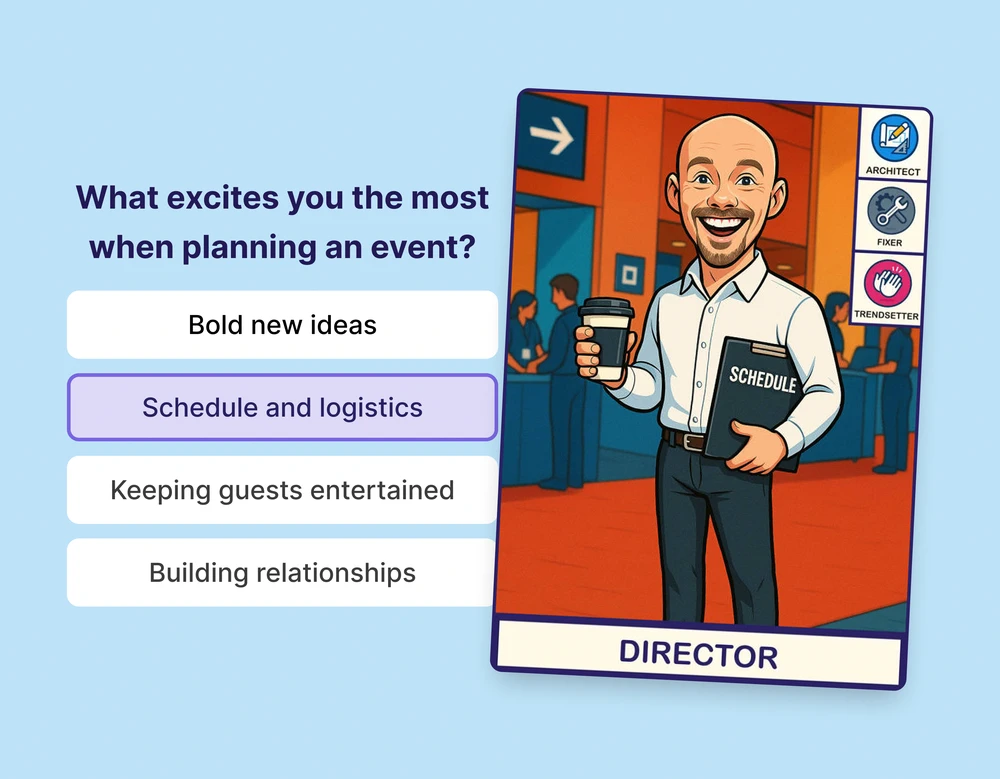
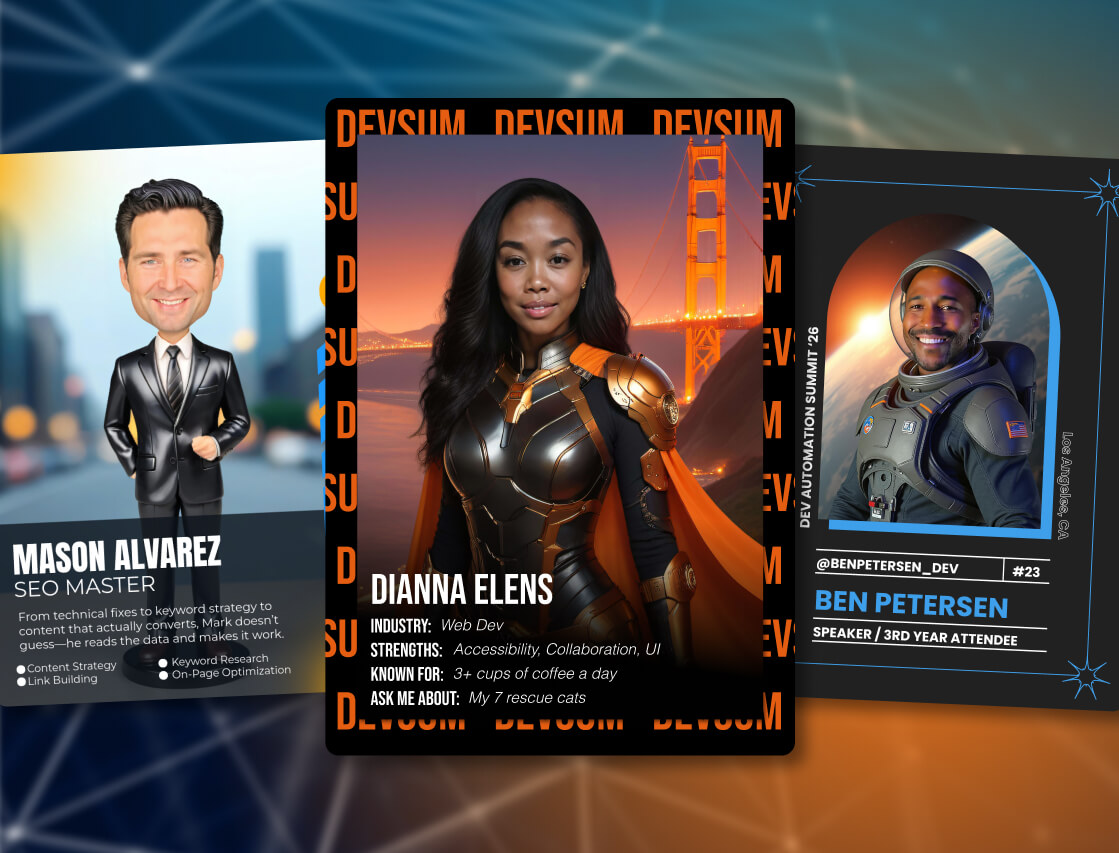
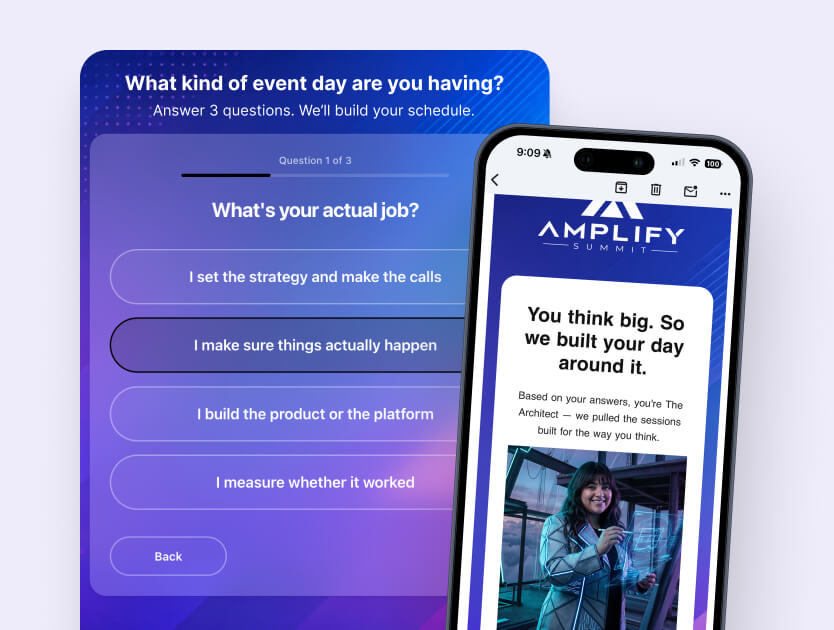
This is where identity-led formats earn their keep, and it's the reason we built the Persona Quiz the way we did. A guest answers a short set of questions, gets a persona result specific enough to be worth showing someone, and walks back into the room holding a conversation starter with their name on it. Comparison is the mechanism: people want to know what their colleague got, and whether the thing is right about them. We break down how the format runs in practice in Persona Quiz activations explained. Trading card activations work on the same logic in a physical form, which matters when you want something guests can hand to each other.
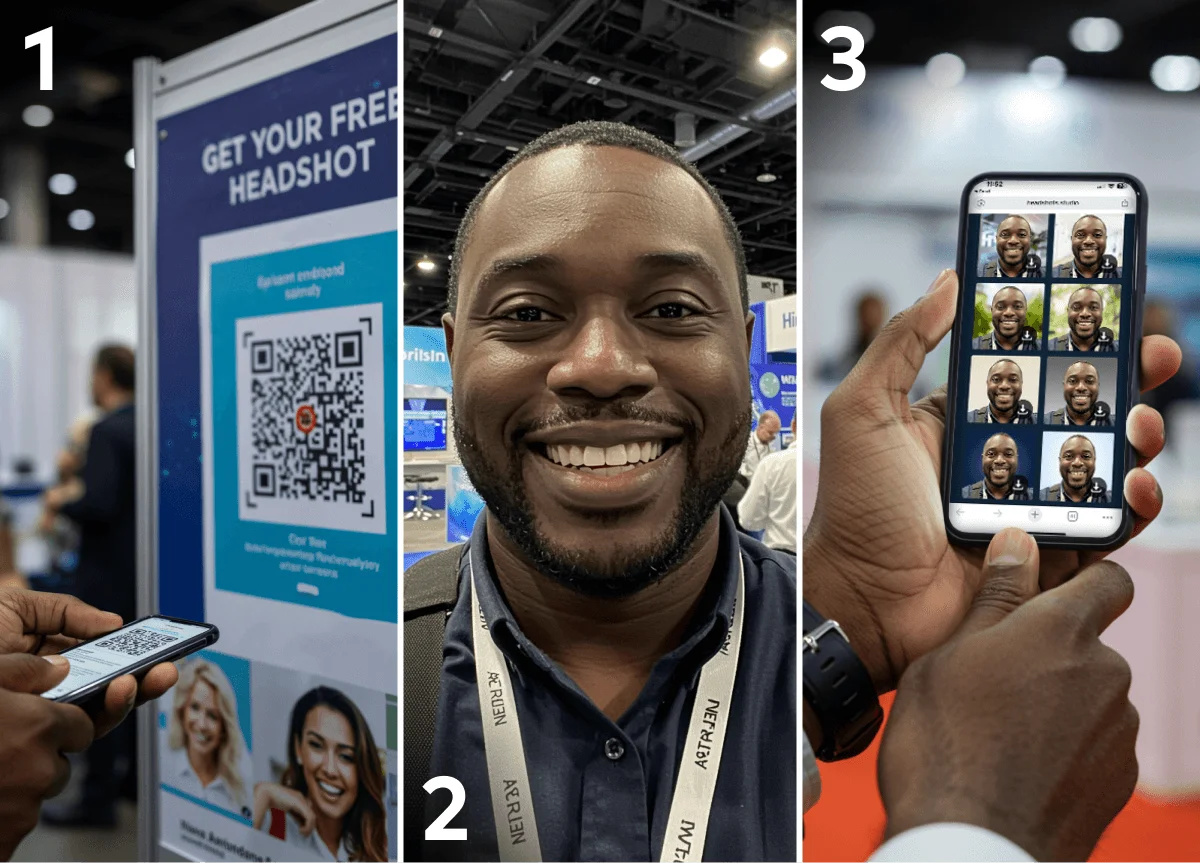
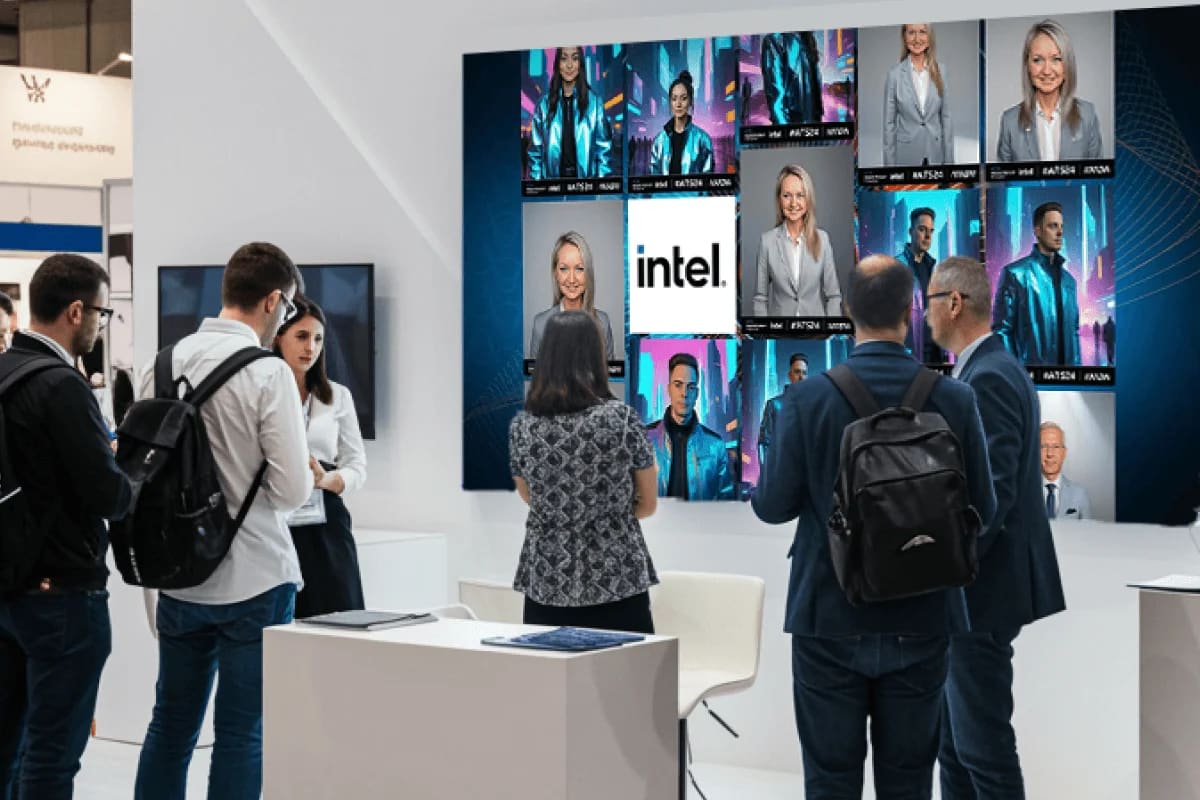
There is a newer piece of this worth knowing about, and it cuts the other way from the badge study above. The badge can now be the guest's choice instead of the organizer's tracking device. When a guest adds their LinkedIn profile at the data capture step, the content they make shows up in the live gallery with a clickable badge that opens it, so the person they were just talking to at the station can find them on the screen and connect while both are still in the room. We wrote up how to run that as a play, and what the dashboard does and does not report about it, in how to encourage networking at events while the room is still full.
The version of this I keep coming back to involved no equipment at all. A national chain of animal hospitals exhibited at VCA in Orlando with QR codes in the booth and a screen showing what people made. The whole experience was built around pets, because they knew their audience either had pets or loved them, and guests spent the show turning their own cats and dogs into something worth sending to a group chat. Roughly 80 percent of the attendee base took part. No gear shipped, no staff on site, no queue management. The reason it's worth telling isn't the number by itself; it's that participation at that level came from giving people something they actually wanted to talk about, not from a bigger booth.
How do you measure whether structured networking worked?
Measure connections, not attendance. Three numbers do most of the work: participation rate against total attendance, connections made per participant, and follow-up rate in the weeks after the event.
Participation rate is the number most programs skip. A session that 12 percent of your audience joins is not a networking program, however good the room felt. Connections per participant tells you whether the format produced introductions or just gave people a nicer place to stand next to their coworkers. Follow-up rate is hardest to capture and the one leadership actually cares about, because a connection that survives the flight home is the kind that shows up in pipeline. Our guide to measuring event success covers how these fit with the rest of your event reporting, and if you're running this at scale, conference and large event engagement is where format choices get more consequential.
The schedule is the honest version of the program
Every event says connection matters. It's in the welcome letter, the sponsor deck, and the closing remarks. The schedule is where that claim either gets funded or doesn't, and the schedule is the version attendees actually experience.
I think our industry is underrated, and I think this is one of the places that shows. So much of what people care about in their lives happens at events, and the part they remember longest is usually who they were standing next to. That's a big thing to leave to chance in a fifteen-minute coffee break. Give the room a reason to talk and it will.
Want your next event to produce connections, not just attendance?
Let's TalkOr explore: Persona Quiz | How It Works