Table of Contents
Event and experiential marketing starts with a simple split. The event is where your audience is. The experience is what they do while they're there. Get the second part right and a booth, a keynote or a customer summit stops being somewhere people walk past and becomes something they take part in, remember and talk about. That matters more in 2026, because an event budget now has to show what it produced. Whether you're planning your first program or your fiftieth, we wrote this guide to show how the two disciplines fit together, how to plan on the right clock, how to design the moments guests remember, and what to measure.
Key takeaways
- Define the program by what guests do, not by where the booth is.
- Plan on two clocks: the event is decided months out, the activation usually a few weeks out.
- Design the most intense moment and the ending. Those are what guests remember.
- Measure participation, content delivered and consented lead data against the one goal you set first.
What is event and experiential marketing?
Event and experiential marketing is the practice of using live events to give your audience something to do with your brand, not just something to look at. The event is the venue. The experience is the part people take part in, remember and share, and it's what turns attendance into leads and content.
Our short explainer walks through the idea and how it compares with the kinds of marketing that came before it.
Broadcast advertising buys reach. Digital marketing adds targeting. Experiential marketing asks for a few minutes of someone's time and gives them something worth those minutes in return. At an event, where your audience has already chosen to show up, that trade is easier to make than almost anywhere else.
It isn't limited to consumer pop-ups. In B2B it shows up at trade shows, user conferences, customer summits, sales kickoffs and partner events: anywhere a company has its audience in one place and a reason to give them something to do. Experiential marketing is a behavior, not a venue, and events are simply where it's easiest to see working.
What is the difference between event marketing and experiential marketing?
Event marketing is about being present: the booth, the sponsorship, the speaking slot. Experiential event marketing is about what happens once people arrive, when they're invited to take part instead of watch. Most B2B programs need both. The table shows where the emphasis shifts.
| Aspect | Event marketing | Experiential marketing |
|---|---|---|
| Primary focus | Being present | Being memorable |
| Success metric | Foot traffic, impressions | Participation, content, qualified conversations |
| Attendee role | Passive recipient | Active participant |
| Content created | Company materials | Guest-created content |
| Goal | Brand awareness | Brand advocacy and pipeline |
| Data captured | Badge scans | Details and answers guests chose to give, with consent |
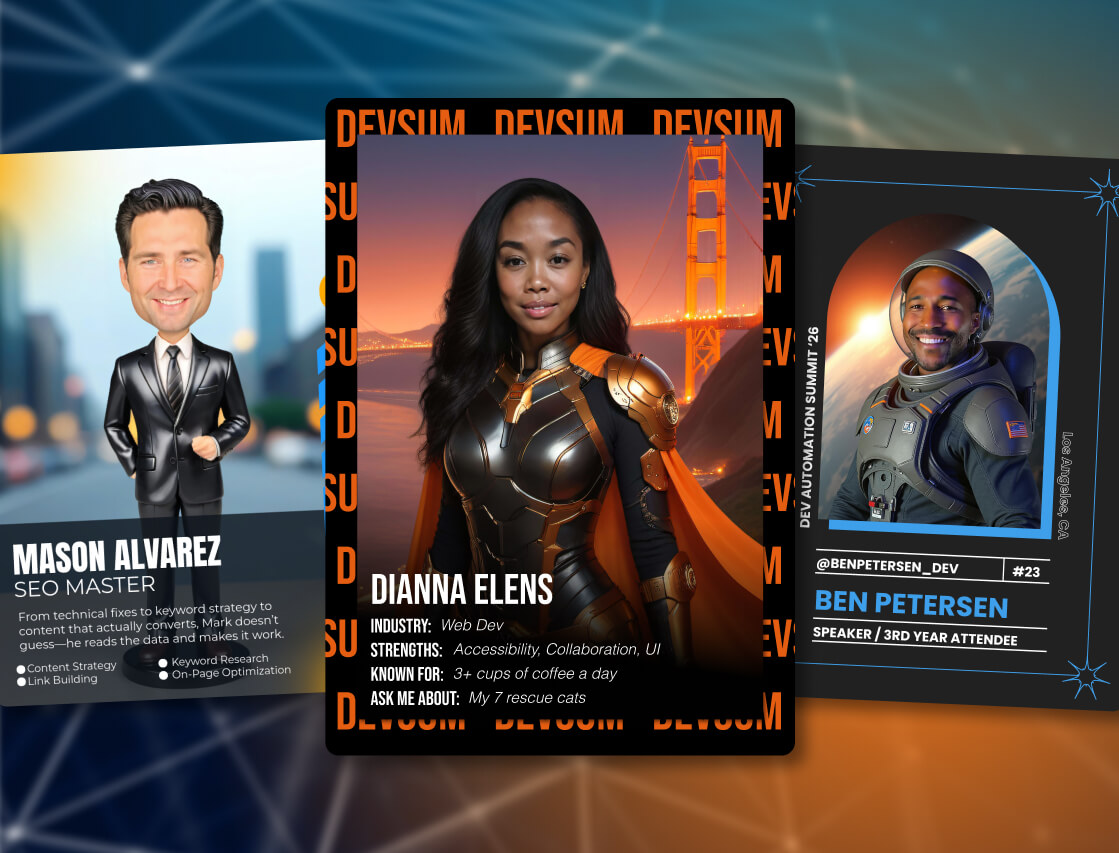
The shift is from counting who walked past to counting who took part. A badge scan tells you someone stood near your booth. A guest who answered three questions to get their own portrait told you something about themselves, on purpose.
Event marketing on its own is sometimes the right call. If the goal is simply to be seen at your industry's biggest show, a well-placed booth and a good team do that. So the experiential marketing vs event marketing question usually comes down to what the booth can't produce by itself: a reason for the right people to stop, a record of who they are, and something they'll share after they leave.
How do experiential events fit a strategic marketing plan?
An experiential event is a live event, or a part of one, designed around audience participation. It earns a place in a strategic marketing plan when it's built to hit one specific goal, and that goal decides everything after it: the format, where it sits on the floor, what guests trade for what they get, and what you'll measure.
Four goals cover most of the programs we see:
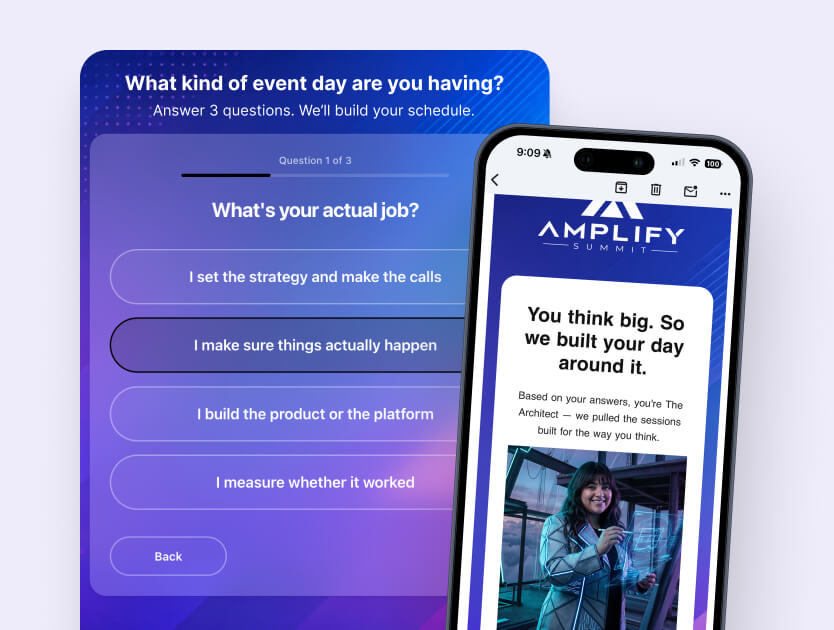
- Qualified conversations. A short quiz or data capture step that tells sales who to talk to first.
- Content. Guest-created photos and videos your team can use for months after the event.
- Community. Shared moments that give attendees a reason to talk to each other, not just to you.
- Education. A hands-on experience that explains the product faster than a slide can.
Don't underrate the last one. Event Marketer's EventTrack 2026 study, which surveyed more than 1,000 Fortune 1000 marketers and event attendees, found that 85% of B2B attendees feel more educated after attending a live event in person. For a complex product, that's the job.
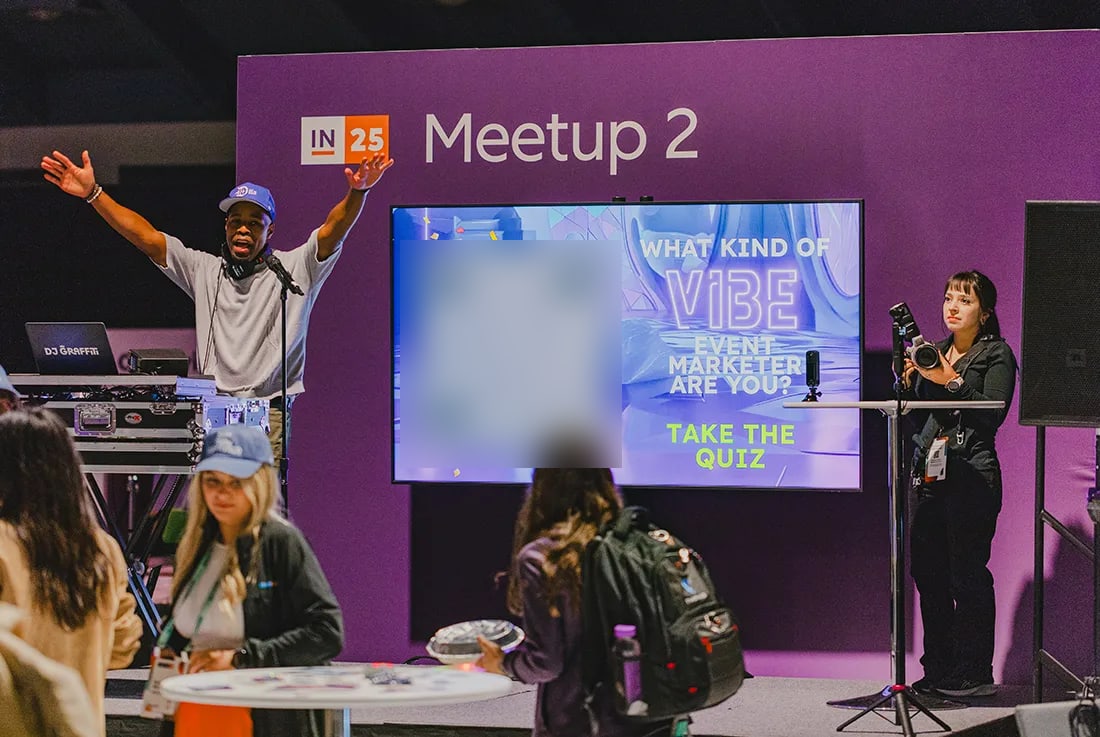
Here's how one goal shapes the rest. Say you want qualified conversations at a user conference. That points to a short quiz at the front of the booth, with three questions your sales team wrote, a result the guest actually wants to see, and a screen showing results so the next person asks what's going on. The measure is how many people finished it and how many conversations sales followed up. If the goal were content instead, almost every one of those choices would change.
Pick one goal per activation. An experience asked to generate leads, content, community and education at the same time usually does none of them well. If you want one place to build, launch and measure it, that's what our experiential marketing platform is for.
How far ahead should you plan an experiential event?
Plan on two clocks. The event itself runs on a long one. Global DMC Partners' Q3 2025 survey of 151 meeting and event professionals found that nearly half of meetings and conferences are planned four to nine months out, and incentive trips longer still.
The activation inside that event runs on a much shorter clock. Across thousands of activations booked with us between January 2021 and August 2026, the median lead time is 28 days, and the middle half book between two and about eight weeks out. The median stepped up from 28 to 38 days between 2022 and 2023 and has held there since. We break the numbers down in when brands book event activations.
Two clocks
Months for the meeting. A few weeks for the activation inside it.
Use the gap. Lock the decisions that shape the experience early: the goal, where the activation sits, which screens you'll use and what the data capture step asks. Styles, copy and prizes can land later without hurting anything.
If your event is a month away, you're not late. You're typical: about half of the activations in our data book within 29 days of the event. Size moves the window more than anything else we measured. The largest quarter of budgets books about 69% further out than the smallest, so a big footprint should treat five weeks as a floor, not a target.
How do you design the attendee journey before, during and after the event?
Design the peak and the ending. In a well-known study, Daniel Kahneman and colleagues found that people's memory of an experience was dominated by its most intense moment and by how it ended, while its length played only a small role (Kahneman et al., 1993). That study used an unpleasant experience, not a party, but the principle carries over. Guests won't remember your whole booth. They'll remember one moment and the last thing that happened.
Sam Eitzen, our CEO, put it plainly in one of our Shorts: "It tends to be that the things you live you remember and the things you scroll past you forget."
Before the event
Give registrants a reason to find you. Show a teaser of what they'll make, put a line in the event app, or add a QR code to the registration confirmation so people arrive already curious. If you're sponsoring someone else's event, ask the organizer early for a line in the attendee emails or app. It often does more than a bigger booth would.
During the event
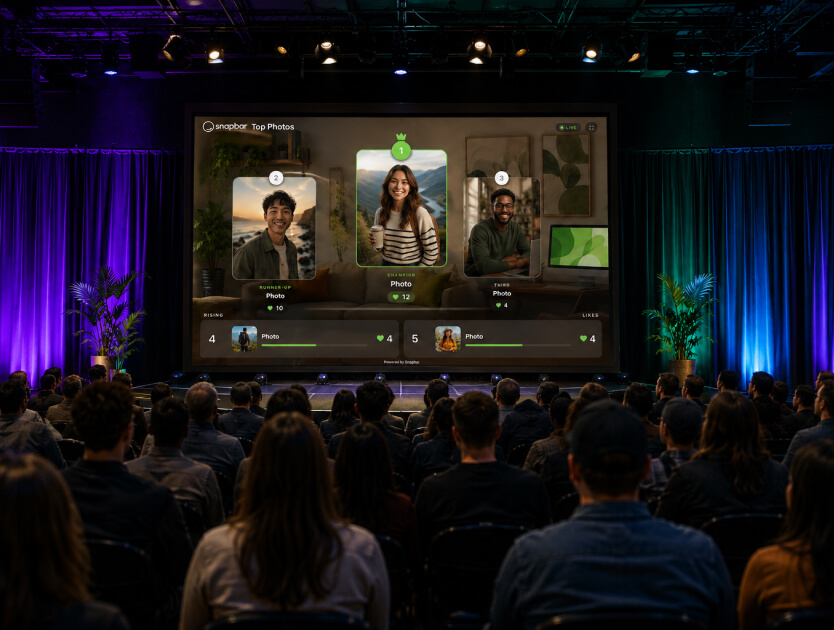
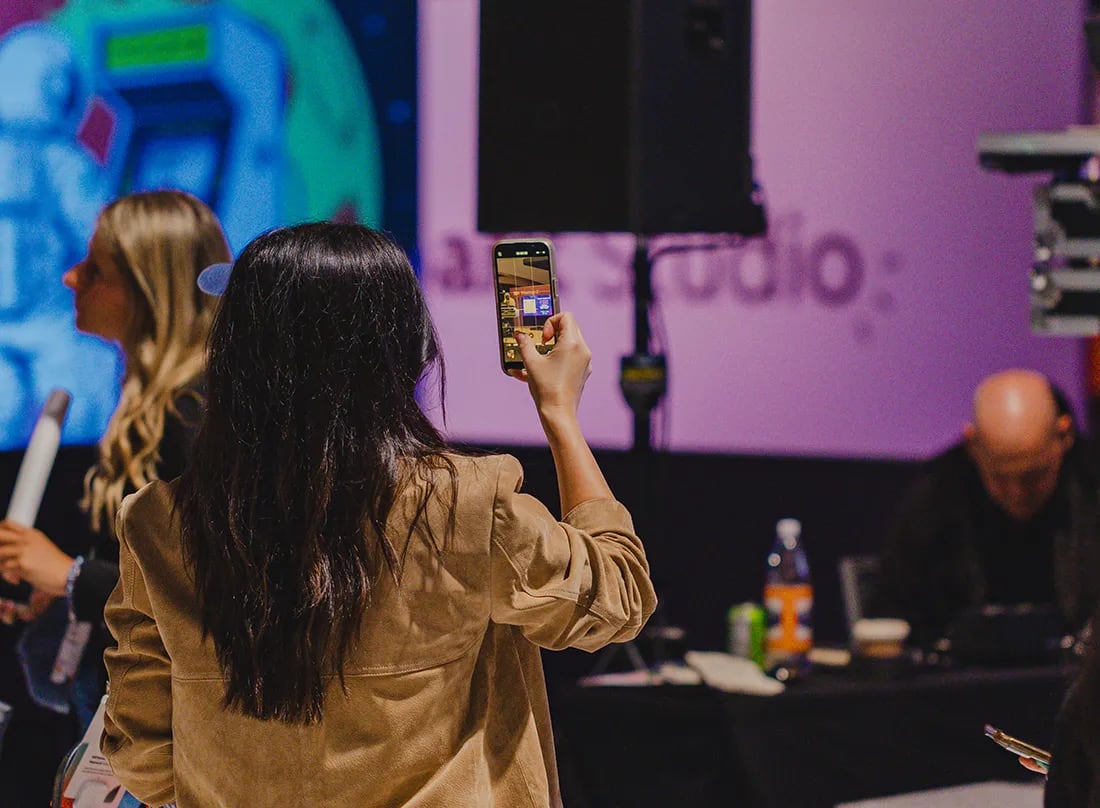
The peak is usually the moment guests see their own content on a big screen. A live gallery, a slideshow or a leaderboard shows what other people are making, and that pulls the next person in. With a leaderboard, guests vote for their favorites, and we can turn on live voting for any activation. Placement matters as much as the screen. Put the experience where people already pause, near the coffee, the registration line or a session exit, and angle the display so the aisle can see it.
Clarity matters as much as spectacle here, as our design director explains:
"Successful activations usually pair the output with strong visual engagement: a pre-populated gallery people can immediately see, large displays, and a landing page with a clear, intuitive prompt. That clarity drives participation."
Taylor Prince, Design Director at Snapbar
After the event
The ending is the delivery. Guests get their content by email or text, along with a sharing gallery they can come back to. That message is the last thing they experience, so design it as part of the activation, not an afterthought. It's also the natural place for a follow-up: a session recording, a product page, a meeting link. At networking-heavy events, clickable LinkedIn profile badges on guest content give the connections made on site a longer life, and bulk exports with structured file names make it quick for your team to reuse what guests created.
Which experiential formats work at conferences and trade shows?
Match the format to the goal you picked, and to the room. On a show floor, the experience has to work in the few seconds someone slows down in the aisle, so keep the first step short and let the screen do the explaining. At a conference, people have more time between sessions, which suits a quiz or a portrait with a few choices.
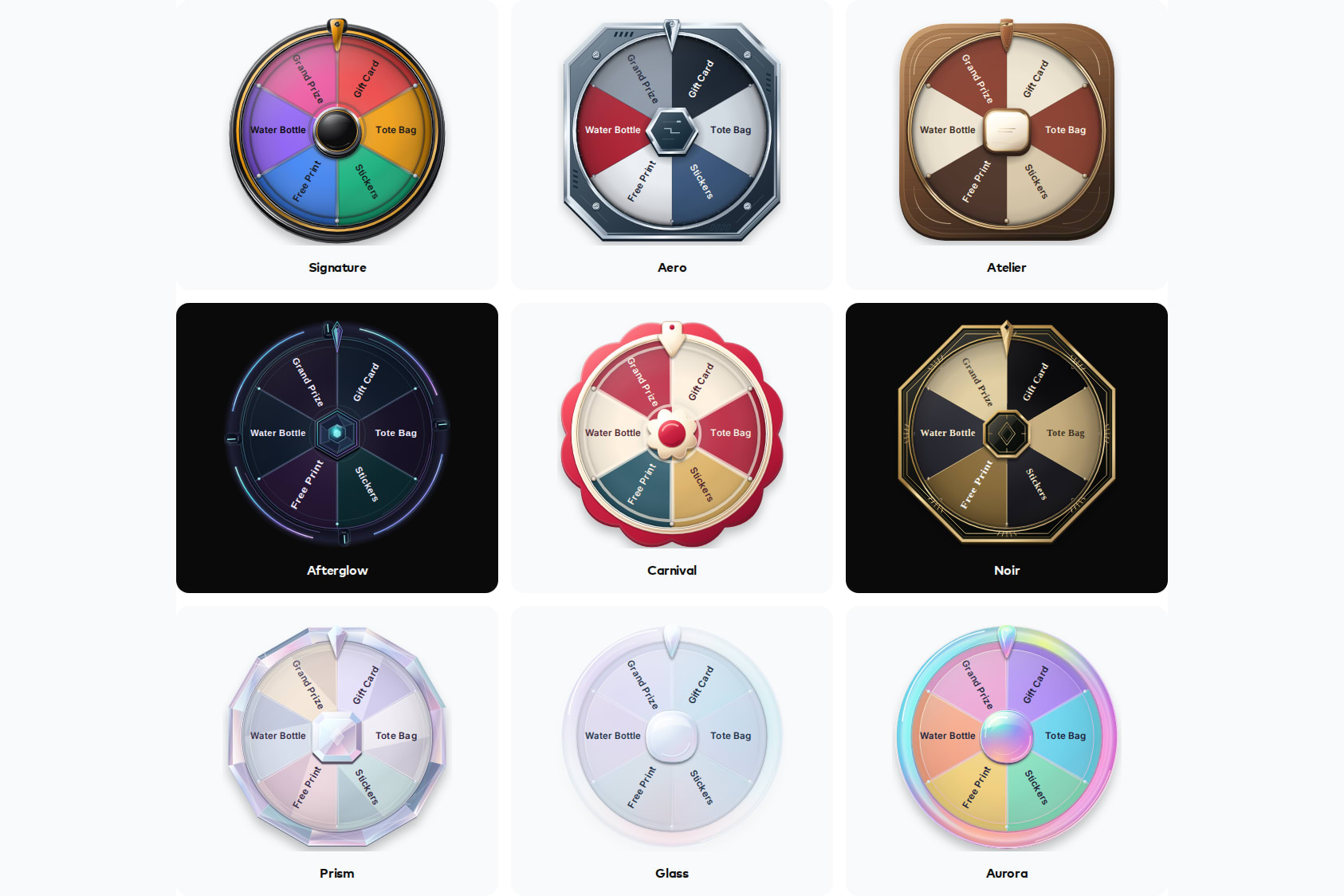
- For qualification, a persona quiz: a short quiz that matches guests to a result.
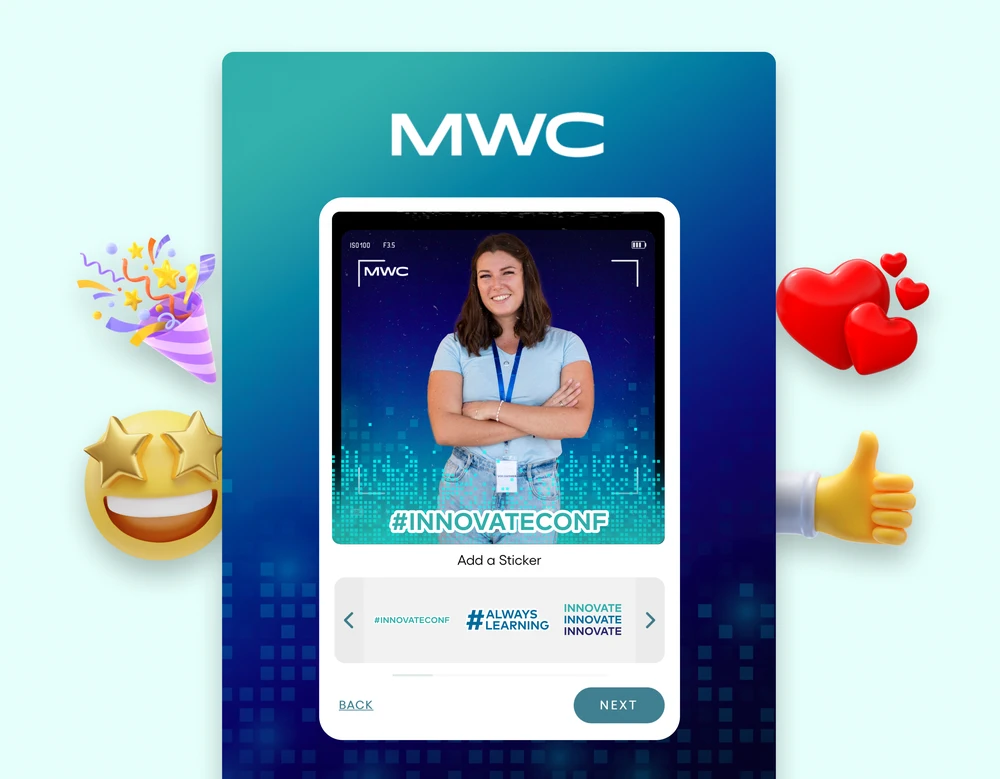
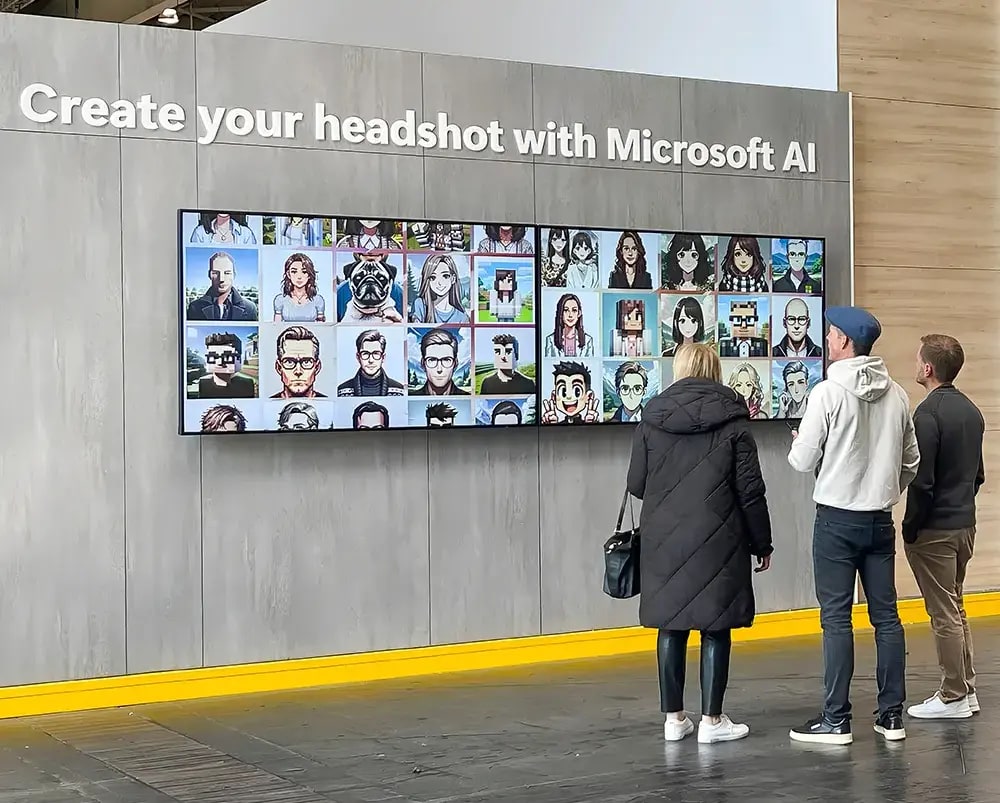
- For content, AI portraits in brand-approved styles our team builds with you, where each guest picks a style (see AI Photo Booth). Or a Digital Photo Booth capture with your frames and overlays, where guests can reframe their own shot instead of retaking it. That keeps the line moving.
- For crowd energy, a leaderboard where the room votes on the best entries.
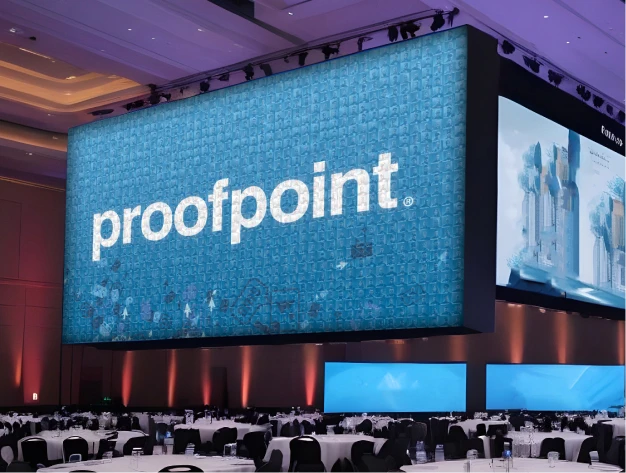
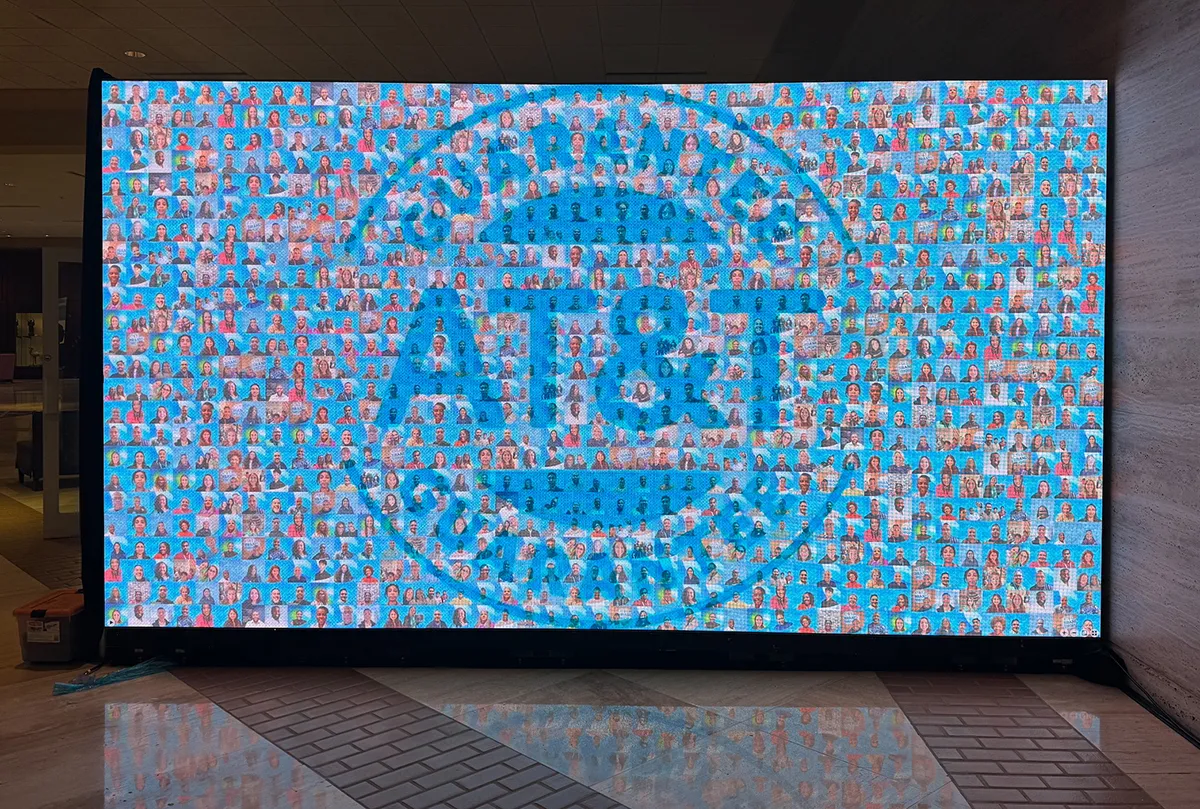
- For the space itself, live displays. Every activation includes a live gallery, a slideshow and a leaderboard, and you can put them on as many screens as you like. The live mosaic is the one add-on display, and it fills from guest uploads as the event goes.
Whatever you choose, test it once with someone who has never seen it. If they can't get started within a few seconds of reading the screen, simplify the first step.
All of it runs in a browser. Guests can use a kiosk, a tablet or a laptop in the room, or scan a QR code and join on their own phones, and a single event can mix all of those. For show-floor specifics, see our trade show activations. For keynotes, lounges and multi-day programs, see conference activations.
For what these formats look like in real campaigns, see 25 experiential marketing examples, grouped by what guests did.
How do you run hybrid and sustainable experiential events?
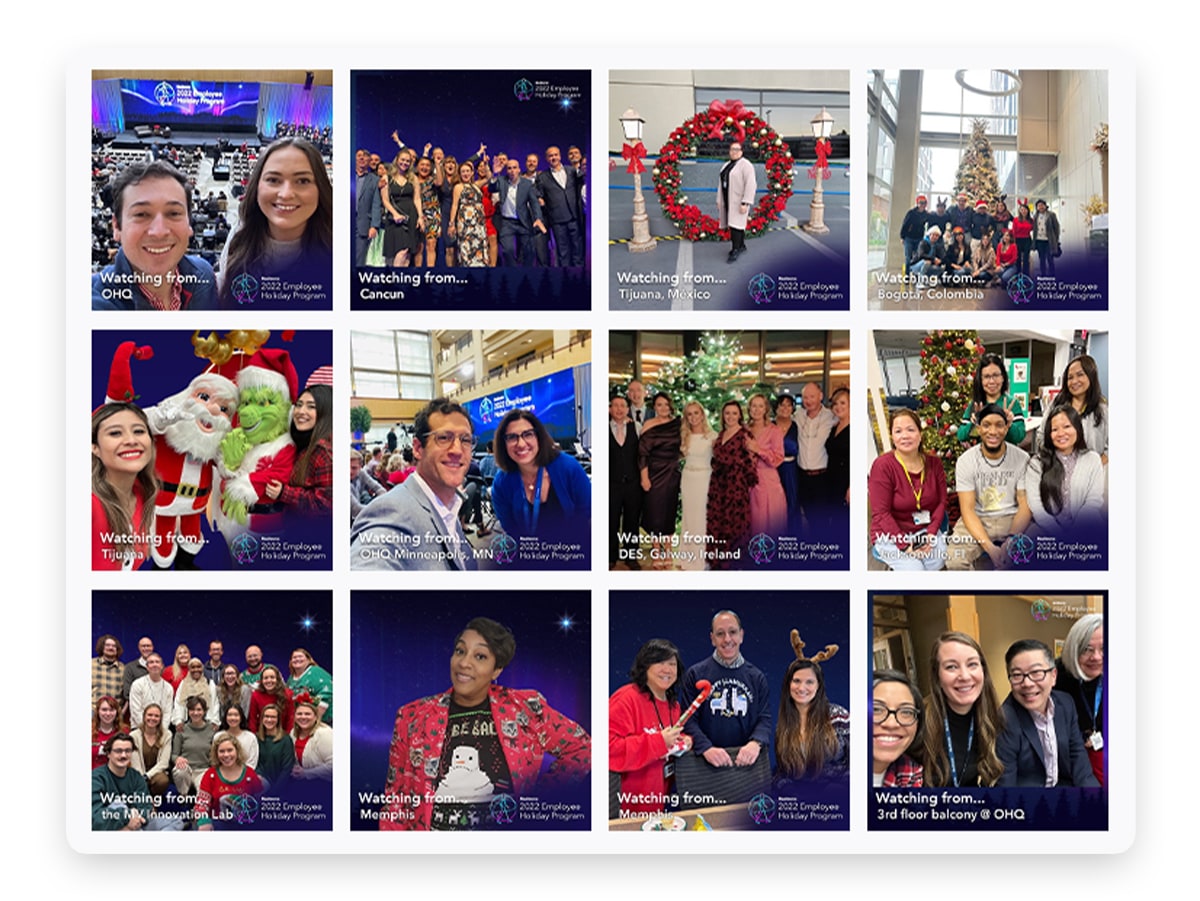
Run one experience, not two. Guests in the room join on a kiosk, an iPad or a laptop, remote guests join the same experience by link, and everyone's content lands on the same live gallery. Give remote guests the same on-screen instructions, the same styles and the same delivery, and put their content on the screen in the room. That's what makes a remote attendee feel counted rather than tolerated. Built-in language translations mean an international audience can take part in their own language.
Sustainability belongs in the same plan. EventTrack 2026 found that 82% of brands have already developed or are developing sustainability strategies. Digital-first activations help: QR codes instead of printed collateral, content delivered by email or text, and booth structures built to be reused from show to show. Count what you cut, too. Printed pieces you didn't order are a number you can report next to the rest.
How do you measure event and experiential marketing?
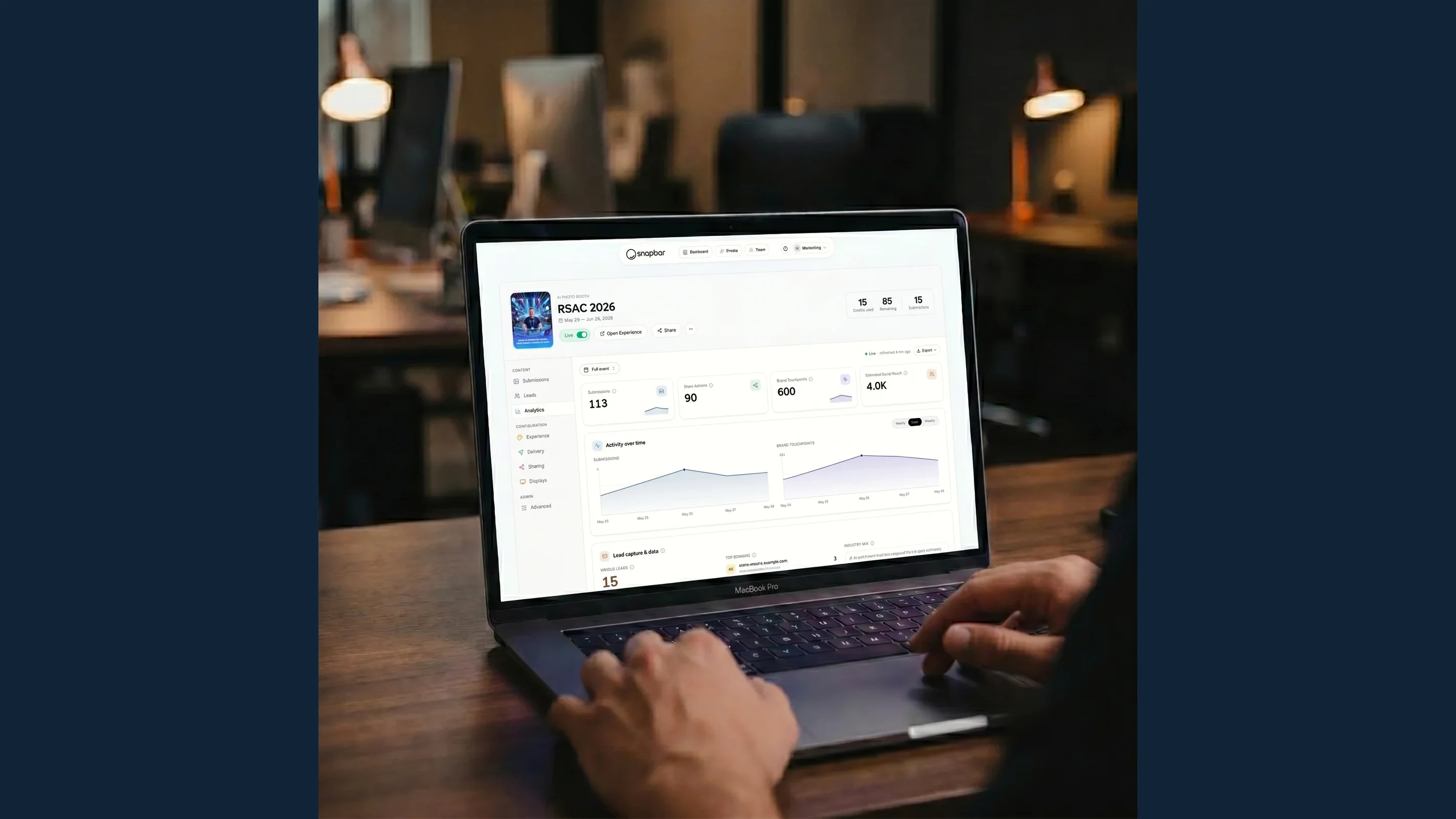
Measure against the goal you set in the plan, starting with what the experience itself records: how many people took part, what they submitted, how many received their content, the lead data and consent they gave, and the votes on your leaderboard. Every Snapbar activation includes real-time shareable analytics, live moderation and lead data, so those numbers exist while the event is still running.
Each goal from the plan points to its own first metrics:
- Qualified conversations: completion rate on the data capture step, and how many follow-ups sales booked.
- Content: pieces delivered, shared and reused in later campaigns.
- Community: repeat participation and votes cast.
- Education: quiz answers, and how many guests finished the demo.
Then connect them to the business. Our framework for measuring experiential marketing ROI covers what to track and how to build measurement in before the event, and the guide to event activation ROI has the formulas. If content is one of your goals, plan its reuse before you capture it; our event content marketing best practices help there.
Be clear about what the experience can't tell you. It records who took part and what they shared with you. It can't see the hallway conversation that happened afterward. Tie your event data to what sales and marketing already track, and the rest of the picture fills in.
A head count says people were in the building. Participation, content and qualified conversations say the program worked, and those are the numbers that hold up when next year's budget is on the table.
Planning an experiential event? Start with the one thing you want guests to do.
Get a QuoteOr explore: The Platform | Activation Concepts