
Table of Contents
Most remote team engagement ideas are pitched as a cure for people who have checked out. The research says you are probably solving a different problem. Gallup's State of the Global Workplace research found that fully remote workers are the most engaged group at work and at the same time the least likely to be thriving and the most likely to report loneliness.
That pairing changes what you are shopping for. The people on your distributed team are not short on enthusiasm for the work. They are short on each other. So the ideas below are sorted by the effort each one takes, with a way to choose between them and a way to tell whether it worked.
Key takeaways
- Sort by effort, not by novelty. A weekly floor, a monthly or quarterly middle, a few larger anchors a year.
- Pick for three traits: participatory rather than passive, produces something shareable, and puts everyone on equal footing regardless of title.
- Design for contact across groups, not simply more contact. Distributed work silos a network; deliberate mixing is the counterweight.
- Measure participation rate, voluntary sharing, and survey lift. Above roughly 70% at an optional event means the format landed.
- No follow-through is the costliest mistake. An experience nobody ever sees again produces almost no attachment to it.
How do you keep a remote team connected?
Keep a remote team connected by running a rhythm instead of an event: one low-lift ritual every week, one activity a month or a quarter that mixes people who do not normally work together, and two or three larger shared experiences a year. Then match what you run to the specific thing that is broken, because disconnection has more than one cause.
In practice it has three, and they are not interchangeable.
- Communication overload. The team talks constantly across four tools and still misses each other. More scheduled contact makes this worse. Agreed response times and clear channel norms fix it.
- Isolation. People do their work well and speak to almost nobody outside their immediate lane. This is the one that low-lift weekly rituals are actually for.
- Absence of trust. People hedge, route things formally, and hold back half-formed ideas. Trust is built by doing something together with a visible result, which is what the medium and high-impact tiers produce.
There is a mechanism underneath this, and it explains why "more team meetings" never appears on a list like this. A study of more than 61,000 Microsoft employees, published in Nature Human Behaviour, used the shift to firm-wide remote work as a natural experiment and found that the collaboration network became more static and more siloed, with fewer bridges between disparate parts of the company.
So the thing to design for is not volume of contact. It is contact across groups that would otherwise never meet. That single distinction is why cross-functional mixing appears in almost every tier below, and why adding another all-hands to the calendar does nothing.
What makes a team engagement activity actually work?
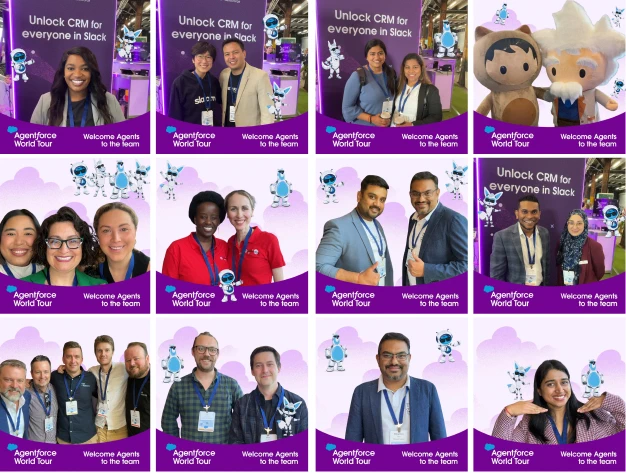
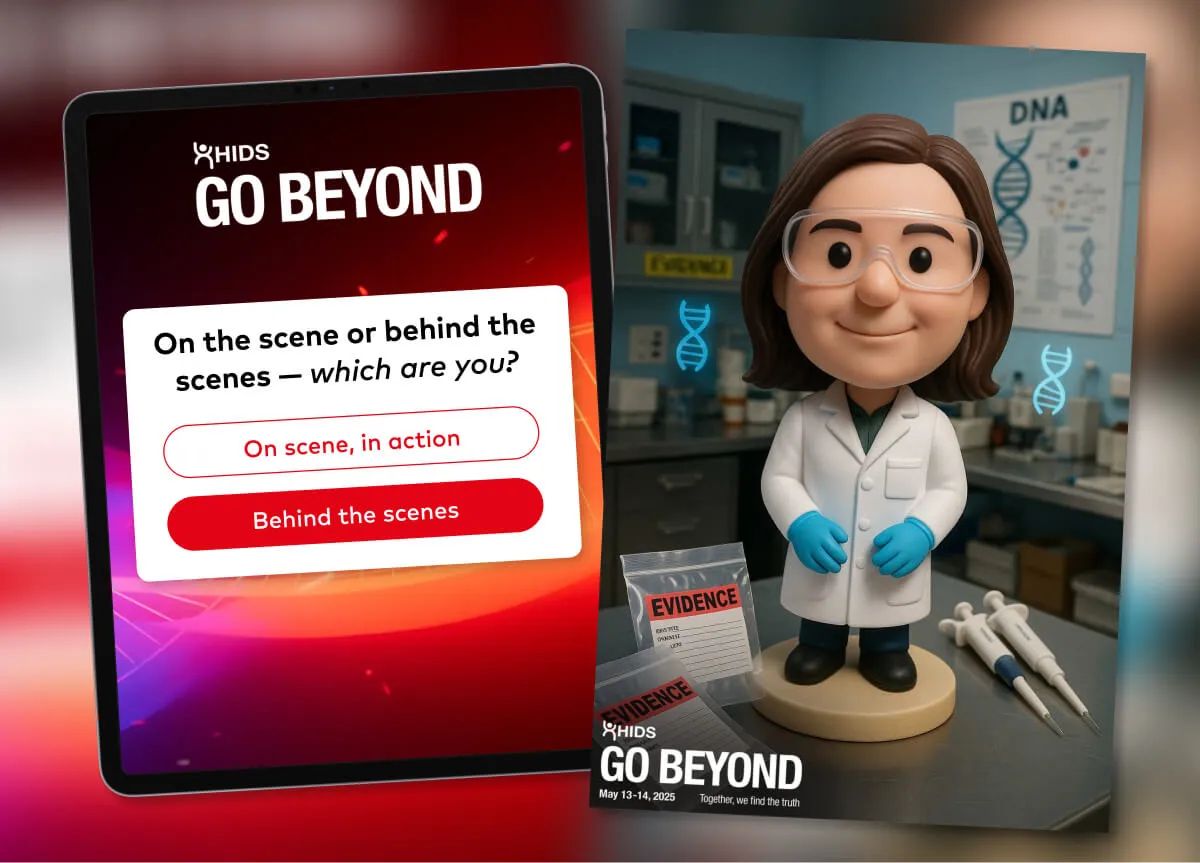
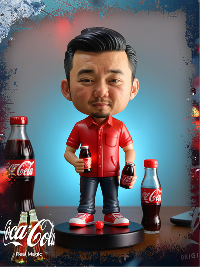
The team engagement activities for remote workers that hold up share three traits: they are participatory rather than passive, they produce something shareable such as a photo, a result, or a story, and they put people on equal footing regardless of role. A VP and a new hire both look equally silly in the same AI-generated portrait, and that is exactly the point.
The third trait is the one most lists skip, and it does the heaviest lifting: anything rewarding seniority or confidence in a group setting quietly excludes the people you most wanted to include.
The second trait has a research basis. Norton, Mochon and Ariely's work on what they named the IKEA effect showed that people value what they built themselves far above an identical thing handed to them, and that the effect disappears when the labor does not result in a finished thing: participants who built and then dismantled their creations, or failed to complete them, showed no lift at all. Co-creating beats being entertained, and showing people the finished thing is what makes it stick.
31% engaged. 27% lonely.
Gallup's State of the Global Workplace research puts fully remote workers at the top of the engagement table (31%, versus 23% for hybrid and on-site remote-capable workers) and at the bottom on thriving (36%, versus 42% for both), with the highest reported loneliness of any work arrangement. Engagement and connection are not the same measurement, and treating them as one is how teams end up running activities that fix nothing.
Use the three traits as a filter on the ideas below. An idea that fails two of them is entertainment rather than connection, which is fine as long as you know which one you bought.
12 team engagement ideas for remote and hybrid teams
These remote team engagement ideas are grouped by the effort they take to run. Most teams need all three tiers at once, because each fixes a different failure mode.
| Tier | Cadence | What it fixes |
|---|---|---|
| Low-lift everyday practices | Weekly | Isolation |
| Medium activities | Monthly or quarterly | Siloed networks, thin trust |
| High-impact activations | Standing, or a few times a year | Belonging, shared memory |
Low-lift, weekly
Almost none of these need a budget line, and all survive a busy quarter.
1. A recognition ritual with specific praise. A weekly shoutout thread, or kudos at the top of a team meeting. Two minutes. The value is all in the specificity: "thanks for staying late to fix the deploy" reinforces that someone was watching, "great teamwork this week" reinforces nothing. Make it a fixed slot; spontaneous gestures stop.
2. Interest-based channels, seeded by leadership. Channels built around hobbies, pets, cooking, running, whatever the team cares about. They only work when leaders post in them first; otherwise they read as an HR mandate. Keep them optional and say so out loud; pushing people who keep work and personal life separate turns a connection idea into a grievance.
3. Walking one-to-ones. Replace one weekly one-to-one with a walk, in person or by phone with cameras off. Removing the screen changes what gets said. Problems surface on these calls that never come up face to face, because looking at nothing is easier than looking at a face.
4. An asynchronous creative prompt. A shared prompt with a multi-day window rather than a live session: a photo challenge, a playlist exchange, a "show us your workspace" thread. The window is the feature. It respects time zones and energy levels, and the quiet people answer at their own pace.
5. Milestone and work-anniversary marking. Work anniversaries, hitting a target, finishing a long project. These are the recurring calendar moments a distributed team lets slide past, and the cheapest connection currency going, because the occasion already exists. Put them on a shared calendar so it does not rest on one person remembering. For milestones that deserve something physical, an employee award posted to someone's door travels further than a message in a channel.
Medium, monthly or quarterly
This tier is where cross-functional mixing belongs. Form groups deliberately across departments, or you reinforce the silos the research describes. For the scoring and competition layer, our guide to gamification for employee engagement goes deeper.
6. Virtual trivia with a company-history round. Standard trivia is forgettable. One round about the company (early clients, the origin of a product name, who was employee number four) lets newer people learn something and long-tenured people feel their history is worth knowing. Mix the teams, keep it to thirty minutes, and run it on one live video call so the reactions land together.
7. A remote scavenger hunt. People run photo challenges in their own environments and submit entries: something blue, your worst mug, the view from your window. This is the one medium-tier activity producing shareable visual output, which makes it the bridge to the tier below. Leave the window open a day and it crosses time zones.
8. A skill-share session. Someone teaches the team something they love that has nothing to do with work: cooking, photography, woodworking. These reveal dimensions of people that never surface in a standup. If it is a cooking one, sending everyone the same ready-to-eat meal beforehand gets a distributed team eating together, the part an office gets for free. A team volunteer project does the same job from another angle, shifting the dynamic from "we work together" to "we accomplished something together."
9. An online escape room. Puzzle-solving against a shared clock, in a group small enough that nobody can hide. The pressure is the point: teams that solve something under time constraints talk differently afterward. Best used when you have new joiners, since tenure stops mattering the moment the timer starts.
High-impact, on a standing schedule or a few times a year
These take planning and a budget, and they are what people remember. One runs as a standing program; the other two are set pieces the smaller tiers hang from. Our corporate team activations are built for this tier.
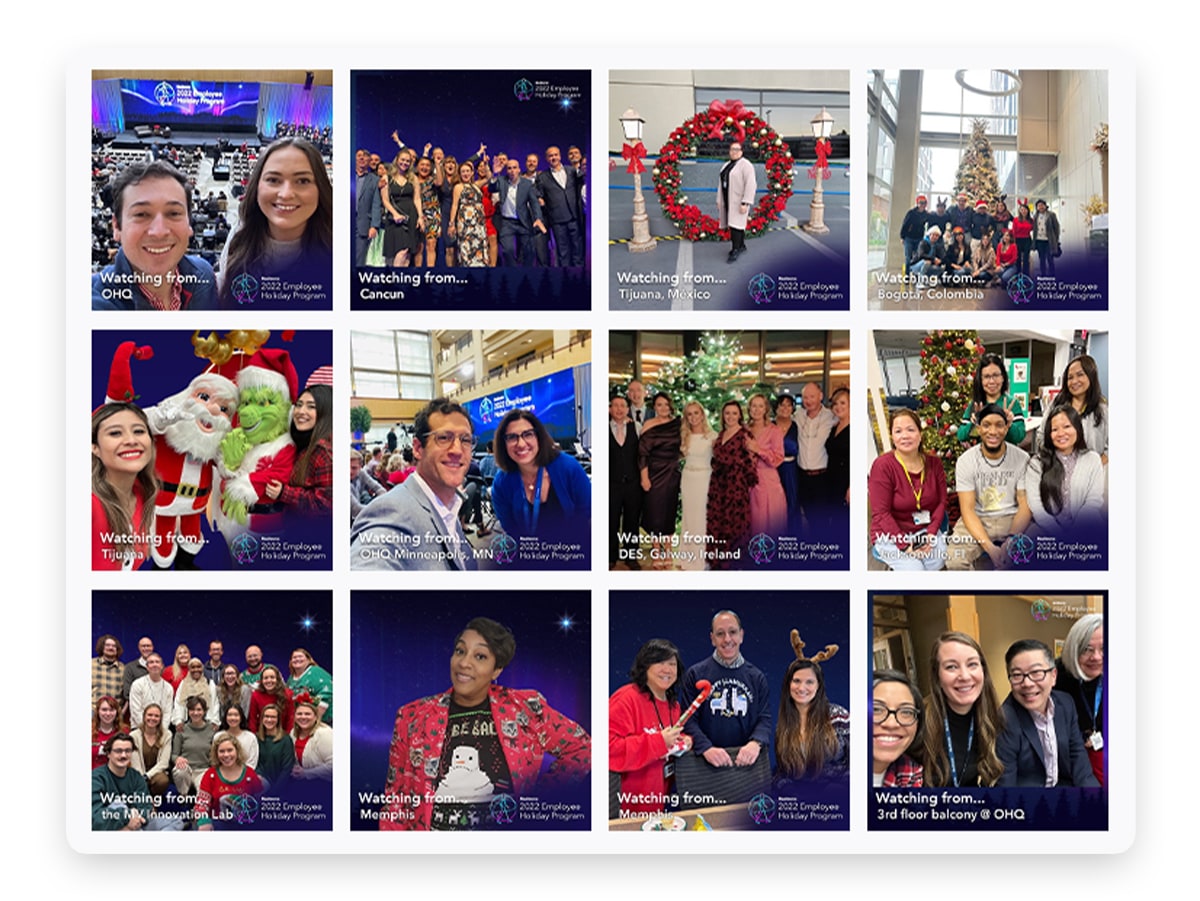
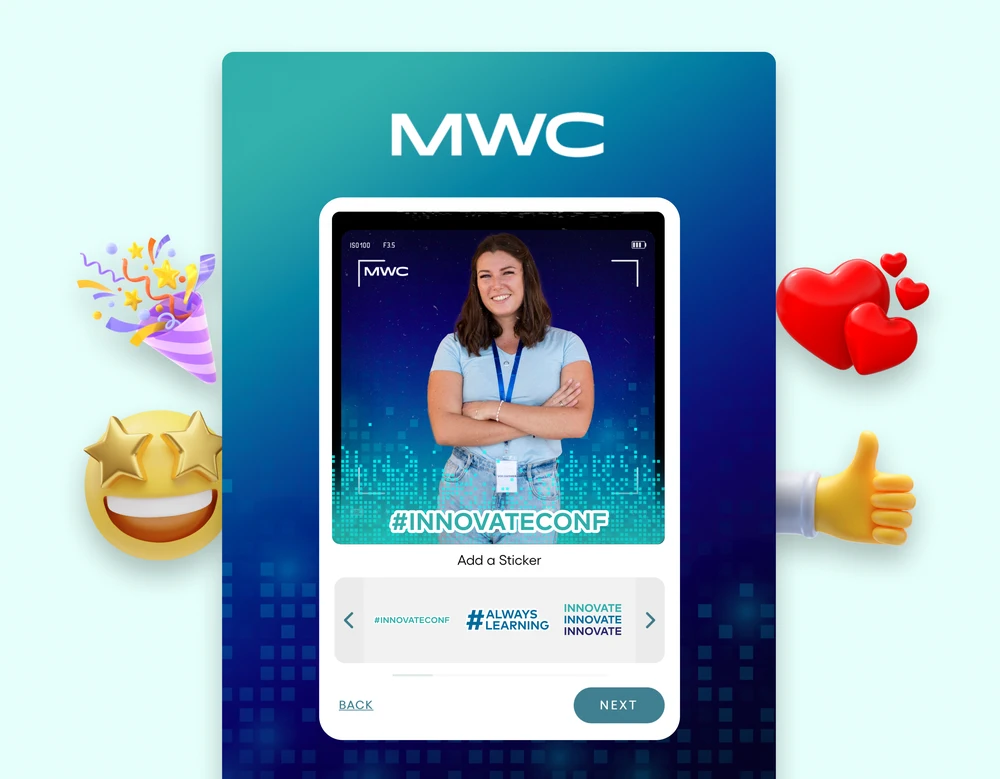
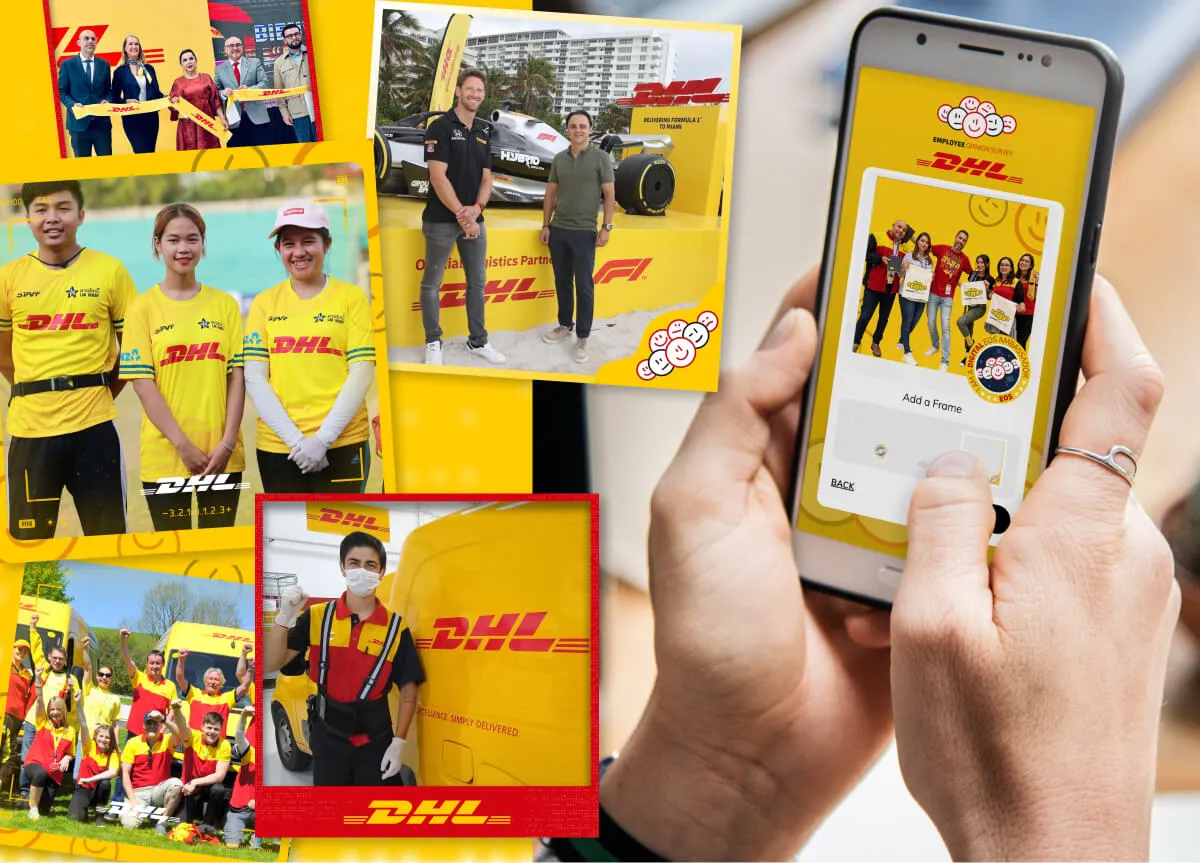
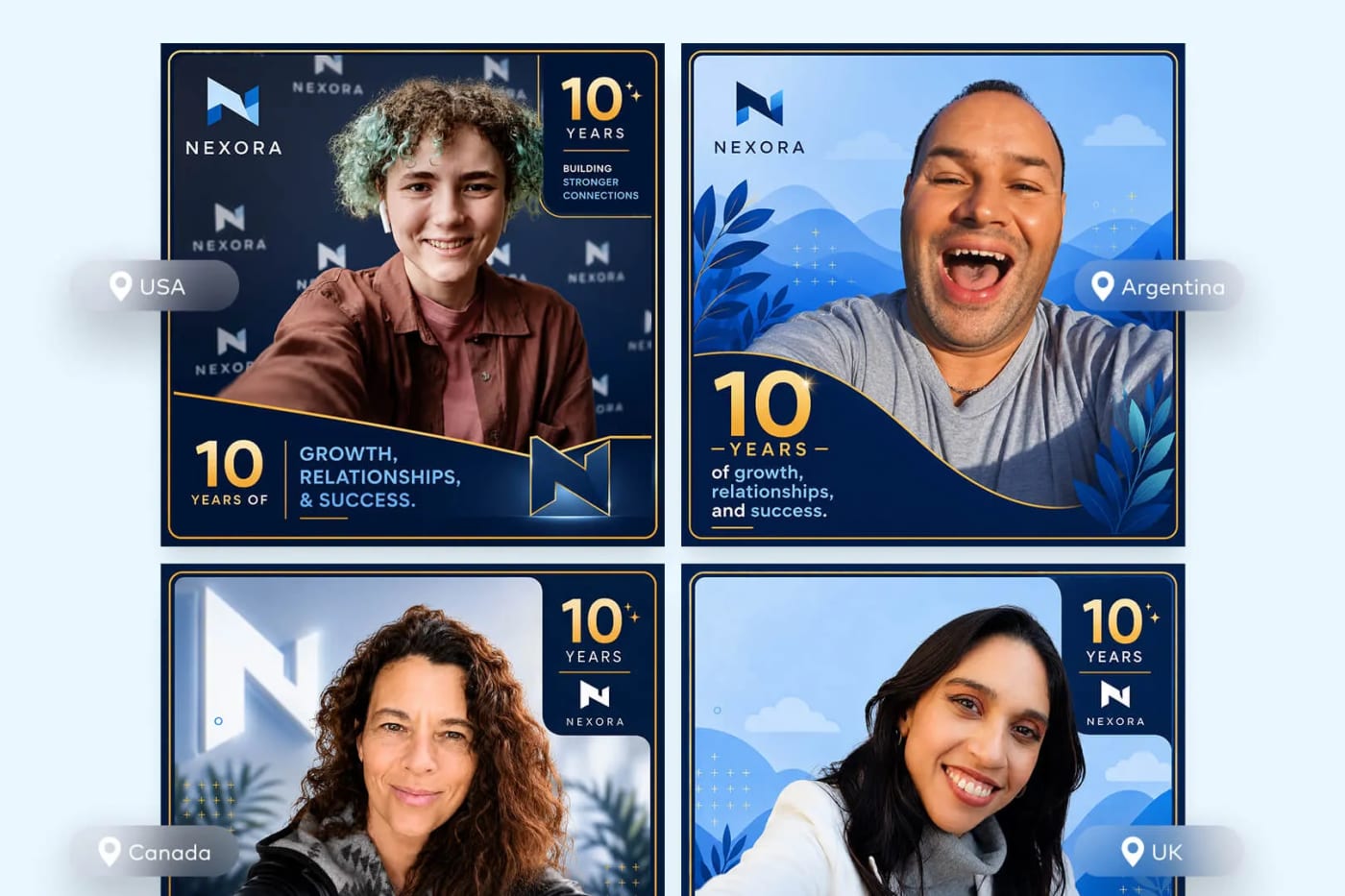
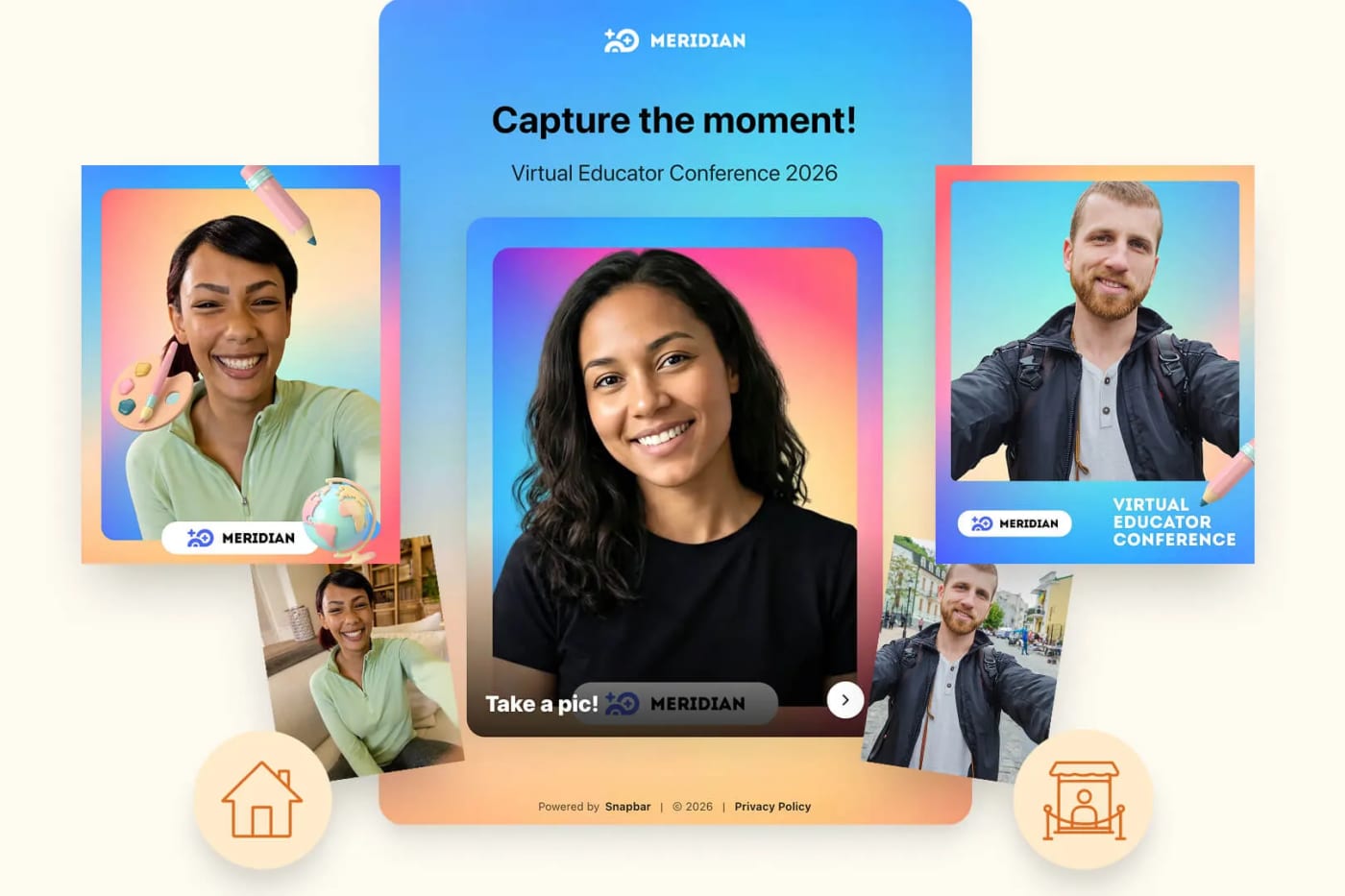
10. A recurring capture ritual with a live gallery. A prompt goes out on a schedule, delivered by email or text message, asking people to capture something from their day. What comes back lands in a live gallery the whole team can browse, and a leaderboard display lets people vote on what they liked, with that display enabled by our team rather than something you switch on yourself. It outperforms a one-off event because it recurs: a habit the team has rather than a day the team had, and it runs in a browser so nobody installs anything. Everyone also keeps a personal digital takeaway, their own copy of what they made, which is the thing a video call never leaves behind. See how the digital photo booth handles capture and delivery.
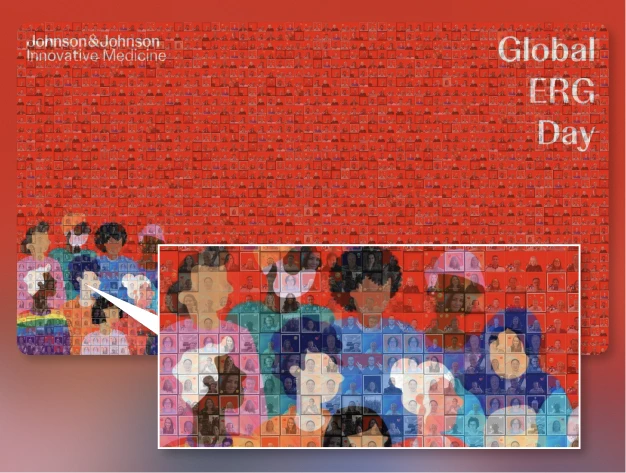
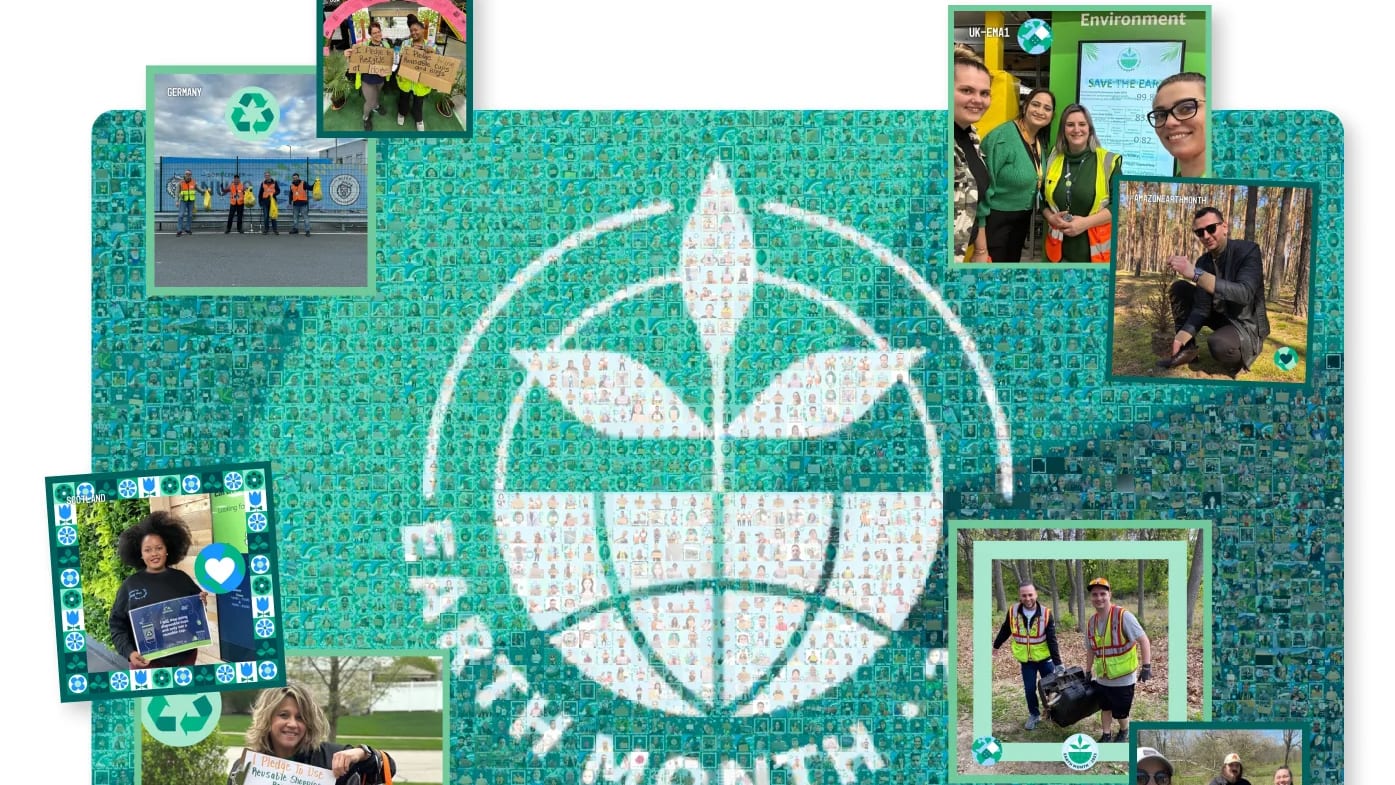
11. A company-wide mosaic everyone feeds at once. Every location, remote and in-office, feeds one image that fills in live. People upload straight from a phone by scanning a code, with no booth session required, and the live mosaic is the one display that is a paid add-on rather than included. Watching your own face appear inside a company-scale picture does something a newsletter cannot. The full play is in our guide to the company-wide mosaic for all-hands meetings.
12. A connection-dense in-person gathering. When a distributed team gets in a room once or twice a year, spend it on connection rather than presentations. Cut the all-day slide format, build in unstructured time, and put one shared activation at the center. Most teams get exactly one a year, so its design matters more than its cadence.
What works for hybrid teams specifically?
Start here, because it is the mistake remote-first companies make most often: trying to replicate the in-person experience over video. A room reproduced on a screen is always the worse copy. Design native to distributed teams instead, and the hybrid problem gets easier, because an activity built for people who are apart already works for people who are together.
For hybrid teams, the rule is that the person in the room and the person on the screen do the same thing at the same time, not two versions of it. Check every hybrid engagement activity against that one test, because almost every failure in this format traces back to breaking it.
The people who feel hybrid disconnection most sharply are not the fully remote employees. They are the part-time remote ones, who get the least interaction with everyone else and belong fully to neither group. They are in the office rarely enough to miss the corridor conversations and remote often enough to miss being designed for. Team building for hybrid teams works when it is built around them rather than around whoever happens to be in the building that day.
Two practical things make the difference. First, run the activity through a browser on everyone's own phone, including the people sitting together in a room, so the format is identical regardless of location. A virtual photo booth works this way for teams with nobody in a room at all. Second, treat asynchronous etiquette as a connection mechanism rather than an operations chore: agreed response times, status updates that say when someone is actually available, and a habit of revisiting those guidelines instead of setting them once. That second one is also the most reliable way to improve remote team collaboration week to week, and it costs nothing.
One boundary: this article is about what a distributed team does week to week and at its occasional gatherings. Designing and funding the in-person event itself is a different job, covered in our guide to high-impact employee engagement events.
How do you measure whether any of this worked?
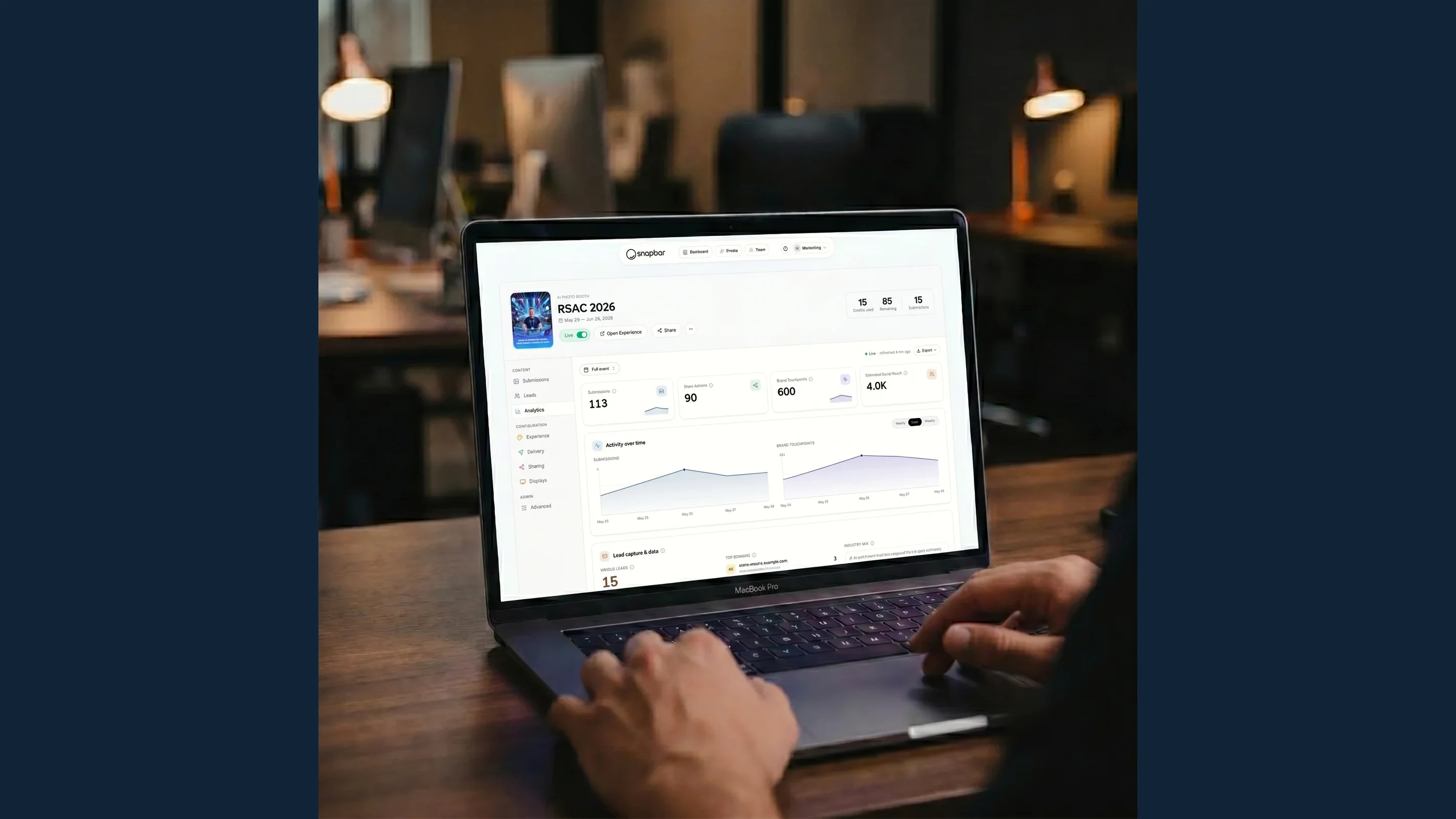
You cannot measure connection directly, so measure its effects. Three numbers do most of the work, and none requires new tooling: participation rate, voluntary sharing, and engagement survey lift against teams that did not take part.
Participation rate is the fastest signal: what share of the people invited actually took part? In our experience, above roughly 70% at a voluntary event means the format resonated. Below about 40% means one of two things: the activity was not compelling, or it was not communicated well enough. Those are different fixes, so ask before you assume.
Voluntary sharing and reuse is the harder signal and the more honest one. If the activity produced something (a photo, a portrait, a result), how many people downloaded it, sent it to someone, or used it as a profile picture? Nobody shares out of obligation. When employees post team content on their own accounts unprompted, that is connection evidence and earned media in one action. The same logic applies to external audiences, which we cover in our notes on audience engagement strategies.
Engagement survey lift is the slowest signal and the one leadership will ask for. Compare scores for teams that participated against teams that did not, over two or three cycles. Framing the program as a retention lever rather than a morale expense is what keeps it funded.
See it in action
Run a capture ritual your distributed team keeps
Prompts go out by email or text, people answer from their phones, and everything lands in one live gallery with a participation number attached.
Explore Digital Photo BoothThese numbers are not there to prove the activity was fun; you know that from the room. They exist so the person approving the next budget sees a participation figure and a survey trend. For how a photo experience produces that evidence, see our piece on using a photo experience to increase employee engagement.

What mistakes should you avoid?
We have watched well-intentioned employee engagement ideas for remote teams fall flat for reasons predictable enough to list. Five come up repeatedly.
Forced fun. Mandatory karaoke and trust falls make people dread team events rather than look forward to them. The fix is choice inside the activity: you pick your theme, you pick your prompt, you are not put on the spot in front of two hundred colleagues. Optional means optional, including the interest-based channels: encourage participation, do not force it.
One and done. A single annual offsite cannot carry a connection culture for twelve months. This is the whole argument for a rhythm instead of an event.
Ignoring introverts. Not everyone bonds over loud group activities, and a program that only ever runs live, high-energy, camera-on formats is selecting for one personality type and calling the result culture. Include creative activities, small-group conversation, and asynchronous participation. The goal is inclusive connection, not extrovert theater.
No follow-through. This is the expensive one, and it is the mistake with an actual research basis behind it. The IKEA effect only appears when the work results in a finished thing. Running a great team activity and then never referencing it again is the organizational version of that. Share the photos. Post the gallery. Send the recap. The experience keeps paying out only while people can still see the evidence of it.
Treating everything as an activity problem. Some disconnection is workload and boundaries, not a shortage of events, and the thriving gap at the top of this article points straight at it. Adding trivia to a team with no protected breaks, no flexibility for people working outside the head-office time zone, and no visible route to support resources reads as one more obligation. Fix the working conditions first; the activities land differently afterward.
Where to start
Pick one thing from the low-lift tier and start it this week, then put one medium activity on the calendar for this quarter. That is enough to establish a rhythm, which is what you are actually building. Save the high-impact activation for the moment you have a reason for one: a kickoff, a milestone, the one week a year everybody is in the same place.
One pattern worth knowing before you choose: phone-first, no-app participation is a recurring ask in our inbound, and it comes up most often from teams trying to include people who are not in the room. If an idea requires a download, an account, or a piece of equipment, expect the people you most wanted to reach to be the ones who quietly opt out.
Ready to run something your distributed team will actually join?
Get a QuoteOr explore: Corporate Team Activations | Digital Photo Booth