Most event lead capture feels like a transaction. Scan a badge, fill a form, hope they don't bounce before your follow-up lands. Event competitions flip that dynamic. When done right, attendees get something they actually want (a chance to win, a fun experience, content worth sharing), and you get their data because they chose to give it. That's a natural value exchange, and it's why event competitions consistently outperform traditional lead capture at trade shows, conferences, and brand activations.
I sit between sales, marketing, and operations at Snapbar, so I care about what actually moves the needle: qualified leads, content you can reuse, and metrics that justify the spend. This guide covers how to structure event competitions that capture quality leads and generate user-generated content without feeling like a bait-and-switch.
Key Takeaways
- Event competitions outperform passive lead capture because participation and data exchange happen in the same step.
- Five formats deliver consistently: photo contests, scavenger hunts, persona quizzes, creative challenges, and leaderboard competitions.
- Keep entry under 60 seconds with QR-code access, no app downloads, and only the fields you will actually use in follow-up.
- The strongest activations make participation valuable on its own, so prizes amplify reach rather than carry the offer.
- Track leads captured, UGC volume, organic social reach, and cost per qualified lead to prove ROI against paid channels.
Why Do Event Competitions Outperform Traditional Lead Capture?
Traditional lead capture asks attendees to give something (their email, their time) in exchange for nothing immediate. A badge scan gets them on a list. A form fill might open a PDF. The value proposition is weak, and the leads reflect that. People who reluctantly hand over contact info to escape a booth rep are rarely warm prospects.
Event competitions create a different exchange. Attendees participate because they want to: they want to win, they want the experience, or they want the content they'll create. In return, they willingly provide contact information, answer qualification questions, or share content that extends your reach. The data you capture comes from people who opted in with intent.
The mechanics matter. A photo contest where entry requires email delivery of the photo captures leads at the moment of highest engagement. A scavenger hunt that tracks participation across the venue creates multiple touchpoints. A trivia quiz that personalizes results based on answers gives you both data and a qualification signal. In each case, the competition is the vehicle, not the afterthought. For more on how this fits into a broader lead capture strategy, that page breaks down the infrastructure.
Insight: The best event competitions are designed so that participation and data capture are the same action. When someone enters a photo contest, they're not "filling a form"; they're submitting their entry. The lead capture happens as a side effect of something they wanted to do anyway.
What Types of Event Competitions Work Best?
Not every competition format fits every event. The right choice depends on your audience, venue, and goals. Here are the formats that consistently deliver.
Photo Contests
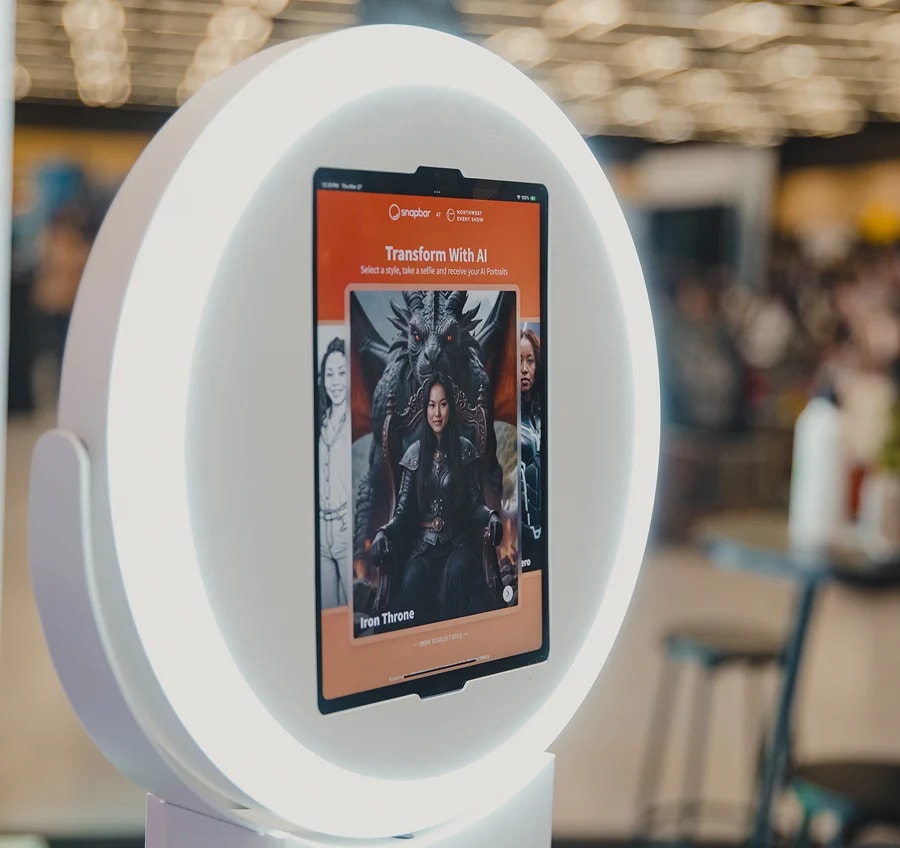
Photo contests are the most natural fit for experiential events because the entry is the content. Attendees create something (a selfie, an AI-transformed portrait, a themed shot) and submit it. The submission flow captures their contact info when they receive their photo or enter the contest. A digital photo booth or AI photo booth can run as the entry mechanism: no hardware, no lines, attendees use their own devices via QR code. The output is shareable, which drives organic reach beyond the event.
Scavenger Hunts
Scavenger hunts turn your venue into a game. Place QR codes at key locations (booth, sponsor areas, breakout rooms), and attendees collect check-ins or complete mini-challenges. A leaderboard adds competition and visibility. The format drives foot traffic to areas you care about and creates multiple data capture moments as people progress. Best for large venues where you want to distribute engagement.
Trivia and Quizzes
Trivia and quizzes work when you want qualification signals, not just contact info. A persona quiz that asks a few questions and delivers a personalized result (leadership style, innovation archetype, etc.) gives you both engagement and segment data. People share their results, which generates UGC. The quiz answers map to real audience segments you can use for follow-up.
Creative Challenges
Creative challenges ask attendees to produce something specific: best caption, most creative use of a prop, funniest AI transformation. The barrier is slightly higher than a simple photo, but the content quality tends to be stronger. These work well when you have a highly engaged audience (conferences, internal events) and want standout UGC for post-event marketing.
Leaderboard Competitions
Leaderboard competitions gamify participation over time. Points for completing activations, sharing content, or visiting stations. The public display creates social proof and FOMO. People who might skip a single activation will participate to climb the board. Works best when you have multiple touchpoints across the event.
How Do You Structure a Competition That Captures Quality Leads?
Structure determines whether you get a list of emails or a pipeline of qualified prospects. Three levers matter.
Entry Mechanics
Keep entry simple. The ideal flow: do something fun, provide contact info to get the result, done. If entry requires more than 2-3 steps, participation drops. Email delivery of a photo is a natural capture moment. So is "enter your email to see your quiz result" or "submit to join the leaderboard." The data capture should feel like a necessary step to complete something they want, not a separate ask.
Data Capture Points
Decide what you need beyond email. Name, company, role, and a qualifying question or two can turn a lead list into a segmented pipeline. But every extra field reduces completion. Only ask for what you'll actually use. If you're routing to sales, job title and company size matter. If you're nurturing for content, email and maybe one interest question is enough.
Qualification Signals
Competition behavior itself can qualify leads. Someone who completes a multi-step scavenger hunt is more engaged than someone who snapped one photo. Quiz answers can indicate fit. Participation level, content shared, and time spent in the experience all signal intent. Design your competition so that high-value actions are trackable.
For a deeper look at measuring what matters, see our guide on how to measure event success. It covers the metrics that connect activation performance to pipeline.
What Makes People Actually Participate?
Competitions fail when the barrier to entry is too high or the incentive is too weak. Three factors drive participation.
Low Barrier to Entry
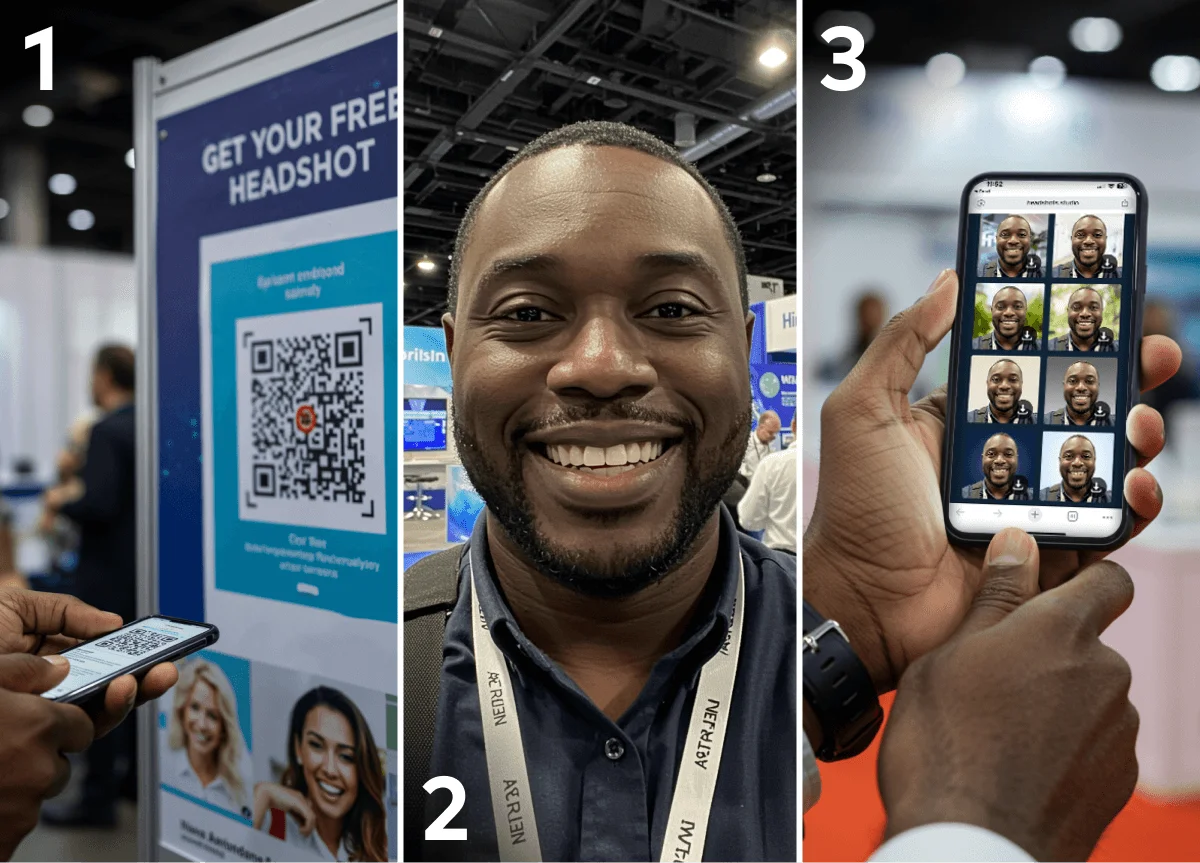
No app downloads. No long forms. No complicated rules. The best event competitions let attendees participate in under 60 seconds. Scan a QR code, snap a photo, submit. If they need to create an account, download something, or read a paragraph of instructions, you'll lose most of them. Browser-based experiences that work on any device remove the biggest friction. We've seen participation rates jump when the only requirement is "open your camera and tap."
Compelling Prizes vs. the Experience Itself
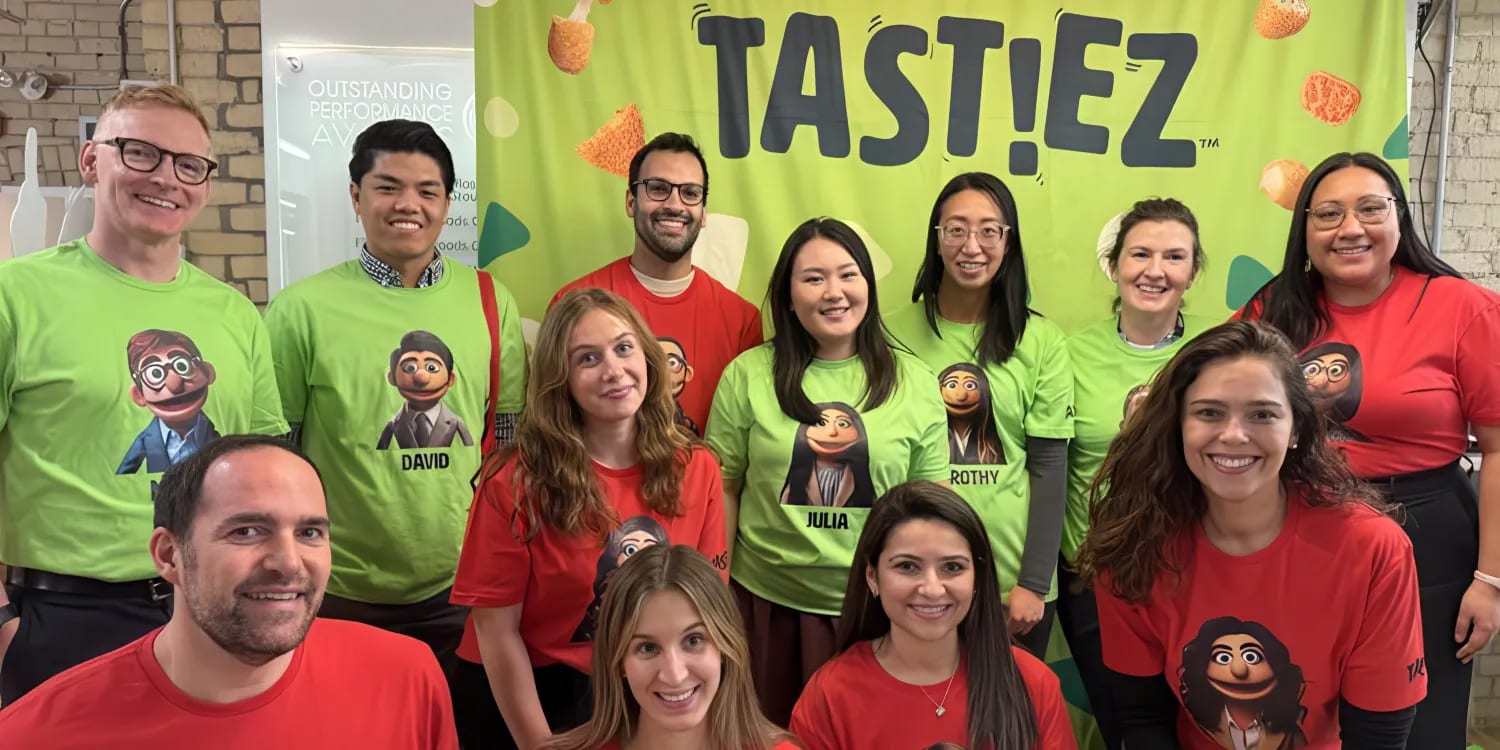
Prizes help, but they're not always the main driver. For many attendees, the experience is the reward. An AI-generated portrait they can share, a persona result that sparks conversation, a trading card that becomes a networking icebreaker. When the output is valuable on its own, participation doesn't depend on winning. Design competitions where the act of participating delivers value, and use prizes to amplify reach.
Social Visibility
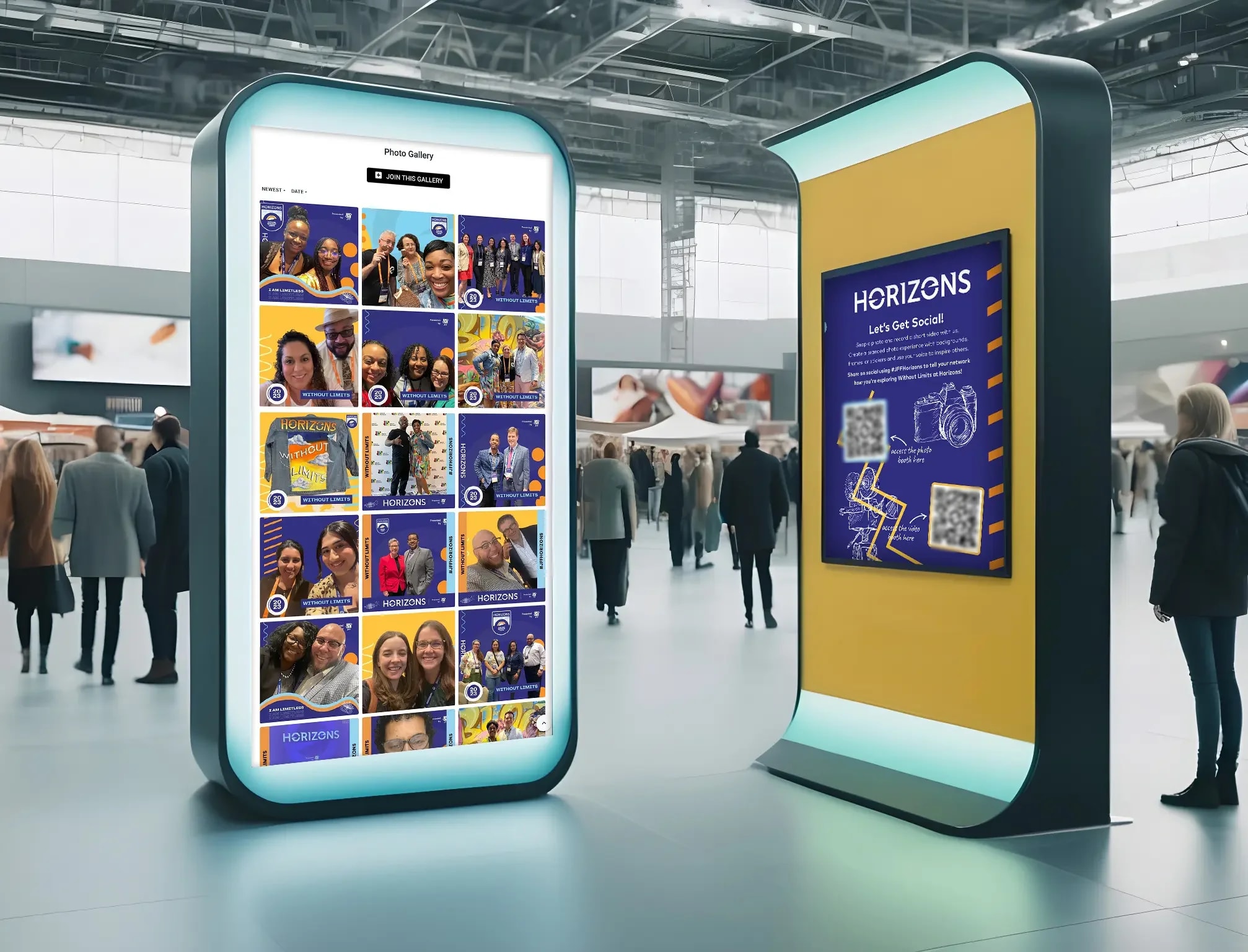
People participate more when others can see it. A live leaderboard, a gallery of submissions, a social wall that displays entries in real time. Public display creates FOMO and social proof. It also encourages sharing: when someone's photo appears on a big screen, they're more likely to post it. For more on building campaigns that drive this behavior, check out our guide to user-generated content campaigns.
Insight: The competitions with the highest participation rates are the ones where "winning" is almost secondary. Attendees participate because the experience is fun, the output is shareable, and the barrier is negligible. The competition framework just gives structure to something they'd want to do anyway.
How Do Competitions Generate User-Generated Content?
Event competitions and UGC are natural partners. The entry is often the content. The key is designing the flow so that creation, capture, and sharing are aligned.
Photo Activations as Competition Entries
When a photo contest uses a digital photo booth or AI photo booth as the entry mechanism, every submission is branded content. Attendees create something they want to keep and share. The competition gives them a reason to submit; the quality of the output gives them a reason to post. You get both the lead and the content. No separate "please share" ask required.
Social Sharing Mechanics
Build sharing into the flow. "Share your result for a chance to win" or "Tag us to be featured on the live wall" turns sharing into a game mechanic. The best setups make sharing feel like part of the experience, not an extra step. When the output is visually striking (AI portrait, persona card, themed photo), people share because they want to, not because you begged.
Hashtag Campaigns
Hashtags work best as aggregation tools, not participation drivers. Use them to collect and curate content attendees are already creating. A branded hashtag lets you surface the best entries, repost to your channels, and measure reach. But don't rely on the hashtag to drive participation. The competition and experience drive that; the hashtag helps you capture what's being shared. For more format inspiration, see our experiential marketing examples.
How Do You Measure Competition ROI?
If you can't measure it, you can't improve it. Event competition ROI breaks down into four buckets.
Leads Captured
Raw count matters, but quality matters more. Track total entries, completion rate (started vs. finished), and how many leads flow into your CRM. Segment by qualification signals if you built them in. Compare cost per lead from the competition to cost per lead from other channels (paid ads, list buys). Competitions often deliver lower cost per lead when the experience is strong.
Content Generated
Count submissions, shares, and social reach. How many branded photos were created? How many were shared organically? What was the total impression count from UGC? Content that gets shared has ongoing value beyond the event. Track it.
Social Reach
Impressions, tags, reposts. Every share extends your event's footprint without additional ad spend. Compare organic reach from competition UGC to what you'd pay for equivalent paid impressions. That's the amplification value.
Cost Per Lead Comparison
Total competition cost (activation, prizes, labor) divided by qualified leads. Compare to your benchmark cost per lead from other channels. If the competition delivers leads at or below your target CPL, it's working. If not, adjust the mechanics, the audience, or the prize structure. Our guide on measuring event success goes deeper on building a metrics framework.
Insight: The most underrated ROI from event competitions is the content. A single activation can generate hundreds of branded photos. If you're paying $2-5 per piece of UGC from influencers, and your competition produces 500 pieces at a fraction of the cost, that's a real number to put in front of leadership.
Common Mistakes to Avoid
I've seen the same mistakes cost teams leads and engagement. Here's what to avoid.
Over-Complicated Entry
Multi-step forms, app downloads, account creation. Every friction point cuts participation. If your competition requires more than "do the thing, enter your email, get the result," simplify. The best competitions feel instant.
Irrelevant Prizes
Generic gift cards or swag that doesn't match your audience. Prizes should feel relevant to the event and the participants. A tech conference crowd might care more about early access to a product than a generic Visa card. Match the prize to the audience.
No Follow-Up Plan
Capturing leads without a plan to use them is wasted effort. Have your nurture sequence, sales routing, and CRM integration ready before the event. Leads go cold fast. Follow-up should land within 24-48 hours while the event is still top of mind.
Event competitions are one of the most effective ways to turn live engagement into measurable results. Design for a natural value exchange, structure for quality capture, and measure what matters. For a look at how we approach activations end-to-end, see how it works and our activation concepts for format inspiration.
Ready to turn your next event into a lead generation engine?
Get a Quote
Or explore: How It Works | Activation Concepts