
Table of Contents
A conference photo booth earns its budget on the floor, not in the run of show. You booked it, the branding looks right, and from where you are standing you can see the part nobody plans for: people walking past. Anyone who has run a photo booth for conferences knows that gap. The activation works. The traffic to it is what you build, with placement, programming and promotion rather than a bigger backdrop. What follows is the operational half of that job, from activations we have run in expo halls and conference centers: where to put it, how to get people to walk over, and what you should have to show for it once the hall empties.
Key takeaways
- Placement beats production. A visible queue recruits more guests than a bigger build.
- Put the activation in the agenda against a real window, not just on the floor plan.
- The display is the recruiting mechanism. If the line cannot see the content, the line does not form.
- The data capture step is what turns a busy hour into opted-in contacts your CRM can use.
- Book earlier for autumn shows. Our published booking data puts the median at 28 days, and October runs longer.
What is a conference photo booth?
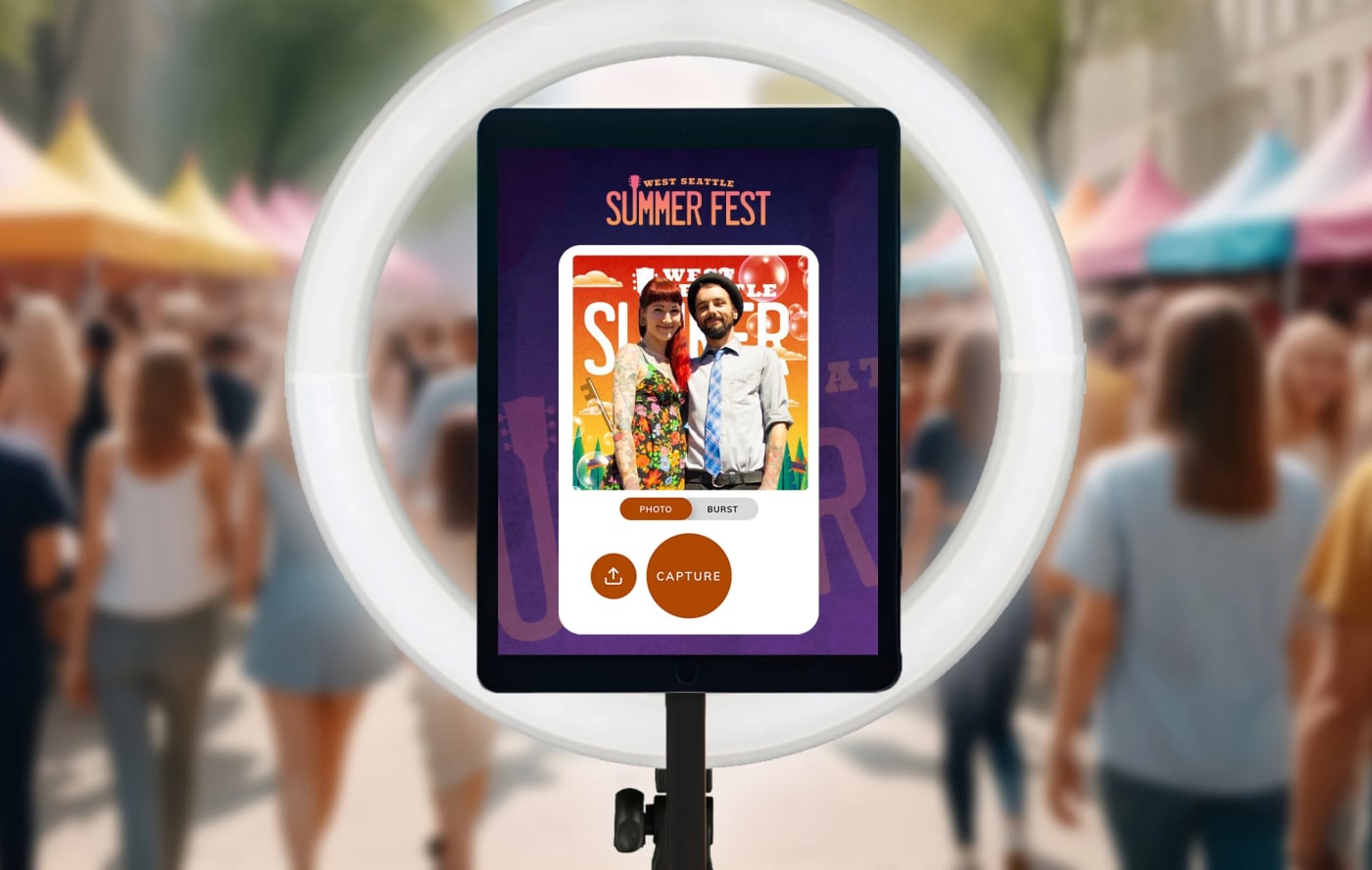
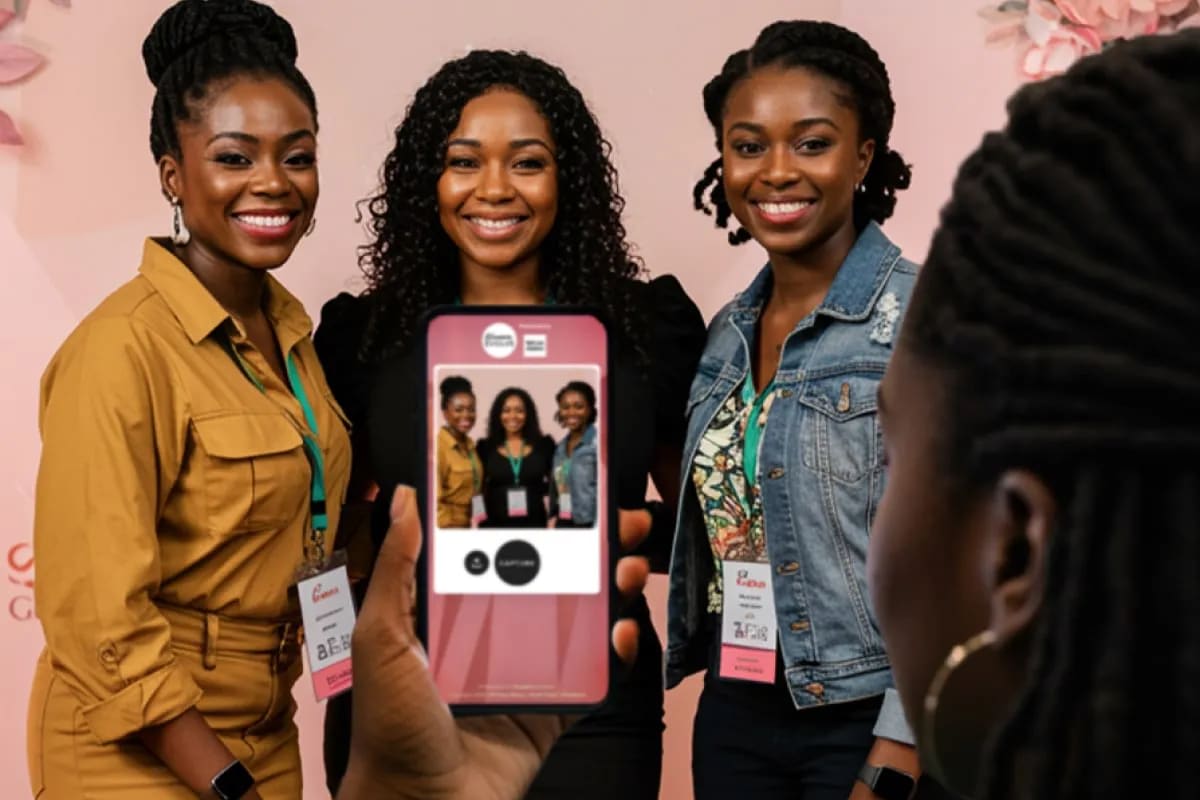
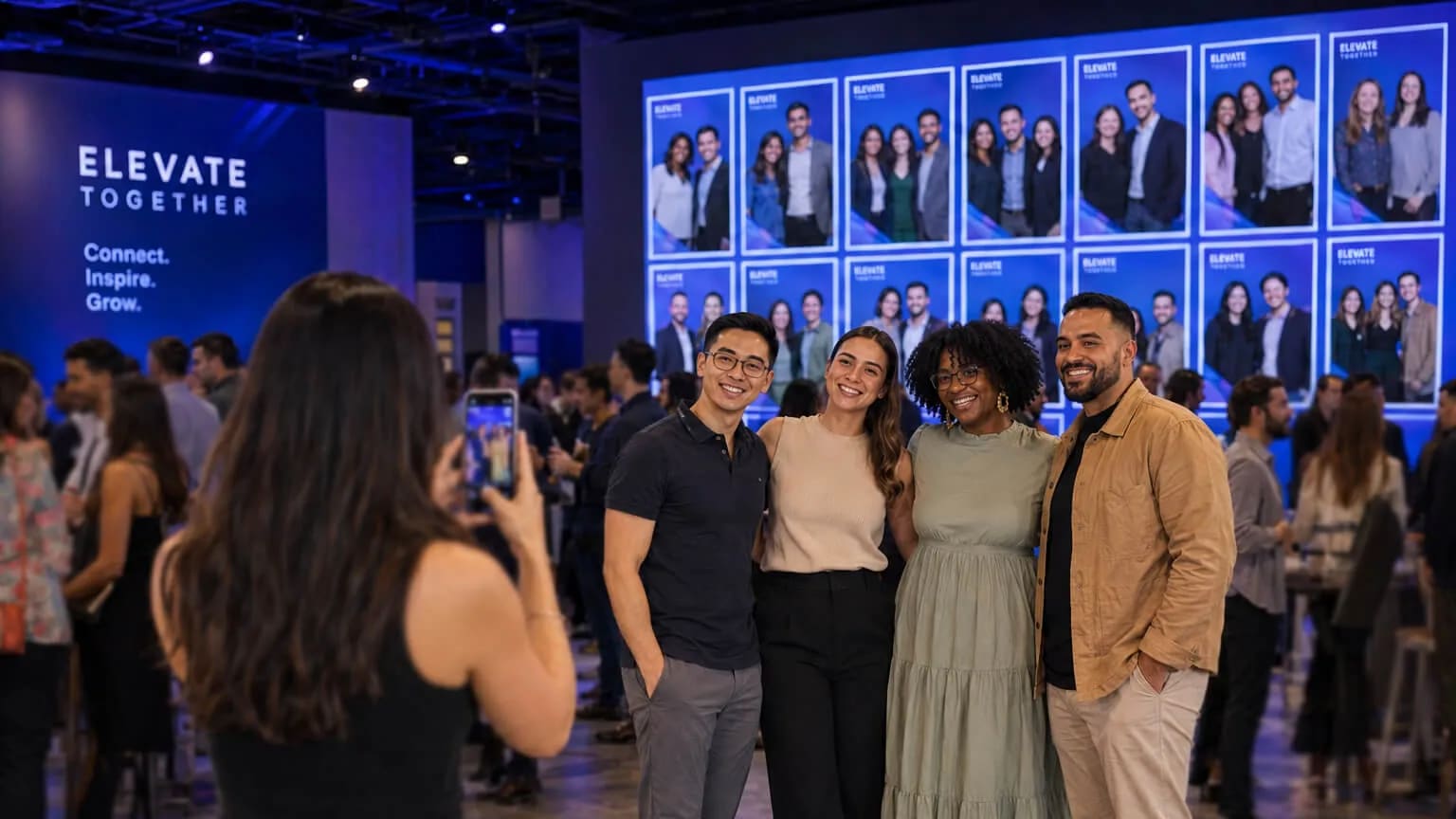
A conference photo booth is a web-based activation guests reach from their own phone, run on a conference floor to start conversations, produce branded content and capture opted-in contacts. There is no kiosk to queue at and no app to install. A guest scans a code, takes part, and the content arrives on their phone and on your screens within seconds.
The reason it outperforms ambient branding is not the picture. Fredrickson and Kahneman showed that people judge an experience in hindsight by its peak and its end, not by how long it lasted. Three days of logos on a lanyard have no peak. One thing an attendee made, with their own face in it, does.
The product name matters here, because it changes what you receive. An activation guests scan into on a conference floor is our Digital Photo Booth. The Virtual Photo Booth is a separate product built for remote and hybrid audiences, covered further down.
If you are still choosing a format rather than running one, our conference and large event activations page has the menu.
Where should you put a photo booth at a conference?
Put it on a sightline from a path people already walk, next to somewhere they already stop. Registration overflow, the end of an expo aisle, the coffee station, the entrance to the reception. The test: stand where the activation will go and count how many people can see a queue at it from twenty feet away. If the answer is nobody, move it.
That is not a design preference. Milgram, Bickman and Berkowitz measured the effect on a New York street and reported it in a short paper on the drawing power of crowds: the size of a stationary group determines how many passers-by stop and look. Your queue is the advertisement. A booth tucked behind a pillar has no queue to show, so it never recruits the fifth person, or the fiftieth.
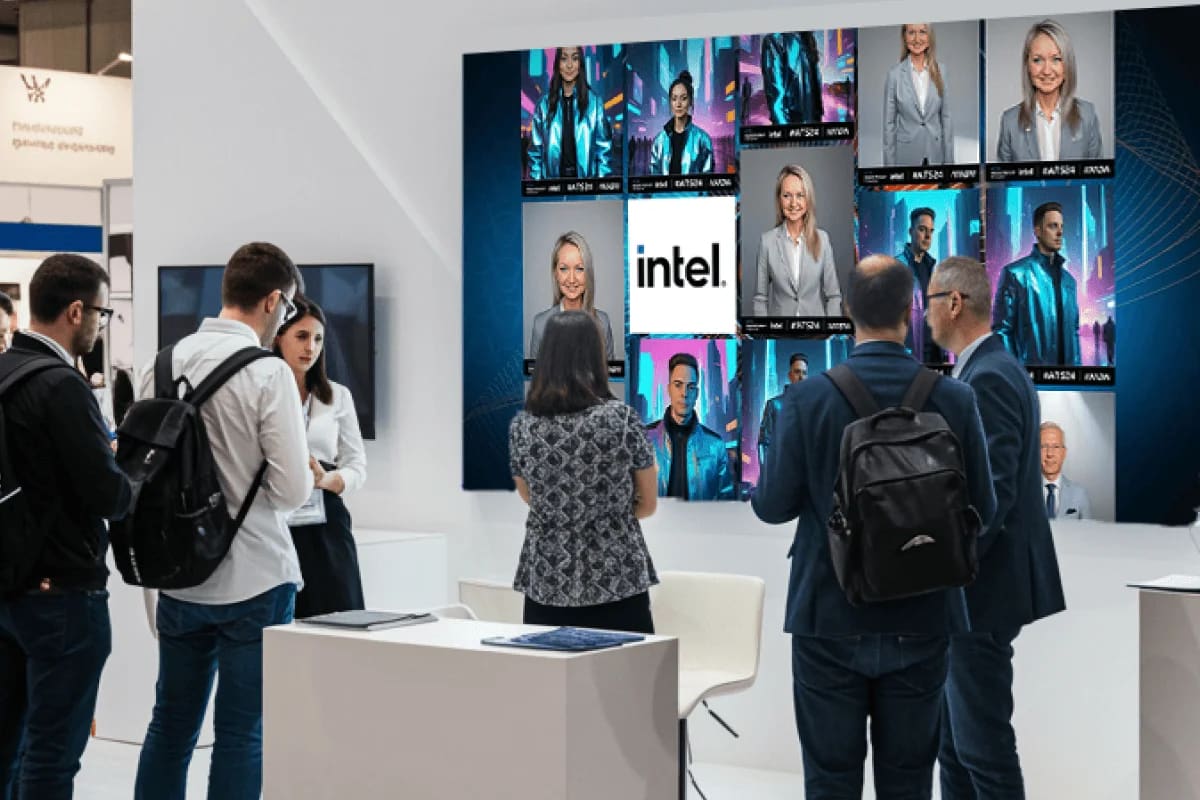
Three constraints decide most placements. Power and hard-wired network, which nobody remembers until load-in. Lighting, because a dark corner reads as closed. And aisle width: a queue blocking a fire lane gets moved on day one, usually to the worst spot in the hall.
We have gotten this wrong ourselves. On one summit floor the activation sat in a beautiful lounge only one track walked through, and it ran at a third of the volume of the identical setup by the coffee. The room was better. The traffic was not.
How do you get conference attendees to use a photo booth?
Give them a reason, a moment and a route. These nine plays are the ones we run most at conferences, in build order. They sit inside a wider set of B2B audience engagement strategies; for the format menu, start on the conference activations page.
1. Put it on the agenda, not just the floor plan
Floor plans say where the activation is. The agenda says when to go. Get it named in the schedule and the conference app against a real window: the mid-morning break, expo-hall hours, the drinks reception. Delegates run someone else's timetable all day, and the minutes between sessions are the only ones they control.
What you get back: a predictable rush you can staff.
67% and 55%
Two-thirds of attendees report feeling less engaged if they do not get downtime, and 55% admit they will skip sessions to decompress if breaks are not built in. The break is not dead time. It is the window where the floor has their full attention. Source: Hilton with Ipsos, 2026 Trends Report, an online survey of 3,150 adults planning to attend an in-person work event.
2. Announce it before anyone lands
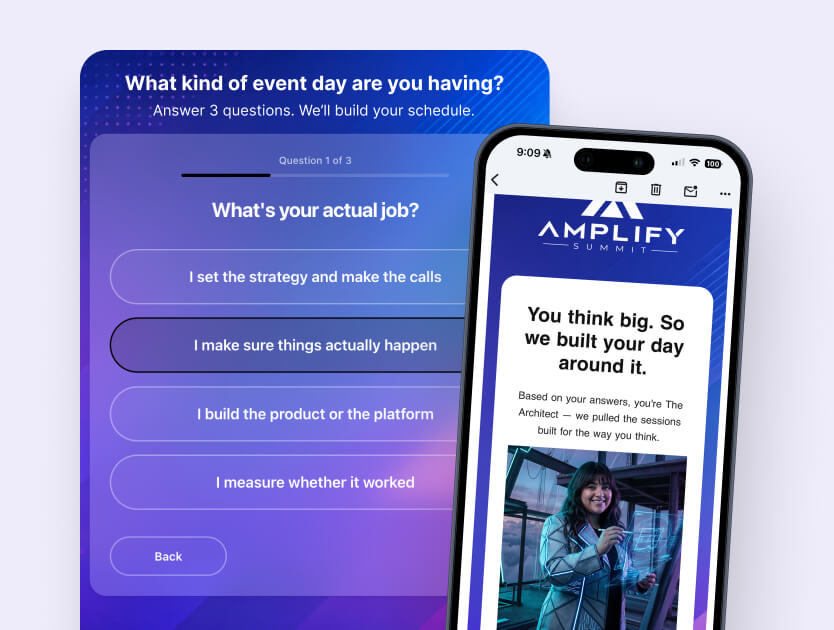
The guests most likely to take part already knew it existed. Three touches cover it: an agenda slide, a push notification in the conference app, and one graphic the sponsor drops into their pre-show email. The assets are quick, and easy-to-edit templates get you there faster than a brief will. If the conference has a public-facing audience as well as a registered one, an event page is somewhere to put the time, the location on the floor and the link. For a registered-only B2B conference the app and the agenda do more work.
What you get back: arrivals in the first hour, not a build that peaks too late.
3. Seed the gallery before doors open
An empty gallery is a cold start, and nobody wants to be the first face on a screen in a hall of strangers. Give your team and a couple of friendly exhibitors half an hour before registration opens. The display is full when the first attendee looks up, and you have flushed out the boring problems: lighting, sightline, network.
What you get back: a warm display and a free rehearsal.
See it in action
Run a Digital Photo Booth on your conference floor
Guests scan, take part, and get their content in the moment.
Explore Digital Photo BoothAll of it depends on guests reaching the activation in one motion.
4. Make the entry point a QR code on everything
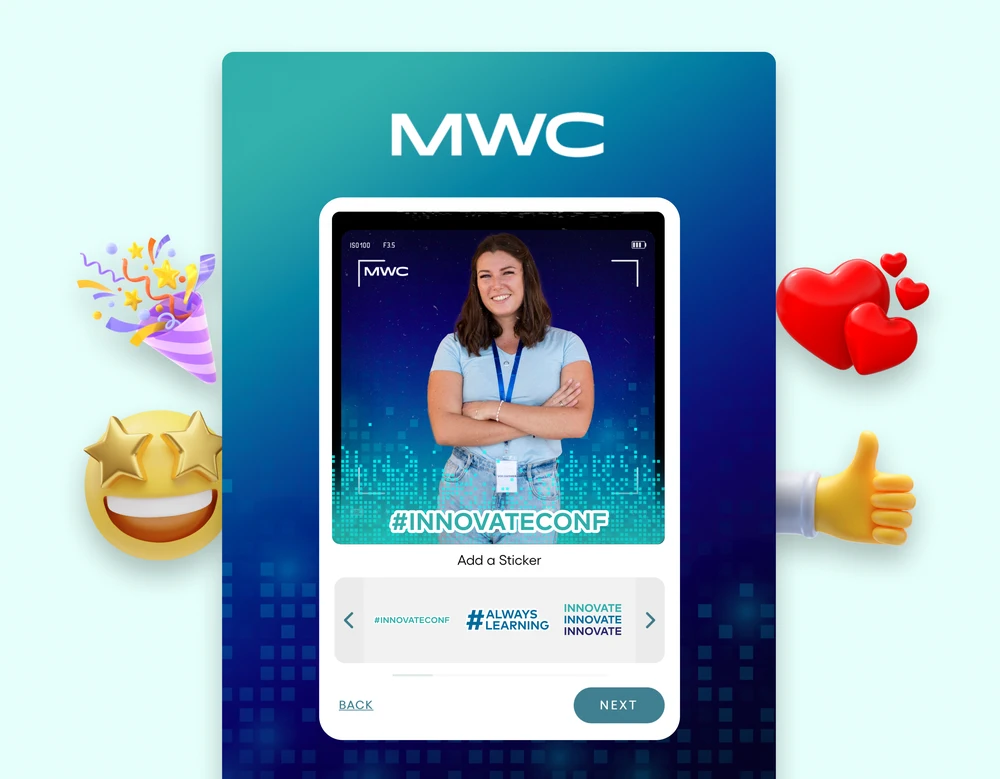
Guests arrive by scanning, so the code belongs everywhere their eyes already go: the backdrop, the aisle banner, the sponsor's slide, the back of the badge. If you only need a code for signage, a free generator will produce one in a minute. When the code is the front door, we build it into the Digital Photo Booth so it opens a branded page, not a raw link. Two variations pay off here: guests can upload to the mosaic wall by QR without a booth session, and sponsors get a scannable tile in the gallery and slideshow displays.
What you get back: participation from people who never queued, and a deliverable sponsors will pay for.
5. Put the content on a screen the line can see
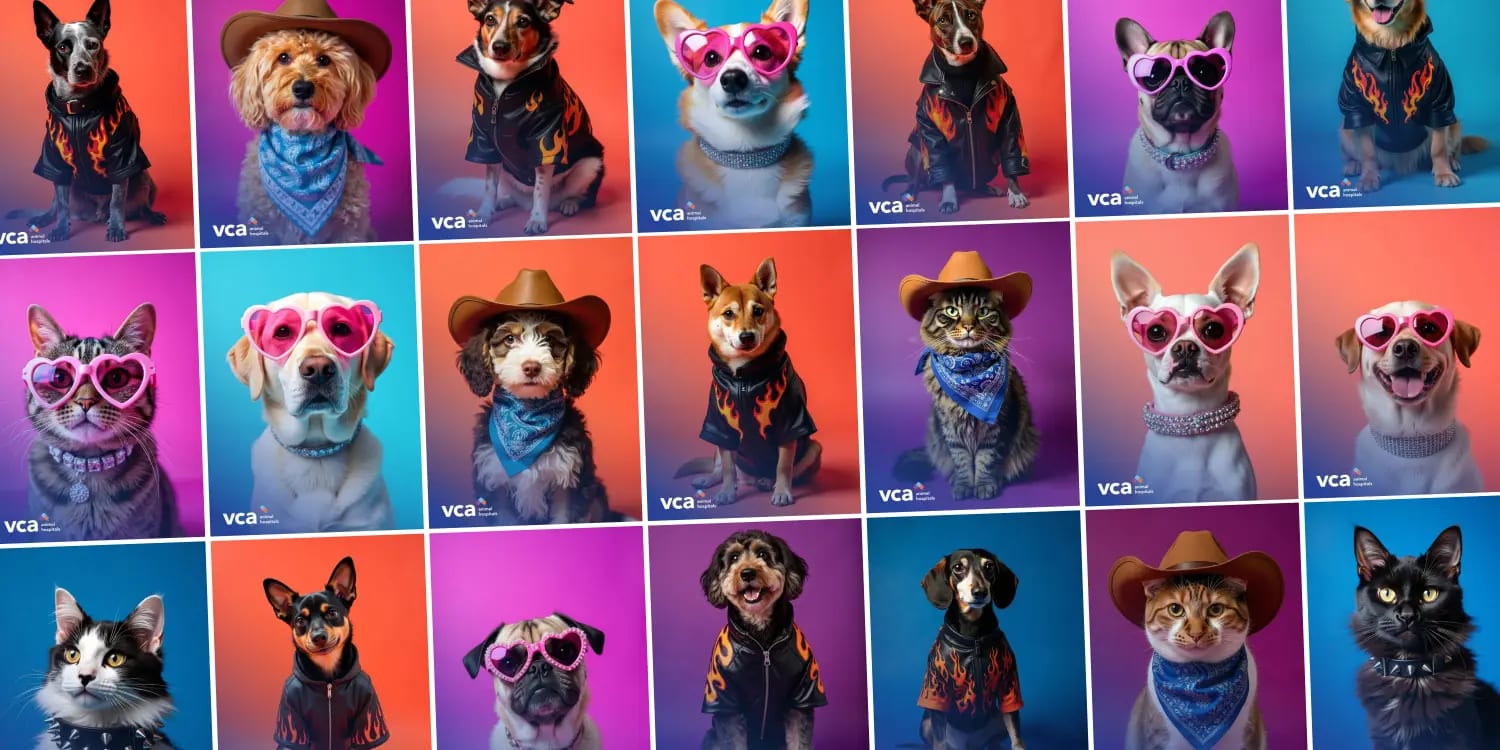
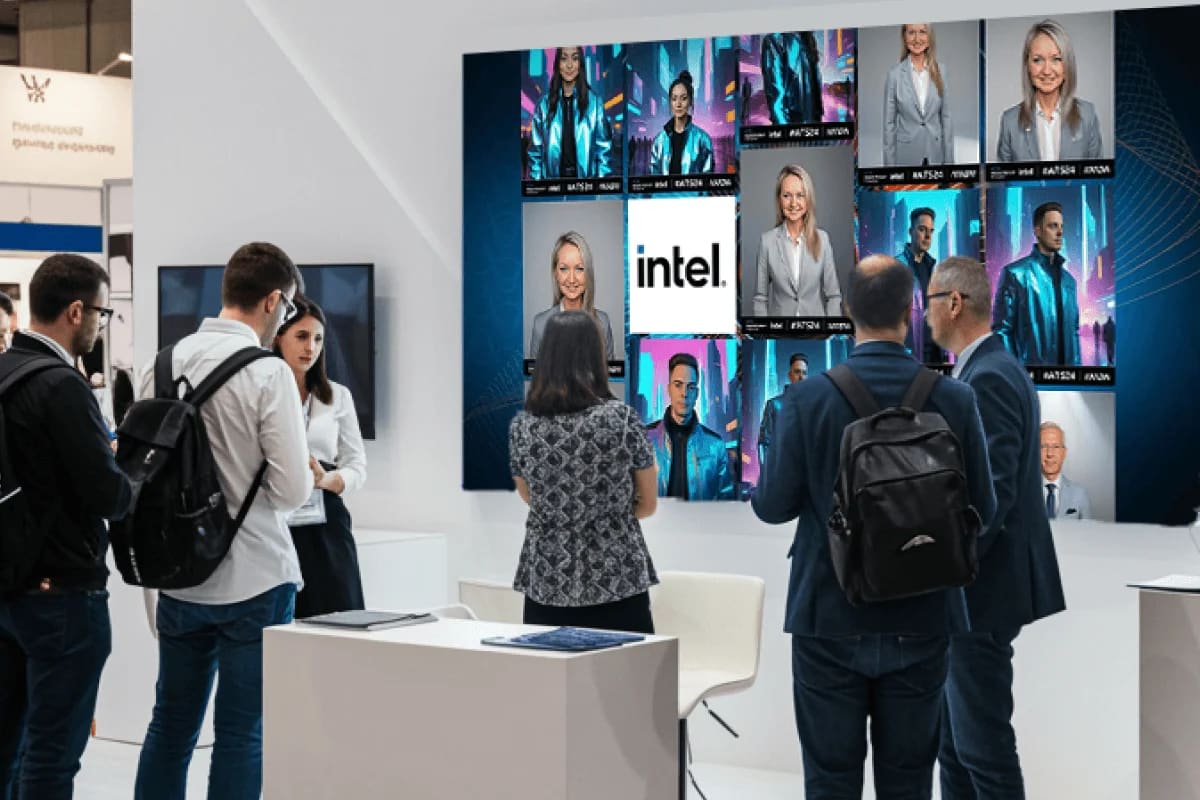
The display is not decoration, it is the recruiting mechanism. A Live Gallery facing the aisle shows a passer-by what they get and how long it takes. Which screen you pick changes the behavior, and we compared galleries, slideshows, leaderboards and mosaic walls side by side.
Floor footage is the cheapest recap you will cut, and it carries an obligation: people walk through your shot who never opted in. Before that clip goes anywhere, blur the background so the only recognizable faces are the ones that chose to be there.
What you get back: a queue that replenishes itself, and a recap you can publish safely.
6. Turn it into a contest with a live leaderboard
A giveaway gets you a bowl of business cards. A contest with a visible scoreboard gets people campaigning for their own entry. A leaderboard ranks guest content by upvotes, and a scannable code on the screen lets a passer-by vote without joining the line. A live gallery, a slideshow and a leaderboard come with every activation; the live mosaic is the one add-on. Our team switches the leaderboard on at setup.
What you get back: votes, participants, and a second way in for the queue-averse.
See it in action
Put your conference on a Live Gallery
Guest content on any screen within seconds, with clickable LinkedIn badges and scannable sponsor tiles in the gallery and slideshow. Guest upvoting runs on the leaderboard.
Explore Live GalleryScreens pull people in. A wall gives them a reason to come back.
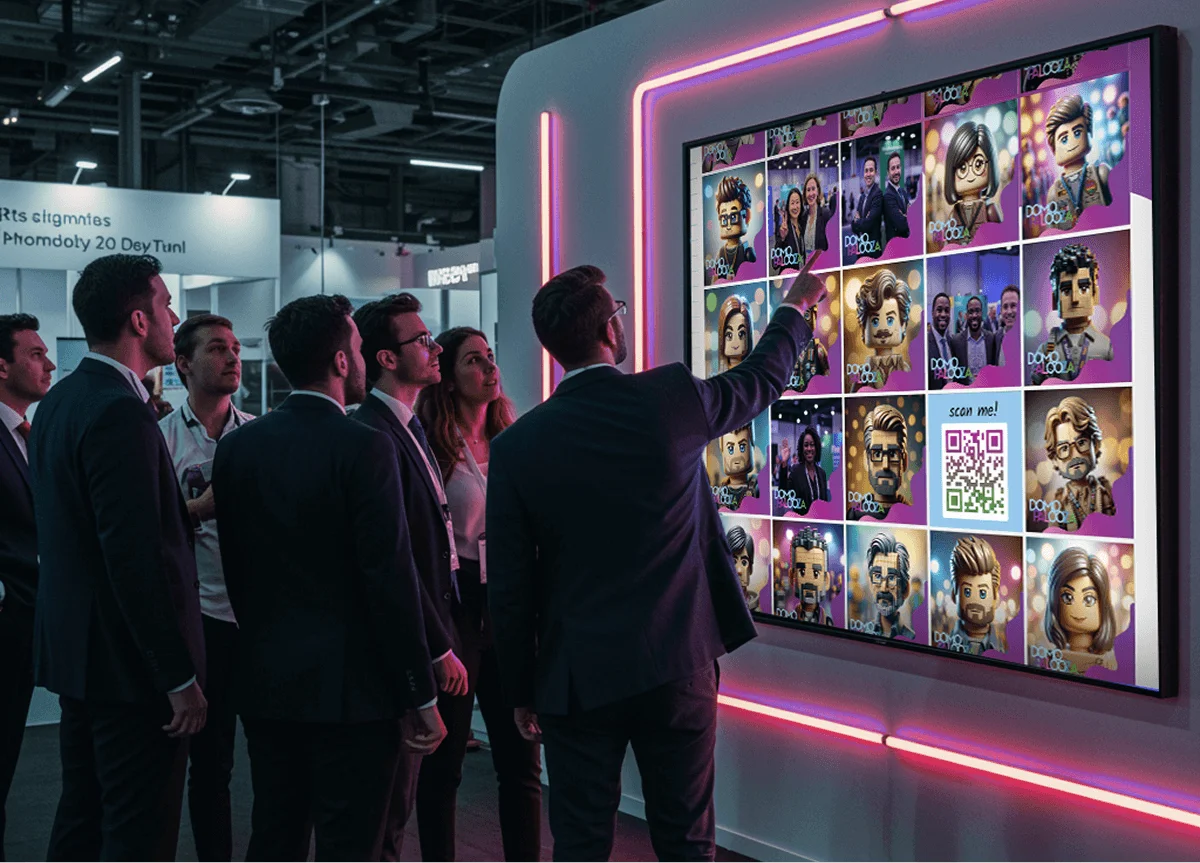
7. Build the wall everyone wants to be on
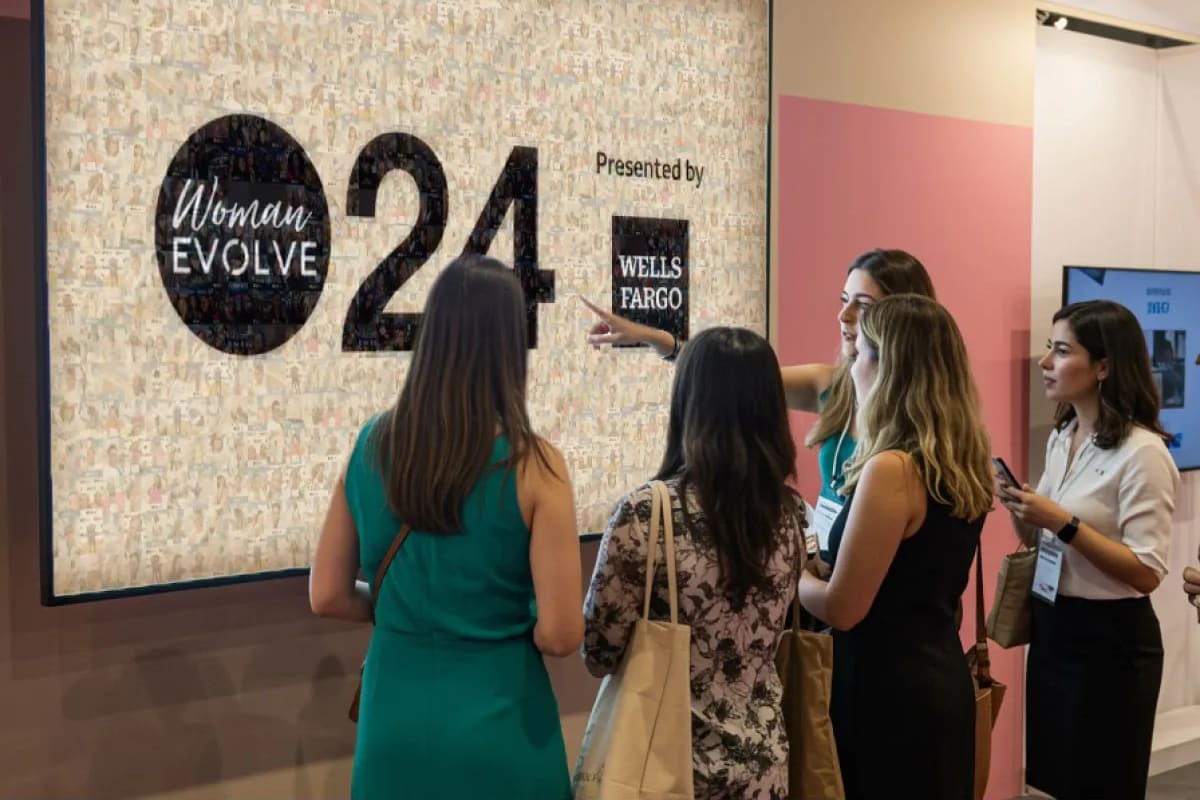
A Live Mosaic, the one display that is a paid add-on rather than included, assembles guest photos into one large image, tile by tile, on a screen the hall walks past. The mosaic never runs out of room, so every guest makes it in, which is what brings people back on day two to find their own tile. Guests can add by QR from their camera roll too, so missing the queue does not mean missing the picture.
What you get back: repeat visits, and one asset everyone wants to post.
8. Give people something they keep
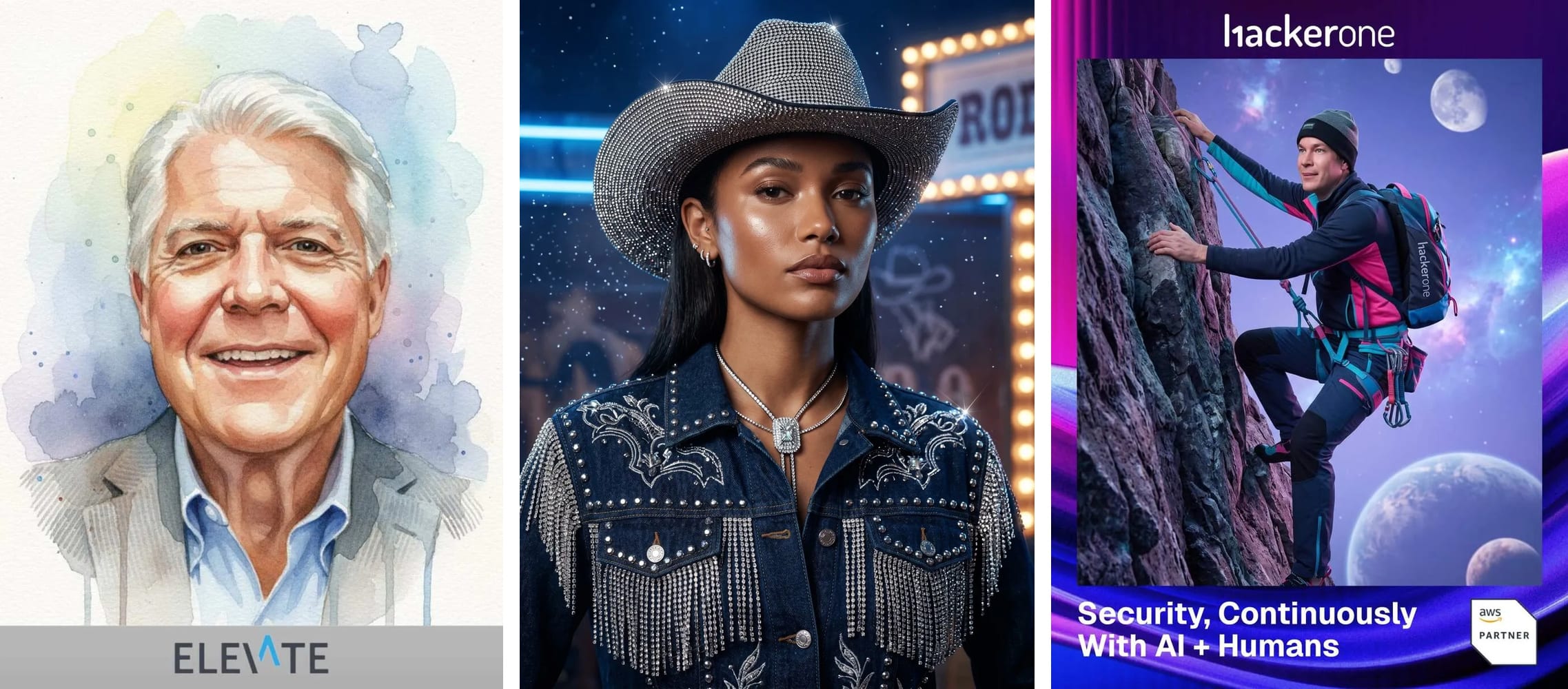
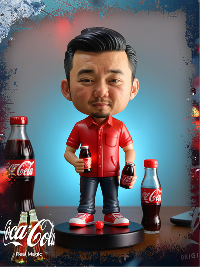
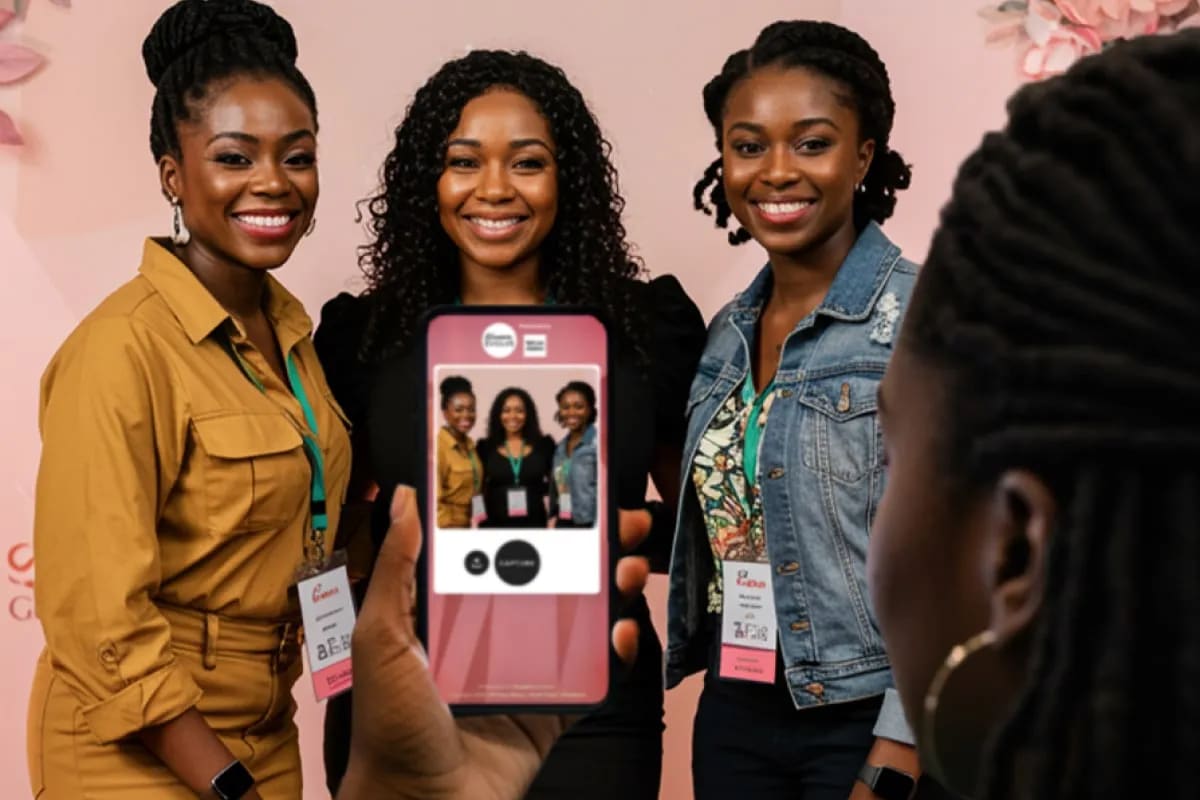
Ambient branding leaves the hall with nobody. A take-home leaves with everyone. That can be a printed strip, a portrait sized for a profile picture, or a digital trading card that tilts and shimmers as the guest moves their phone, and keeps doing it inside every link the guest shares. At Sitecore Symposium the take-home was the point of the stand; the project write-up shows what that looked like.
What you get back: content still circulating after the badge comes off.
9. Ask for the one field that keeps the conversation going
Nearly half of attendees say meeting new people and bonding with their team is the main reason they attend work events, according to the same Hilton research. So ask for the field that serves that. A LinkedIn field in the data capture step becomes a clickable profile badge on the guest's content, so two strangers at the same screen have a reason to connect. Be honest about the limit: the badge gives two people a route to each other, and whatever happens next happens on LinkedIn rather than at your stand. The mechanic is covered in our piece on LinkedIn badges at events.
What you get back: a profile route on every piece of content, and introductions made at the screen.
What does a conference photo booth capture for the marketing team?
Three things: opted-in contacts from the data capture step, branded content the guest shares from their own account, and a record of who took part. Content is delivered by email or text in the moment, which is what makes the opt-in worth giving. Everything captured pulls as a bulk export with structured file naming, templated for import into your CRM.
Decide the fields before you decide the backdrop. Every extra box costs you completions, so keep it short: where the content goes, consent, and one qualifying field somebody will act on. Company, role or the session track a delegate walked in from sorts a list faster than a free-text comment, and none of it can be added afterwards.
Be precise about what an activation can and cannot tell you, because this is where event reporting overpromises. It hands you an export of the people who took part and what they agreed to. It does not tell you which of them became pipeline. That join happens in your CRM, and only if somebody decided in advance which campaign the export lands in and who owns the follow-up. We wrote about the handover in where event lead data goes, and about the wider program in our event lead generation playbook.
Agree the destination before load-in, not in the week after the show when half the team is at the next event.
Does a photo booth work for virtual or hybrid conference attendees?
Yes, and it is a different product. A conference floor activation is the Digital Photo Booth. A remote or hybrid audience is served by the Virtual Photo Booth, which guests join from a browser with no app and no hardware on their side.
If the conference runs a virtual platform, two placements do most of the work. Put the link on the platform home page or in the navigation, where remote delegates actually look, not inside a resources tab. Then embed the gallery on the same page so it fills as people take part, and the remote audience sees the same activity the hall does. For formats we have run remotely, see our creative ways to use a virtual photo booth.
How far in advance do you need to book a conference activation?
The median event activation planning timeline is 28 days, based on our own closed bookings. That is the middle of the range, not the recommendation, and the month you are booking into moves it. October events were booked at a 40-day median and December at 38, against 27 days for both February and March.
October is also the busiest event month in that data, which is the awkward part for conference organizers: the season with the most demand is the season when everyone is booking furthest out. If your show is in the autumn, work back from a longer window than the median suggests. We broke the full pattern down in our analysis of the event activation planning timeline.
If your conference is next month, start here
Do three of the nine. Fix the placement so a queue is visible from the aisle, get the activation named in the agenda against the break, and put a screen where the line can see itself. Those three cost nothing but decisions, and they move participation further than any addition to the build.
The content does not stop working when the hall empties. It goes to the CRM as opted-in contacts, to your channels as marketing fuel, and, if the conference runs an ongoing community between editions, to the place your audience already is.
Two neighboring cases. If you are working a trade show hall rather than a conference program, the economics of the aisle differ and our interactive trade show booth ideas cover it. If the goal is peer connection rather than content, look at how structured networking events are designed. And when you want the format menu, everything we run for conferences and large events sits in one place.
Planning a conference activation people actually walk over to?
Tell us the venue, the floor plan and the date, and we will show you what it looks like on your stand and what it hands your marketing team afterwards.
Get a QuoteOr explore: Conferences & Large Events | Experiential Marketing Platform