

Table of Contents
If you're commissioning event photography, you already know the mechanics. Book the photographer, build the shot list, get the gallery back, drop it in the shared drive. That part is well understood.
Here's what's easy to miss: the photos that get commissioned and the photos that get used are usually not the same photos. Most event photo budgets buy documentary coverage. Wide room shots, the stage, the keynote mid-gesture, a crowd from the back of the hall. Then the folder gets mined twice, once for the recap post and once for next year's sales deck, and goes quiet.
The research on what visual content actually does for a brand points somewhere more useful. We went and read it, and it changed how we think about briefing an event shoot.
What is event photography in a marketing context?
In marketing terms, event photography is the practice of capturing visual content at a live event so it can be used after the event to build reach, trust, and pipeline. That last clause is the one that gets dropped. Photography that only documents what happened is event coverage. Photography planned around where the images will live afterward is a content operation, and it gets briefed differently.
The distinction matters because the two produce different libraries. Coverage produces proof that the event occurred. A content operation produces assets your team is still pulling from in March.
Faces are doing more work than the venue is
The clearest finding in the literature is about faces, and it's bigger than most marketers assume.
38% more likes, 32% more comments
Analyzing 1.1 million Instagram photos, researchers at Georgia Tech and Yahoo Labs found that images containing faces received 38% more likes and 32% more comments than images without them, after controlling for follower count and account activity. The number of faces, their age, and their gender made no difference. Presence did.
Now compare that against a typical event gallery. Ballroom, signage, a lectern, the branded step-and-repeat with nobody standing at it, a half-empty expo aisle at 8am. Technically competent, and mostly faceless.
What makes this more interesting is a second study, from a completely different field, that suggests the face effect runs deeper than engagement metrics.
The trust signal nobody reports noticing
Researchers studying Airbnb listings in Stockholm rated 395 host photos for perceived trustworthiness, then ran two choice experiments. A one-unit increase in how trustworthy a host's photo looked was associated with a 7% higher listing price. Review scores, meanwhile, had no measurable effect on price, because almost every listing sat between 4.5 and 5 stars and the signal had flattened out.
The detail we keep coming back to: only 8% of participants said the host's photo influenced their choice.
So the effect was commercially meaningful and almost entirely invisible to the people it was working on. If you've ever run a post-event survey asking attendees what shaped their impression of a brand, that number should give you pause. Nobody is going to write "the photos of people" on your feedback form. It still moves.
Source: Ert, Fleischer & Magen, Tourism Management 55
Why the guest in the photo remembers your brand differently
There's a well-established result in cognitive psychology called the self-reference effect. When people process information in relation to themselves, they recall it better than under any other kind of encoding, including thinking carefully about its meaning. Rogers, Kuiper and Kirker demonstrated it in 1977 in the Journal of Personality and Social Psychology, and it has held up since.
Applied to an event: a photo of the stage and a photo the attendee is in are not the same memory object. One is information about an event. The other is information about them.
A more recent study makes the point sharper. Across one field study and three lab studies, participants who could freely take photographs during an experience later recognized more of what they saw than participants who couldn't, without ever revisiting the photos. The act of capturing was itself the thing that improved visual memory.
Worth knowing the flip side, because it's a real trade-off: the same study found photo-taking impaired memory for what people heard. If your event is a speaker program and the goal is retention of the talk, encouraging phones up during the session works against you. Put the capture moment adjacent to the content, not on top of it.
Source: Barasch, Diehl, Silverman & Zauberman, Psychological Science 28(8)
Production polish is not the variable you think it is
This is where we have to be careful, because the easy version of this argument is wrong.
In a seven-day field experiment, 215 participants followed a real clothing brand's Instagram feed. Half saw studio-produced images, half saw snapshot-style images. The snapshot group rated the brand higher on source credibility (3.88 versus 3.00) and brand attitude (4.13 versus 3.27), both on seven-point scales. Less polish, more credibility. Fair caveat: it was a fashion brand and the sample skewed young and female, so we wouldn't stretch it to a pharma users' conference without hesitating. (Colliander & Marder, Computers in Human Behavior 78)
But run the opposite finding alongside it. A study of 7,423 Airbnb properties over 16 months found that listings using Airbnb's professional photographers had 8.98% higher occupancy than listings using host-shot images. Professional photography won, decisively. (Zhang, Lee, Singh & Srinivasan, Management Science 68(8))
Both are true, and reconciling them is the actual insight. Production value wins when the image is about the thing. Your venue, your product on the table, your booth build. Snapshot aesthetic wins when the image is in a feed, competing with everything else a person scrolls past. And when the image is of a person, perceived trustworthiness drives the outcome largely independent of how it was produced.
Which is a more demanding brief than "hire someone good." It means one event usually needs two different kinds of capture, and most budgets only fund the first.
How to brief an event shoot so the content has a second life
Five changes we'd make to a standard shot list.
Brief to the destination surface, not the agenda. A shot list organized by session time produces a chronological archive. A shot list organized by where images will be published (paid social, the careers page, the sponsorship recap deck, next year's landing page) produces assets. The photographer can work from either. Only one of them gets used.
Make attendees the subject, not the scale reference. There's a reflex to shoot people small, in context, to show how full the room was. Room-fullness is a metric for your internal recap. It isn't what performs downstream.
Solve consent at the moment of capture. The most common reason a good event photo never gets used is that nobody can confirm the person in it agreed to appear in an ad. Handling permission at capture rather than chasing it in week three is a boring operational fix that quietly frees up a large share of the library.
Add a capture layer that runs without the photographer. One photographer physically cannot put 2,000 attendees at the center of their own frame. This is a throughput ceiling, not a skill ceiling.
Sort and route within 72 hours. Galleries that arrive unsorted get triaged once and abandoned. Tag against the destination surfaces from the first bullet before anyone's attention moves to the next event.
Where a photo activation changes the math
That fourth point is the one that tends to be structural rather than fixable with a better brief.
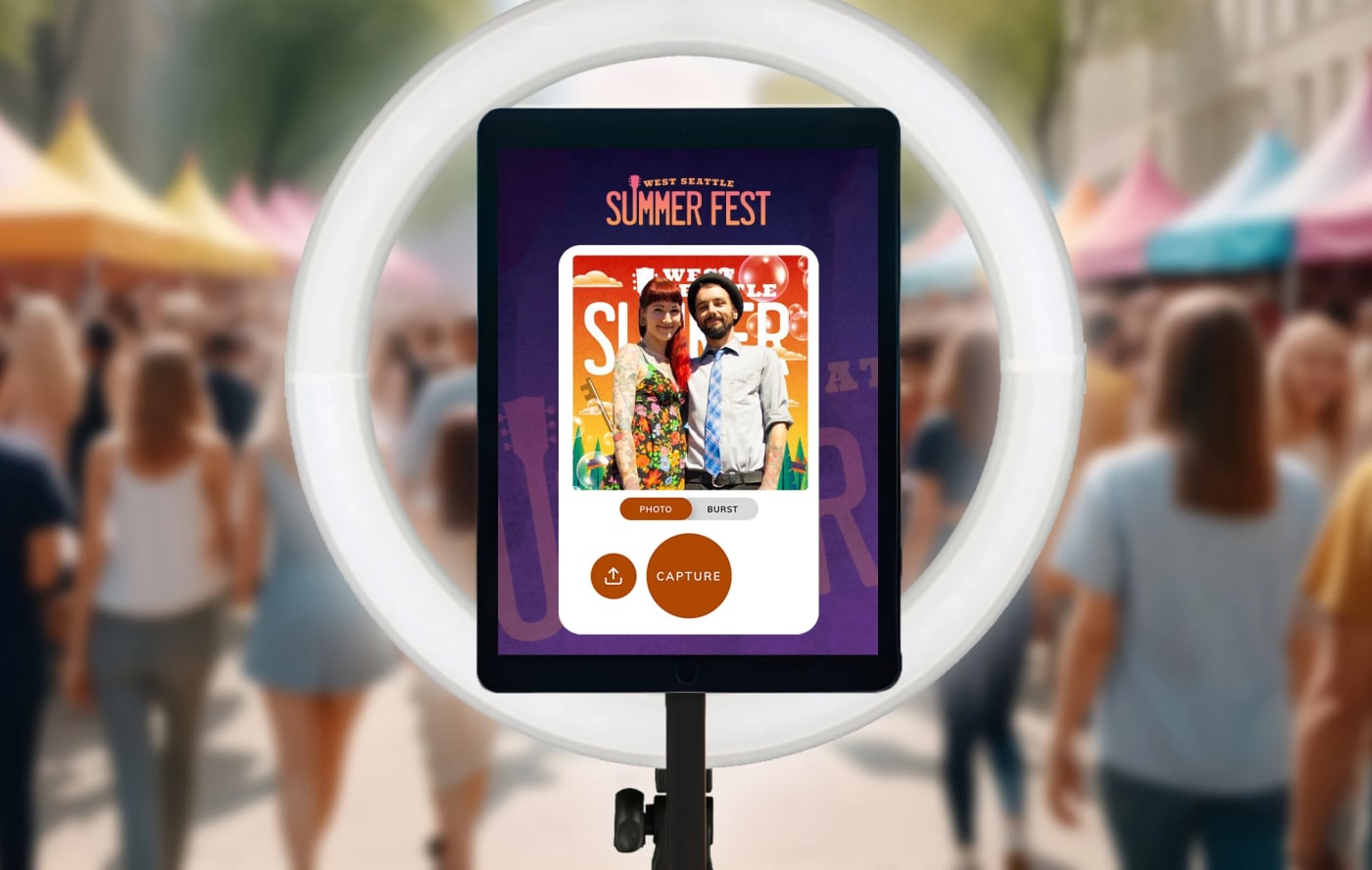
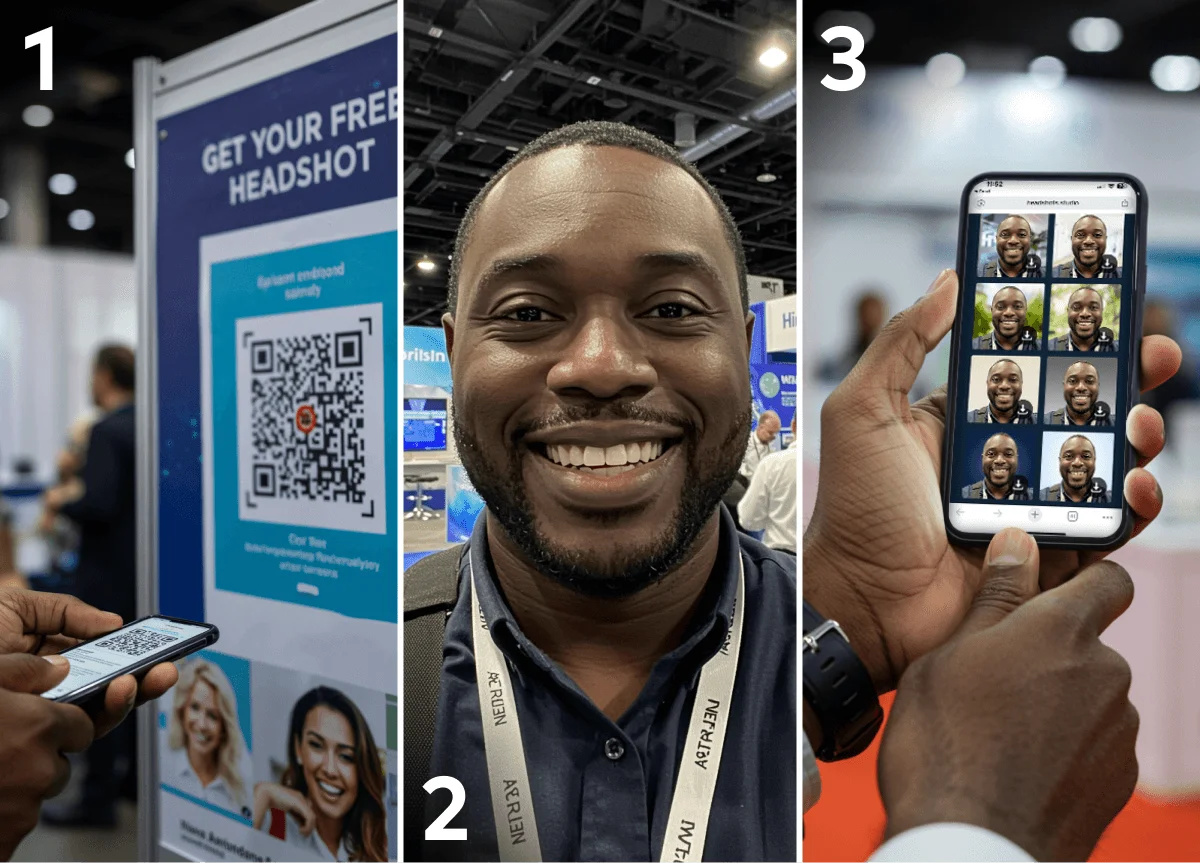
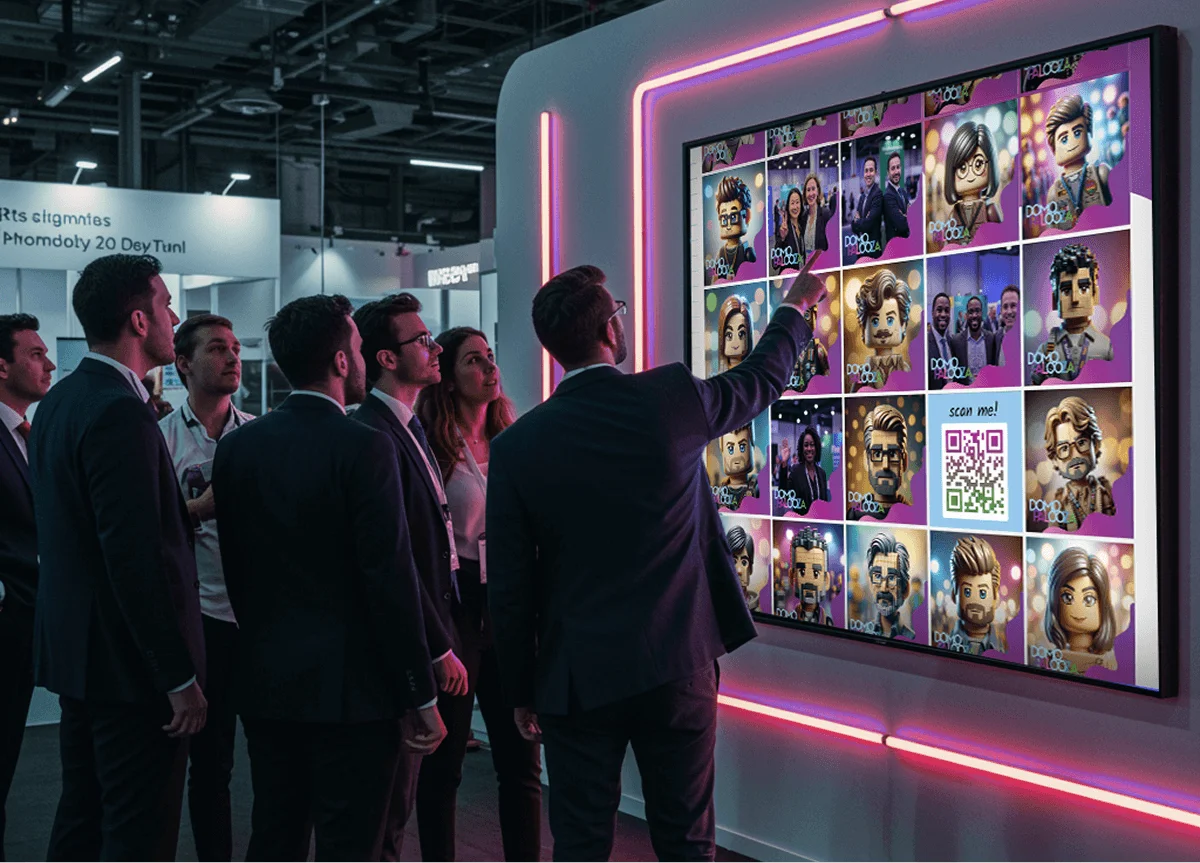
A photo activation inverts the capture model. Instead of one professional moving through a room deciding what to shoot, every attendee becomes the subject of their own frame, on their own phone, branded to the campaign, and the resulting image is delivered to them by email. Faces, by default. Self-referential, by default. Consent, captured in the flow.
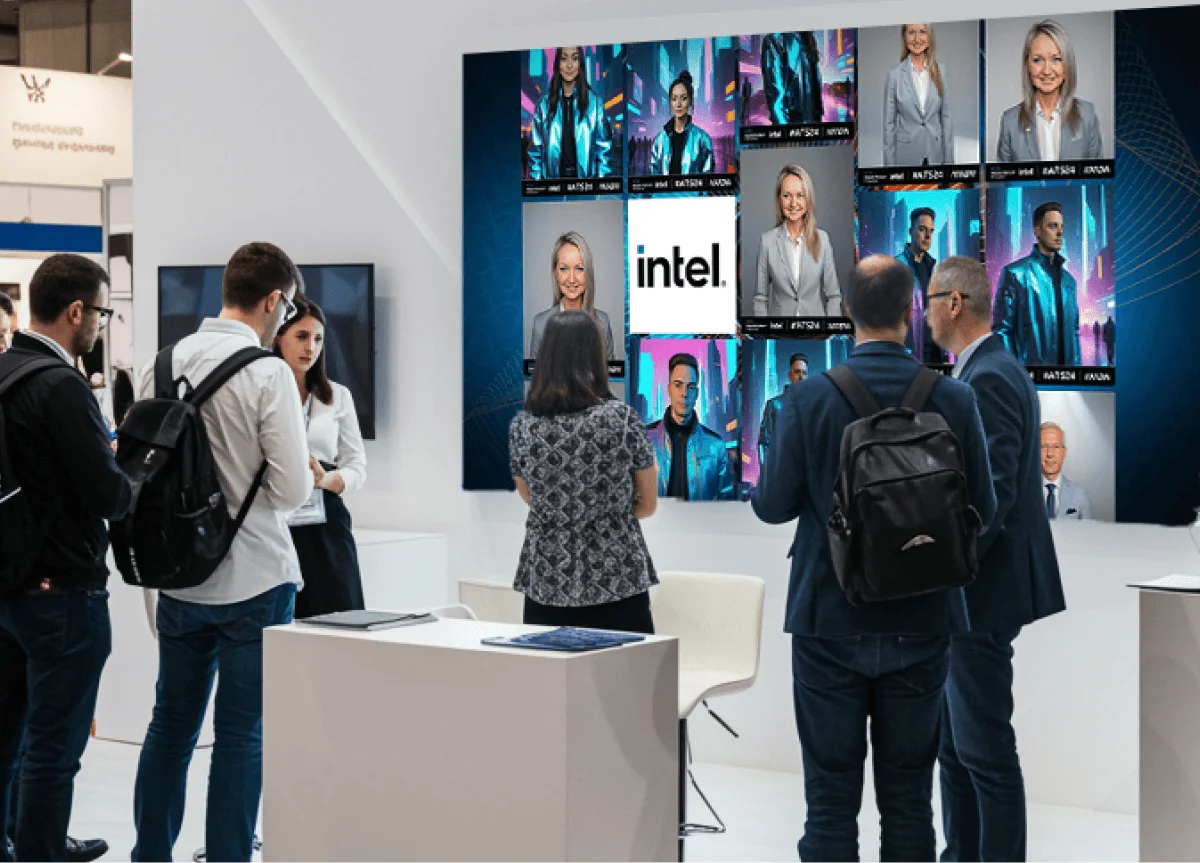
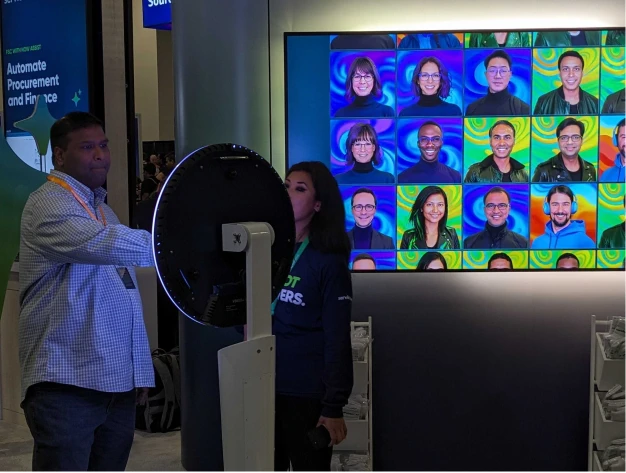
The throughput difference is not subtle. At NAVC VMX, a single AI Photo Booth activation processed more than 4,000 guests in one day. No photographer covers 4,000 individual portraits in a day, and that isn't a criticism of photographers.
This doesn't replace an event photographer, and we'd push back on anyone who says it does. You still want someone good shooting the keynote, the venue, the product, and the executive portraits. What it replaces is the impossible expectation that documentary coverage will also produce thousands of personalized, face-forward, permissioned images.
See it in action
Put every attendee at the center of the frame
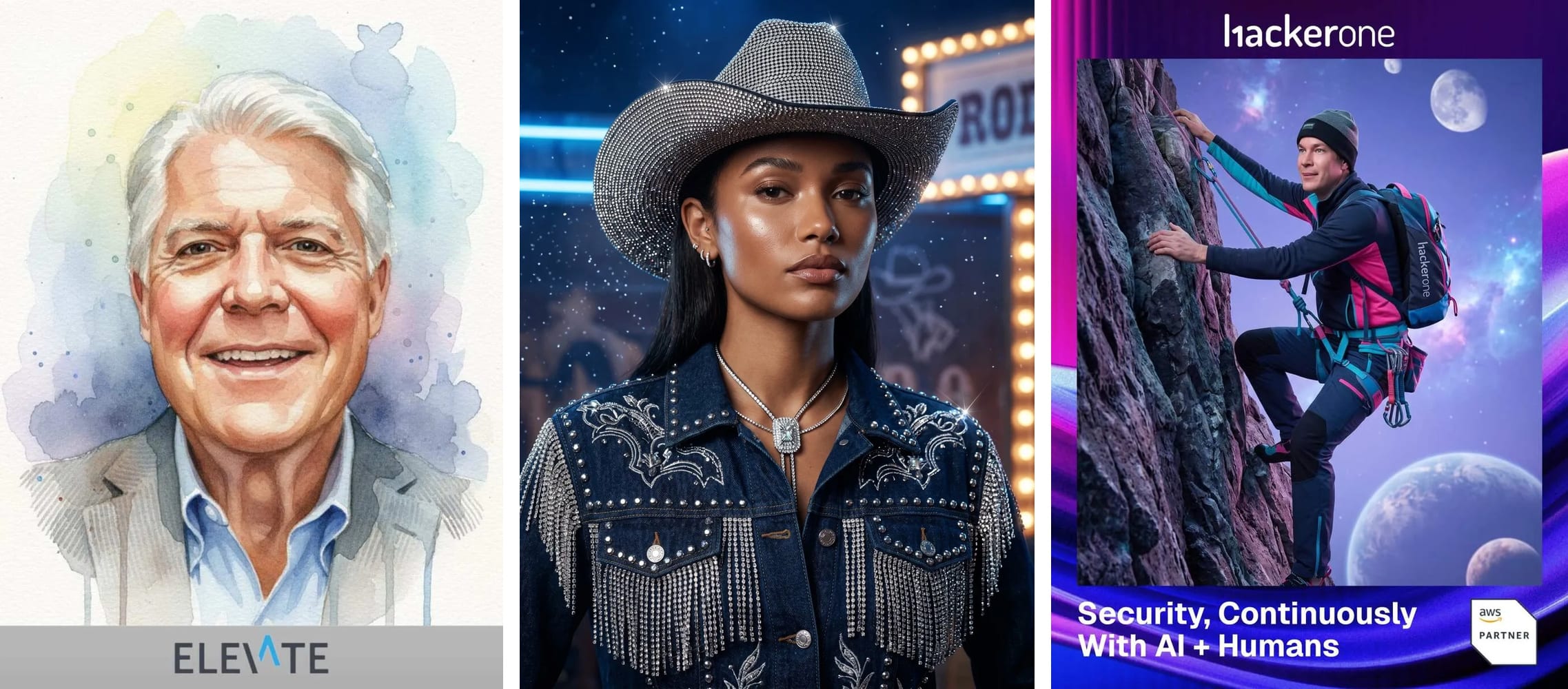
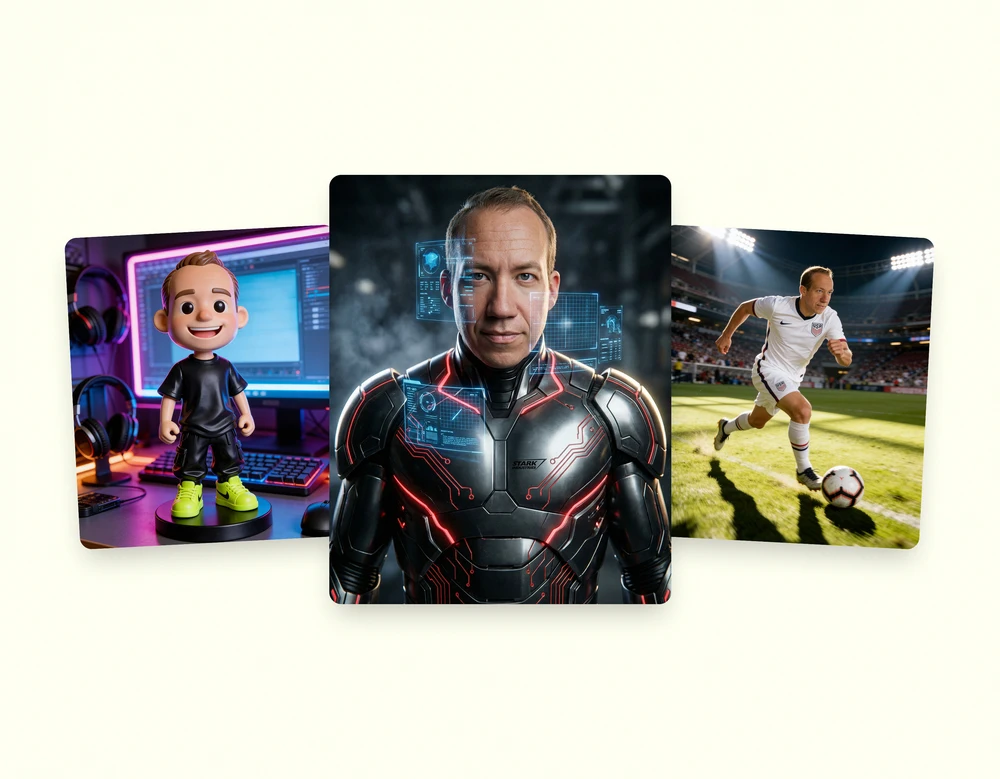
An AI Photo Booth activation turns each guest into the subject of a branded portrait they actually want to keep, delivered to their inbox with their contact details captured on the way through.
Explore AI Photo BoothThe two capture layers do different jobs. Coverage tells the story of your event to people who weren't there. Participant-created content puts your brand in the hands of the people who were, and gives them a reason to pass it on. Teams running large conferences and exhibitor programs tend to feel the gap first, because that's where attendee volume makes the throughput ceiling obvious.
Key takeaways
- Images with faces earned 38% more likes and 32% more comments across 1.1 million photos, controlling for reach. Most event galleries are mostly faceless.
- Perceived trustworthiness of a photo of a person tracked with a 7% price premium in the Airbnb study, while only 8% of people said the photo influenced them. The effect operates below self-report.
- People remember information encoded in relation to themselves better than information encoded any other way, which is why an attendee's own portrait outlasts a photo of the stage.
- Taking photos during an experience improves visual memory of it, and weakens memory for what was said. Place capture next to the content, not during it.
- Professional production wins for subject imagery. Snapshot aesthetic wins in a feed. For images of people, trustworthiness matters more than either.
- Brief against publishing destinations, resolve consent at capture, and route the gallery within 72 hours.
If you're planning the next one, the question worth asking in the brief meeting isn't how many photographers you need. It's how many of your attendees will end up in an image they want to keep.