
Table of Contents
Most event teams treat social media as an afterthought. They set up a hashtag, post a few behind-the-scenes stories, and hope for the best. The problem? Hope is not a strategy. Driving real social media engagement at events requires intentional design, not just last-minute posting.
After years of designing activations for brands like Microsoft, Google, and Toyota, our team has seen what actually moves the needle on social sharing. It comes down to this: you have to create moments people want to share, then remove every barrier between the experience and the post. The brands that get this right turn every attendee into a content creator and every event into a social media engine.
This playbook breaks down the strategies that work, organized around the event timeline: before, during, and after.
Key Takeaways
- A single attendee sharing branded content reaches 500-1,000 people on average; multiply that by participation rates to size your event's organic reach.
- Social engagement starts weeks before the event with teaser content, personalization hooks, and seeding 10-15 active social attendees.
- Personalized, AI-generated outputs (portraits, trading cards, persona quizzes) outperform generic brand photos because attendees share content that reflects them.
- One-tap sharing, QR-code access, and live social walls remove every barrier between making content and posting it.
- Track UGC volume, share rate, earned media value, and content longevity to prove social ROI in the budget meeting.
Why Does Social Media Engagement Matter for Events?
The math is straightforward. A single attendee who shares a branded photo or video to their personal network reaches, on average, 500 to 1,000 people. Multiply that across hundreds or thousands of participants, and your event's reach extends far beyond the venue walls. That's organic brand exposure you didn't have to buy.
But reach alone isn't the goal. Social engagement creates a feedback loop. Content shared during an event generates curiosity, which drives ticket sales for future events, which creates more shareable content. It also gives your marketing team something tangible to report: impressions, shares, mentions, and user-generated content that can be repurposed for months.
The shift in recent years has been clear. Event marketers aren't just trying to fill seats anymore. They're trying to generate branded content from their audience, capture leads, and prove that live experiences contribute to pipeline. Social media is the connective tissue between all of those outcomes.
How Do You Create Shareable Moments Before the Event?
Social engagement doesn't start when the doors open. It starts weeks earlier, with anticipation. The best event marketers build a pre-event content arc that gives attendees a reason to engage before they even arrive.
Teaser content that invites participation. Rather than posting generic "We'll be at Booth 412!" updates, create content that asks something of your audience. Polls about what they want to see, countdown reveals of the activation experience, or early access to a digital component all give people a reason to interact with your brand before the event.
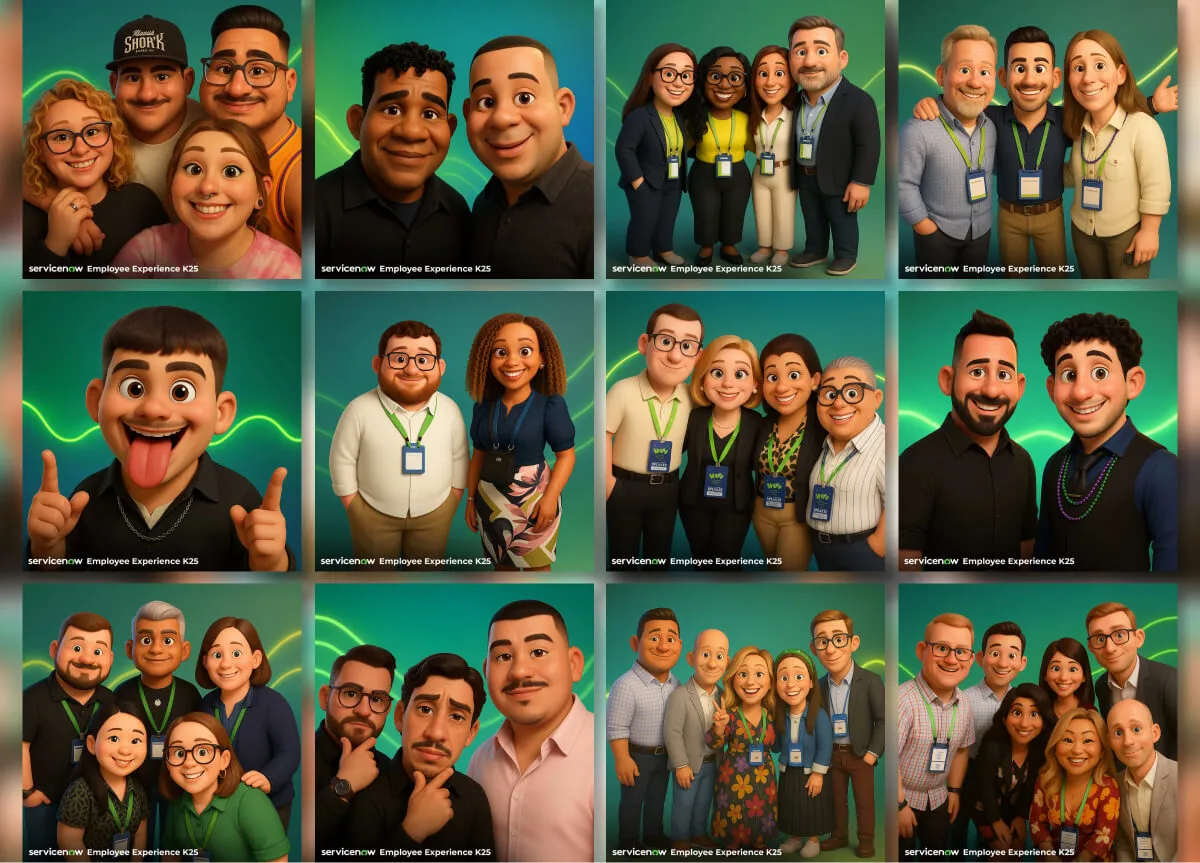
Personalization hooks. If your event activation includes any kind of personalized output (AI-generated portraits, custom trading cards, persona quizzes), promote the concept ahead of time. When people know they'll get something unique to them, they're more likely to seek it out and share the result. This is especially effective with AI-powered experiences where the output itself becomes the social content.
Influencer and speaker seeding. Identify 10 to 15 attendees with meaningful followings (they don't need to be celebrities, just active on social) and offer them an early look at your activation. Their pre-event posts set the tone and create FOMO for everyone else.
What Makes a Hashtag Strategy Actually Work?
Hashtags sound basic, but most event teams still get them wrong. The difference between a hashtag that trends and one that collects dust comes down to three things.
Keep it short and specific. #YourBrandSummit2026 is better than #YourBrand_Summer_Summit_2026_NYC. Every extra character reduces the chance someone will actually type it. If the hashtag requires explanation, it's too complicated.
Make it visible everywhere, not just on social. Print it on signage, embed it in your digital photo experience overlays, display it on screens throughout the venue, and include it in the Wi-Fi password instructions. The hashtag should be inescapable, not something people have to search for.
Give it a purpose beyond tracking. The best event hashtags do double duty. They function as a tracking mechanism for your team and as a community signal for attendees. When people see others using the same tag, it reinforces that they're part of something. Pair the hashtag with a live social wall and suddenly there's an immediate, visible reward for posting.
Insight: The most shared event content isn't polished brand photography. It's personalized, participant-created content that feels authentic. When attendees co-create something unique (an AI portrait, a custom trading card, a mosaic contribution), they share it because it reflects them, not your brand. Your brand just happens to come along for the ride.
How Can You Turn Attendees Into Content Creators?
This is where most event social strategies either succeed or fail. The difference between "we had a hashtag" and "we generated 2,000 pieces of branded content" comes down to how you design the experience itself.
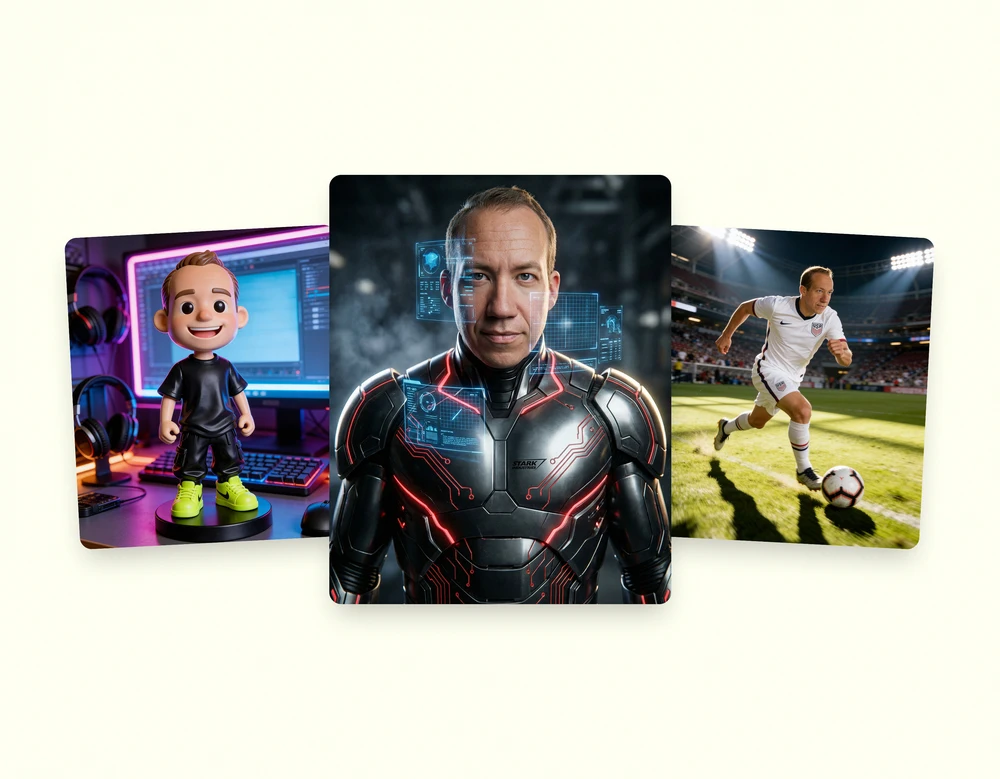
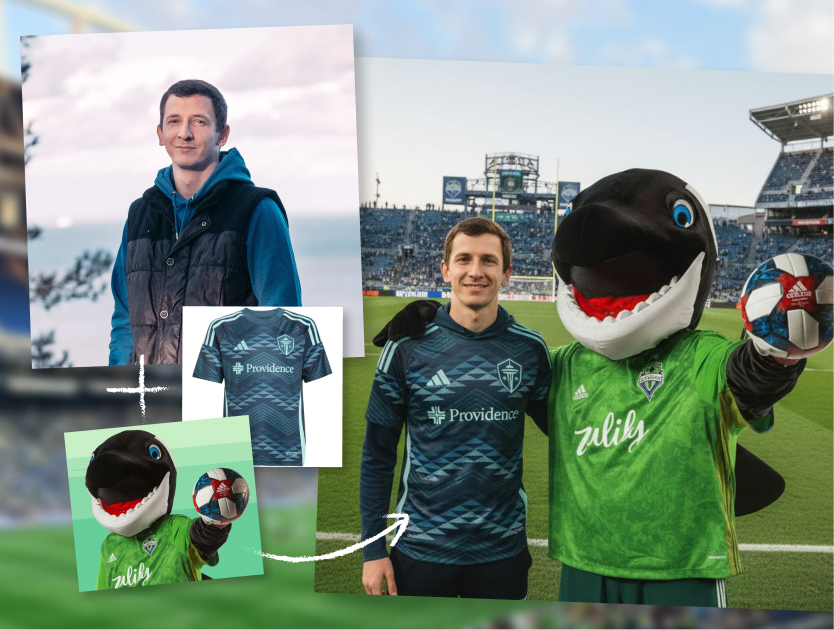
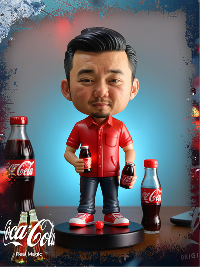
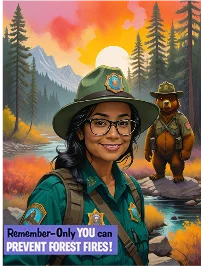
Make the output inherently shareable. A plain photo with a logo overlay is fine. A custom AI-generated portrait that transforms someone into a character, or a personalized trading card they can collect and swap? That's content people actively want to show off. The key is designing outputs that are interesting enough to share on their own merit, not because you asked nicely.
Remove friction from the sharing process. Every extra step between "I just made something cool" and "my followers can see it" kills your conversion rate. Web-based activations that let people share directly from their phone (no app download, no account creation) consistently outperform setups that require additional steps. QR code access, instant digital delivery, and one-tap sharing options are the baseline, not the upgrade.
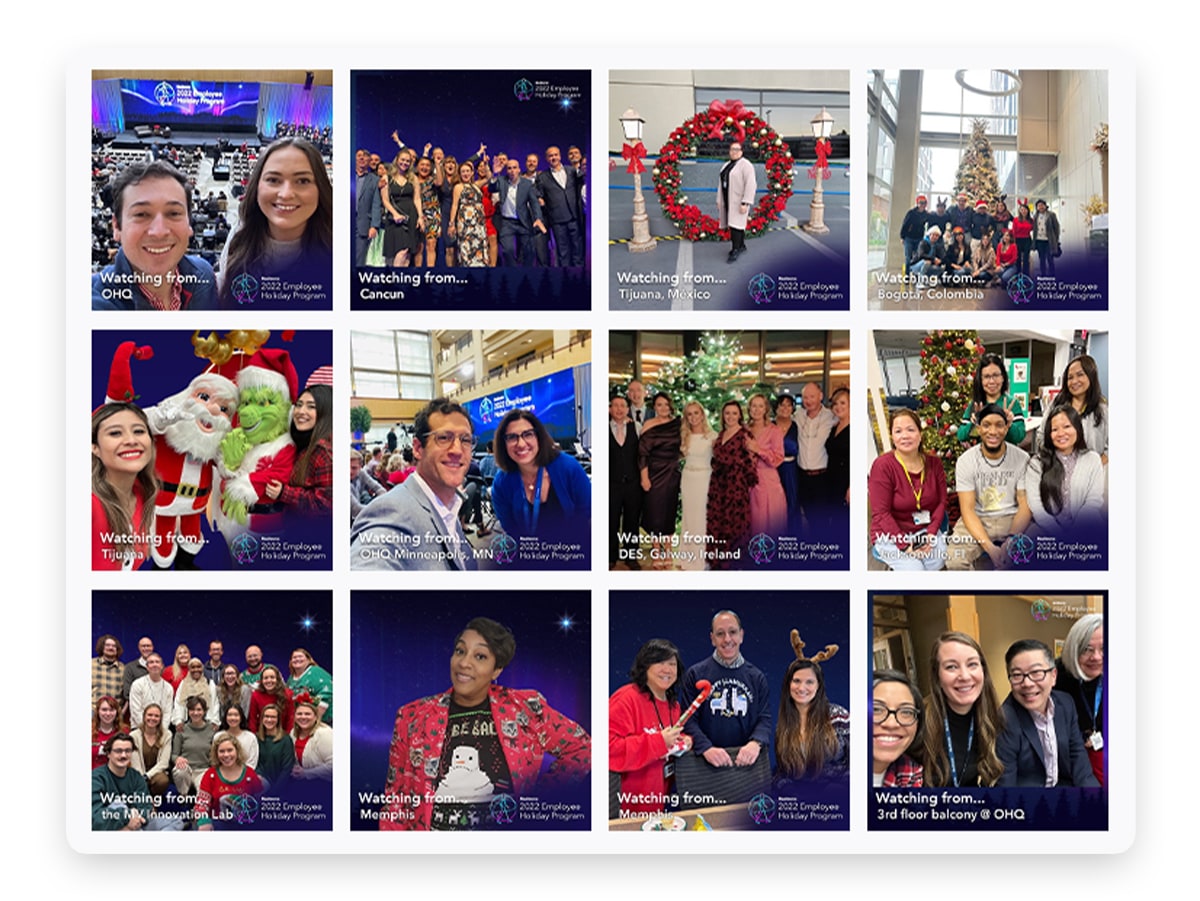
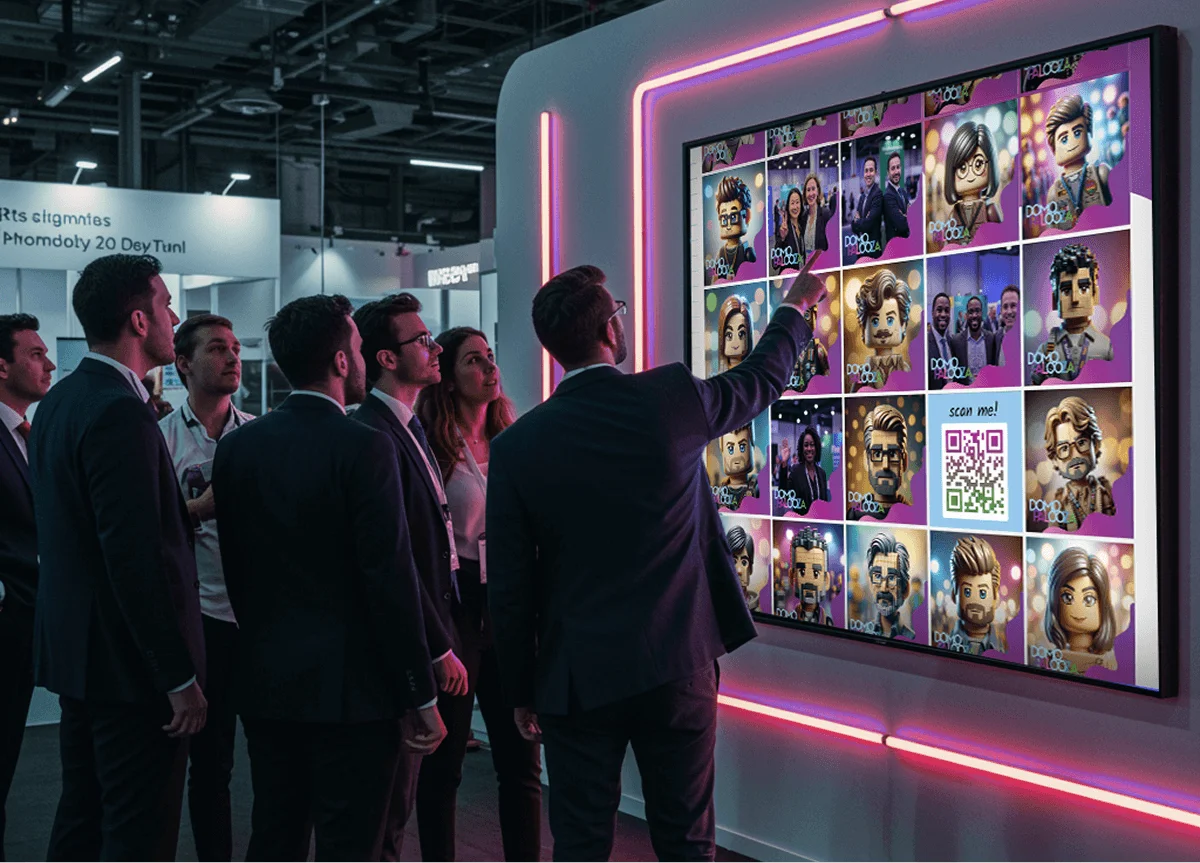
Integrate user-generated content into the event in real time. When attendees see their content displayed on screens, featured in a photo mosaic, or highlighted on a social wall, it creates a positive reinforcement loop. Other attendees see the display, want to participate, create their own content, and the cycle continues. This visual feedback mechanism is one of the most reliable ways to amplify participation rates throughout an event.
What Role Do Live Social Walls and Displays Play?
A live social wall aggregates hashtagged content and displays it in real time, usually on large screens near high-traffic areas. They've been around for years, but the execution has evolved significantly.
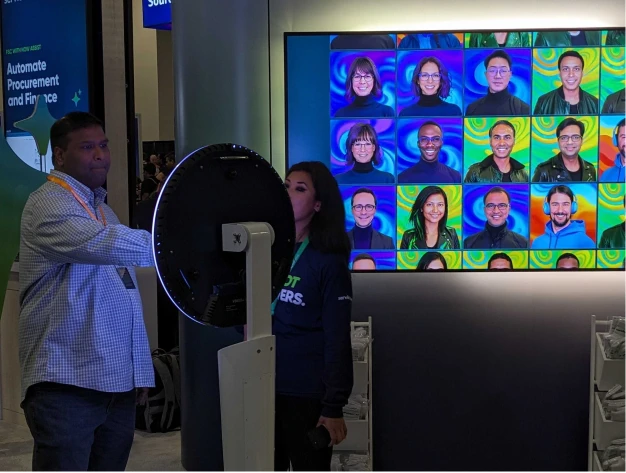
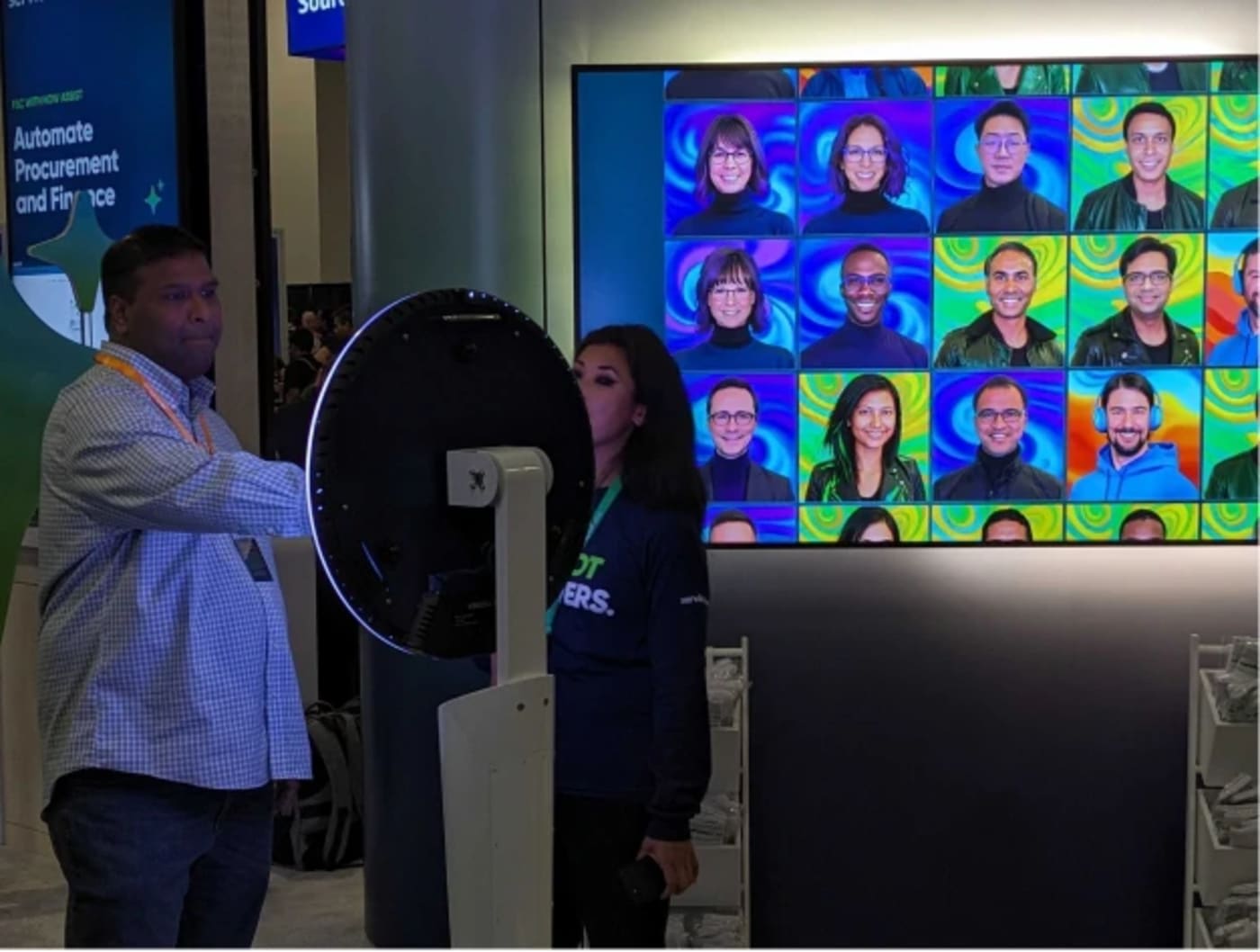
Modern social displays go beyond simple feeds. Rather than scrolling through a raw Twitter feed (which can include off-brand or irrelevant posts), today's best implementations curate content from your activation directly. A live gallery showing the AI portraits or branded content that attendees just created is more compelling and more controlled than an unfiltered social stream.
Placement matters more than technology. A social wall hidden in a corner does nothing. Position displays where people naturally congregate: registration areas, session breaks, near food and drink stations, and at the center of your activation space. The goal is to create a "what's that?" moment that draws people in.
Use displays to create gentle competition. Showing a counter ("427 participants and counting") or featuring the most creative outputs encourages people who haven't participated yet to join in. This works especially well at multi-day events where day-two attendance at your activation can be driven by day-one buzz.
How Do Photo Activations Drive Social Sharing?
Photo and video activations remain the most reliable social amplification tool at events, and the reason is simple: visual content outperforms text on every social platform. But the type of activation matters enormously.
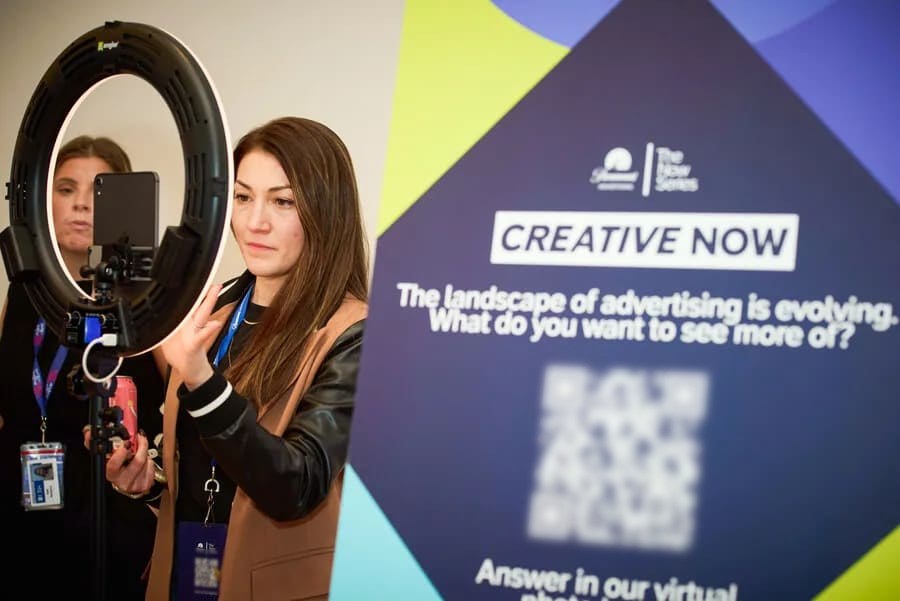
Traditional setups with a physical backdrop and a ring light produce decent content, but they're limited by throughput (one group at a time) and creativity (same backdrop, same pose). Digital and AI-powered activations change the equation because they can serve hundreds of people simultaneously, personalize every output, and generate content that looks genuinely different from anything else in someone's feed.
The activations that generate the most social sharing tend to share a few traits:
- Personal relevance. The output reflects something about the individual, not just the brand. AI portraits, persona quizzes, and custom illustrations all score high here.
- Visual novelty. If the output looks like something people haven't seen before, they're more likely to share it. This is why AI-generated imagery performs well: the outputs are visually striking and inherently unique.
- Low barrier to entry. Scan a QR code, take a selfie, get a result. The entire interaction should take under 60 seconds.
- Built-in sharing mechanics. Direct-to-phone delivery via text or email means the content lands in the attendee's camera roll, ready to post. A 95% open rate on content delivery emails means nearly everyone sees and saves their content.
Insight: The best social activations don't feel like marketing. They feel like a gift. When someone receives a custom AI portrait or a branded creation they genuinely enjoy, sharing it is a natural response, not a favor to your brand. Design for delight first, and the social metrics follow.
How Do You Measure Social Media Impact From Events?
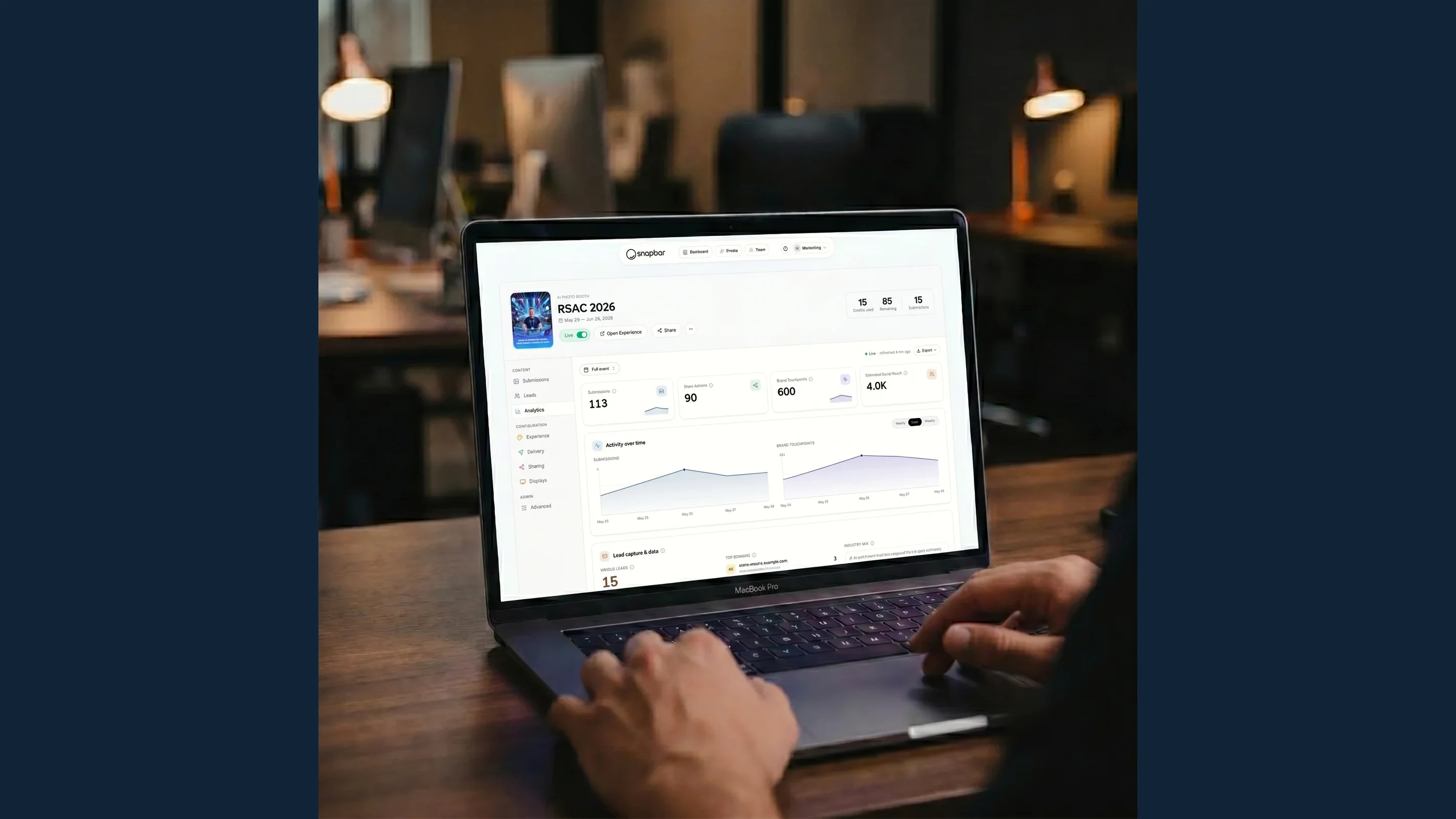
Measurement is where good intentions meet reality. "We got a lot of engagement" doesn't hold up in a budget meeting. Here's a practical framework for tracking social impact from events.
Quantitative metrics to track:
- Hashtag volume and reach. Total posts using your event hashtag, combined with estimated impressions.
- UGC pieces created. How many attendees actually created and received content through your activation?
- Share rate. Of the people who created content, what percentage shared it to social?
- Earned media value. A rough calculation: multiply total social impressions by your industry's average CPM.
Qualitative signals to watch:
- Sentiment of posts (are people genuinely excited or just tagging for a giveaway?)
- Organic mentions beyond the hashtag
- Screenshot and save rates (platforms like Instagram track this, indicating high-value content)
The most valuable long-term metric? Content longevity. Social content from a well-designed activation continues to generate impressions for weeks after the event. If your branded content is still being reshared a month later, you've built something that transcends the event itself. That kind of sustained visibility is worth far more than a single-day spike, and it's what separates a strategic experiential approach from a one-off activation.
The through line across all of these strategies is intentional design. Social media engagement at events doesn't happen by accident. It happens when you create experiences worth sharing, remove barriers to posting, and give attendees content they're proud to put their name on.
Ready to turn your next event into a social media engine?
Get a QuoteOr explore: How It Works | Activation Concepts